Joshua Tree is my favorite desert park; it owes this distinction to its two principal elements: Joshua trees, which arise like sculptures from the dessert floor and its granite boulders—sculpted into fantastic shapes by natural forces.
The park contains the boundary between the highland Mojave Desert and the lowland Sonora Desert. There is a shift from the Joshua tree-dominated Mojave to the creosote bush-dominated Sonora.
The sun plays a critical role in the aesthetics:
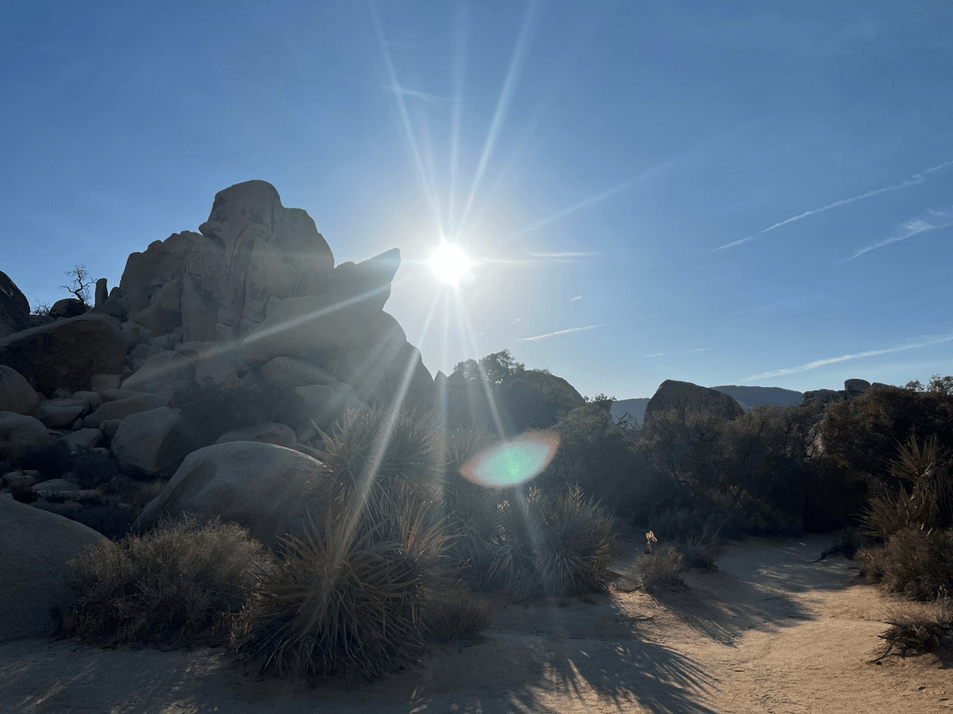
The sunshine permeates the landscape and it is easy to see why early desert peoples were sun worshippers.
Joshua Trees
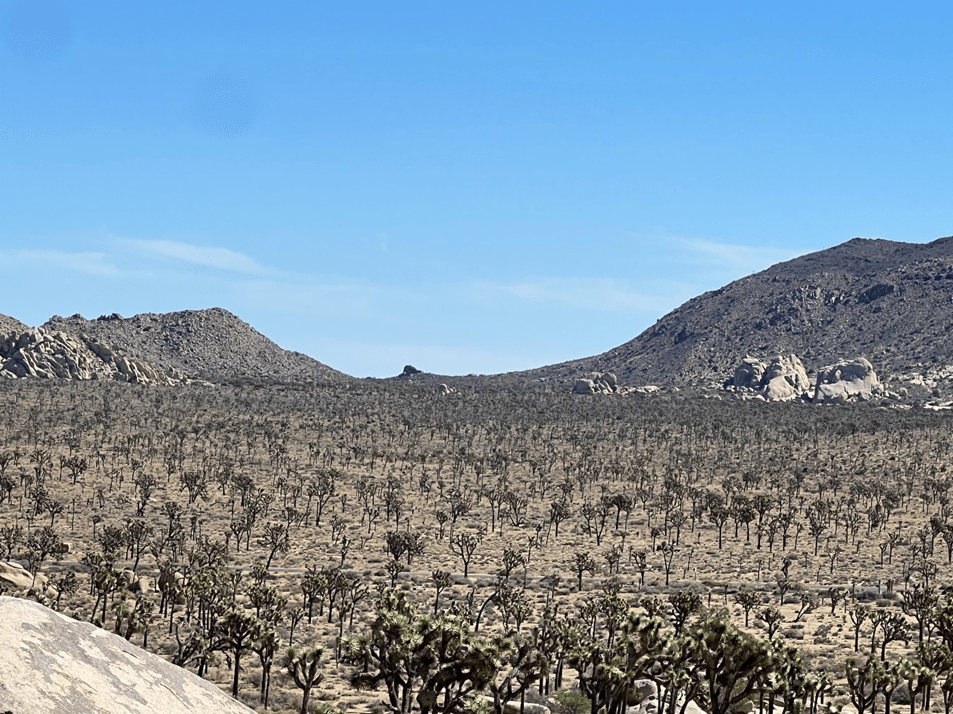
Opinions differ about the aesthetics of the Joshua tree (Yucca brevifolia, closely related to the agave plant); to me they are exceptionally beautiful, appearing in an enormous variety of shapes:
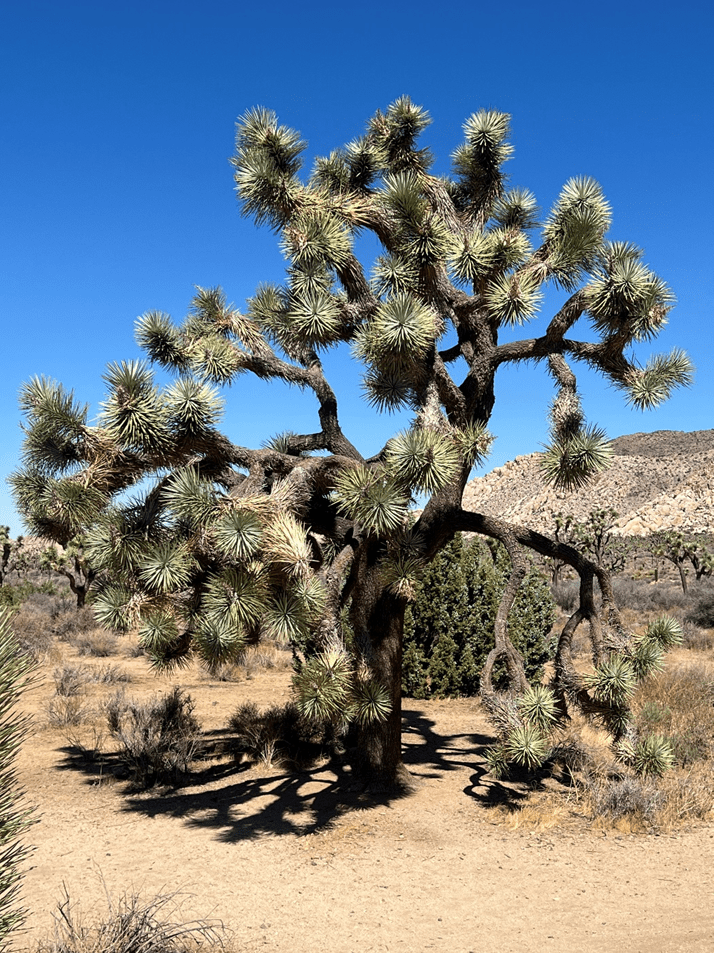
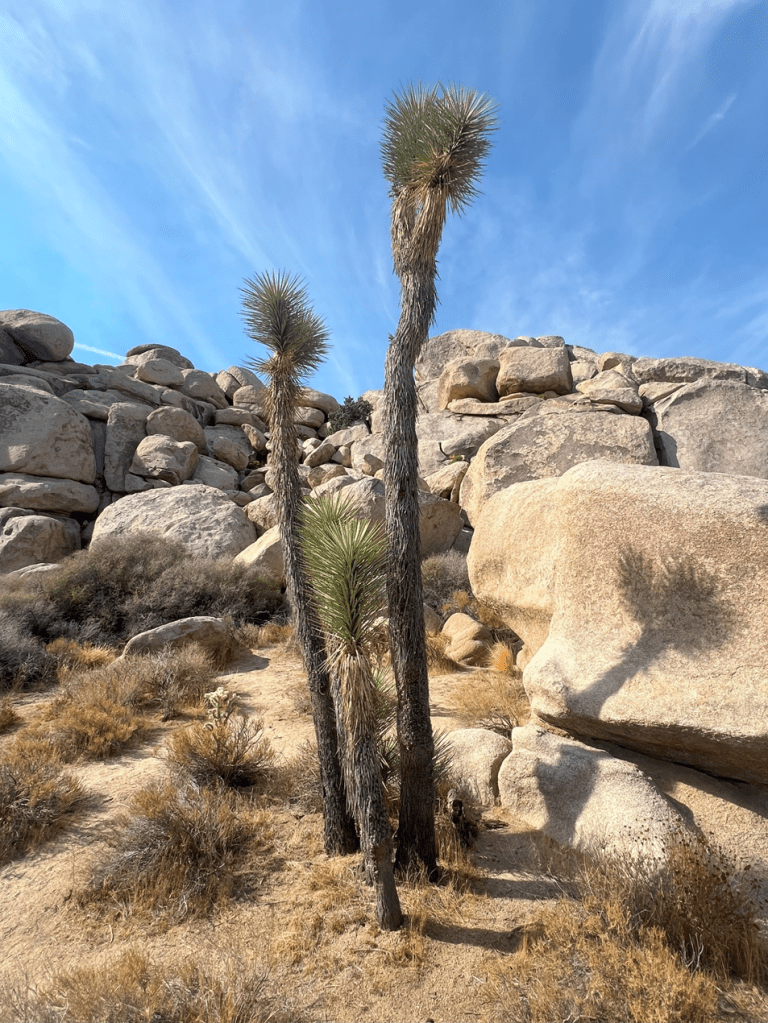
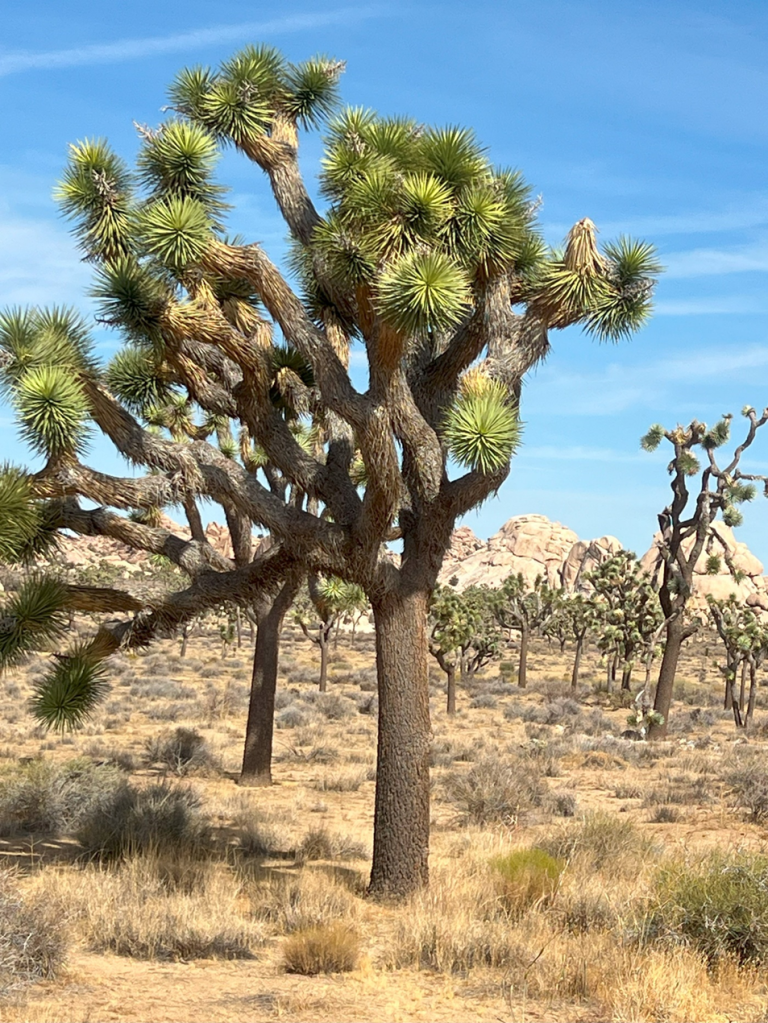
The Joshua tree “forest” when seen from above, appears to have been deliberately planted, like a reforestation project. Each tree is separated by low scrubby plants and the resulting rows look eerily like cultivated crops:
:.
Granite Forms
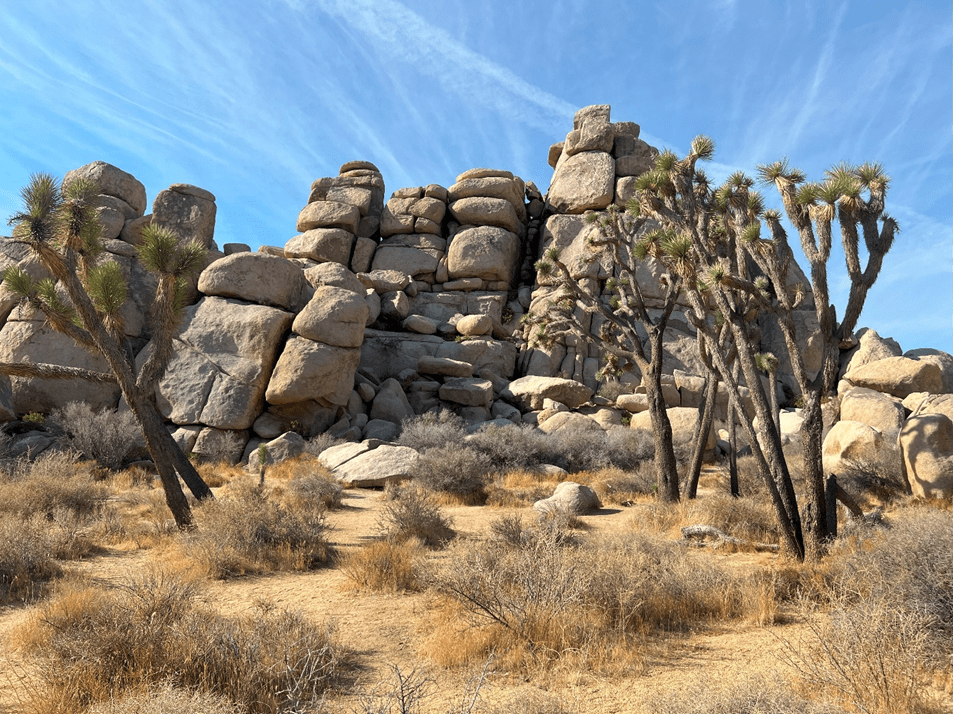
Boulders of Monzogranite (an igneous rock) scattered across the landscape have been weathered and split into a variety of sculpted forms. Many formations have been given evocative names and are marked features on several trails in the park. The boulders’ patterns and colors vitally contribute to the aesthetics of the sun-soaked desert.
The group below resembles a stack of toy building blocks:
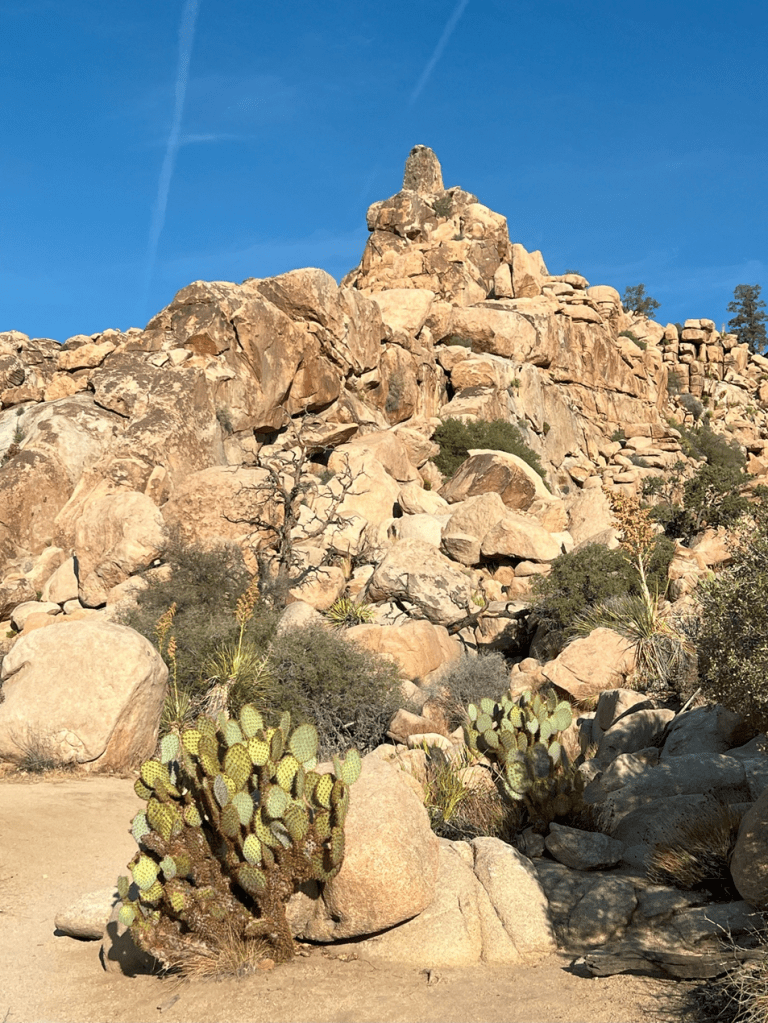
Here is a “mountain” of boulders with an unusual top. Note the prickly pear cactus in the foreground. These are unusual in the high Mojave where most rain falls in winter when it is cold and hard for the larger cacti to absorb the moisture. This prickly pear clump flourishes is in the “microclimate” of Hidden Valley:
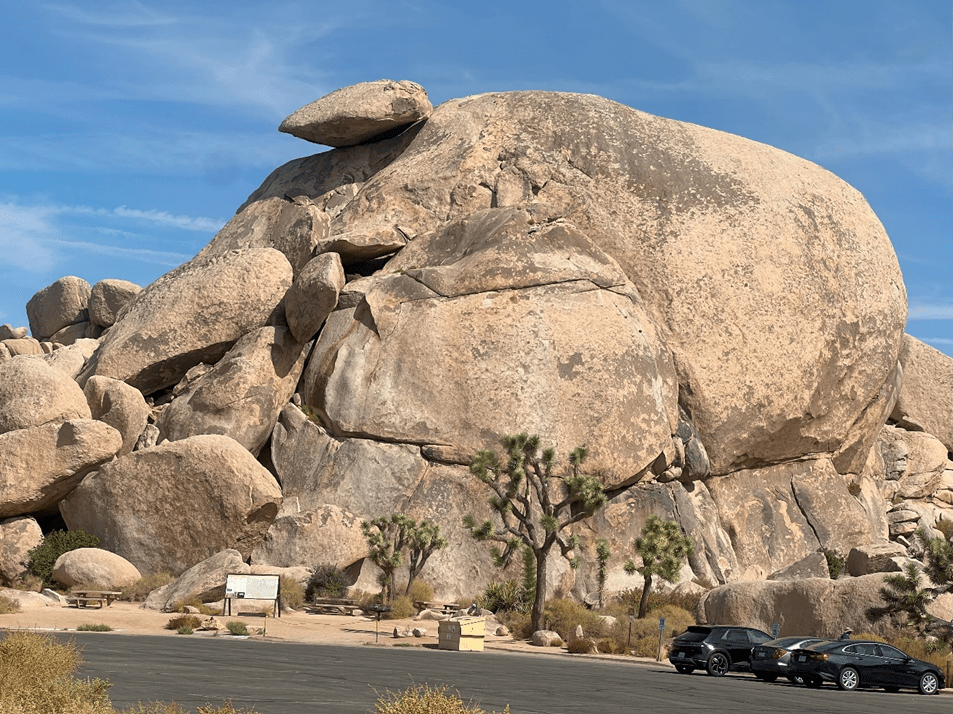
Cap Rock:
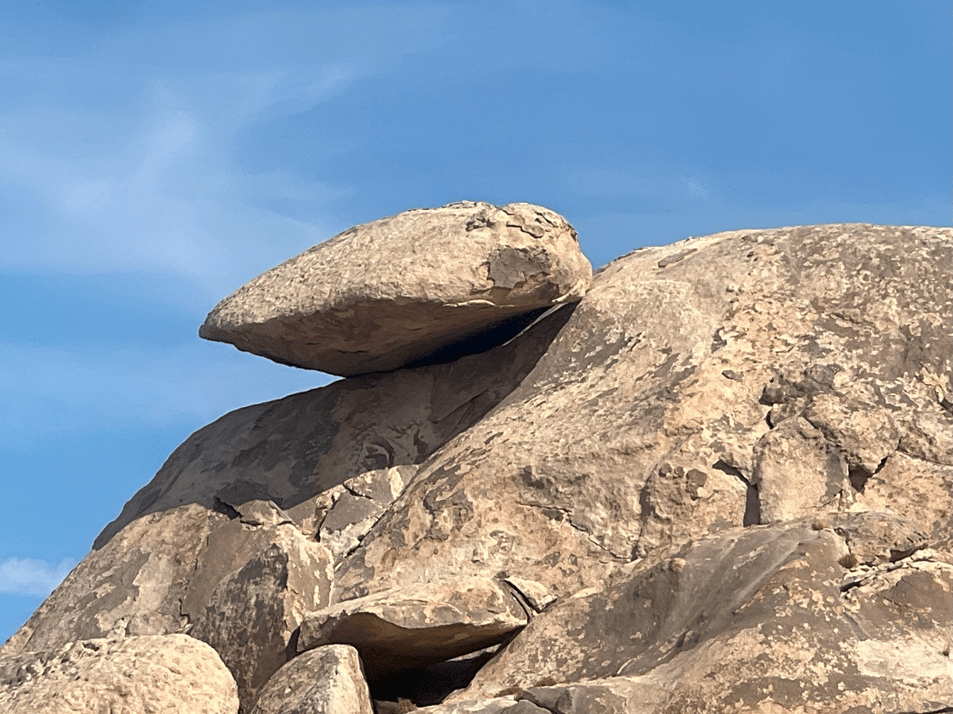
Balancing precariously above a parking lot:
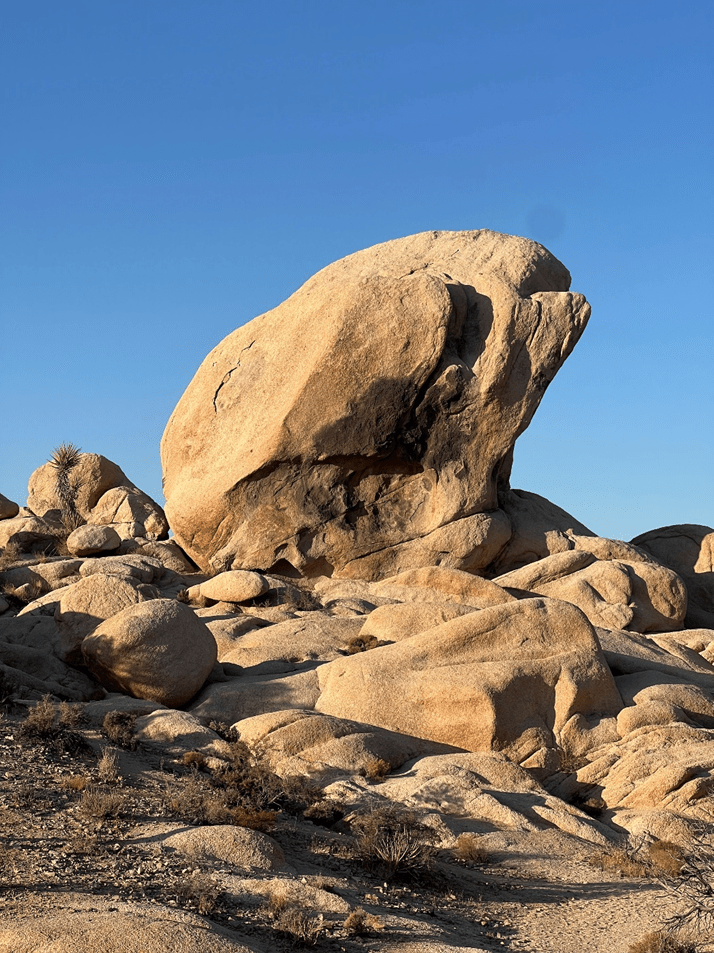
A boulder like the head of a monstrous bird rising out of the ground:
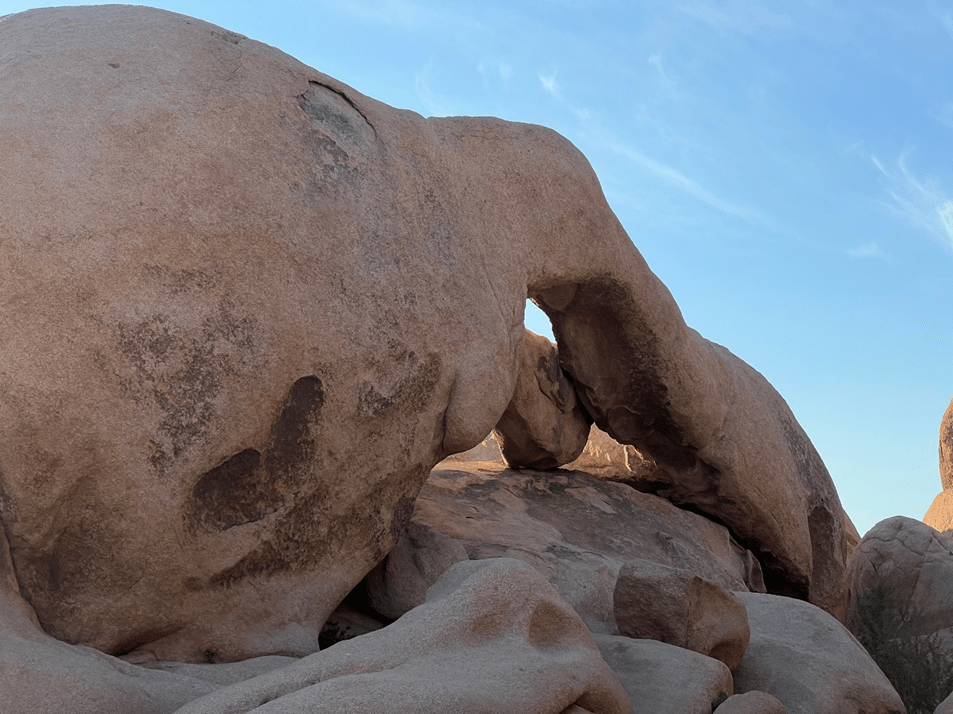
Arch Rock:
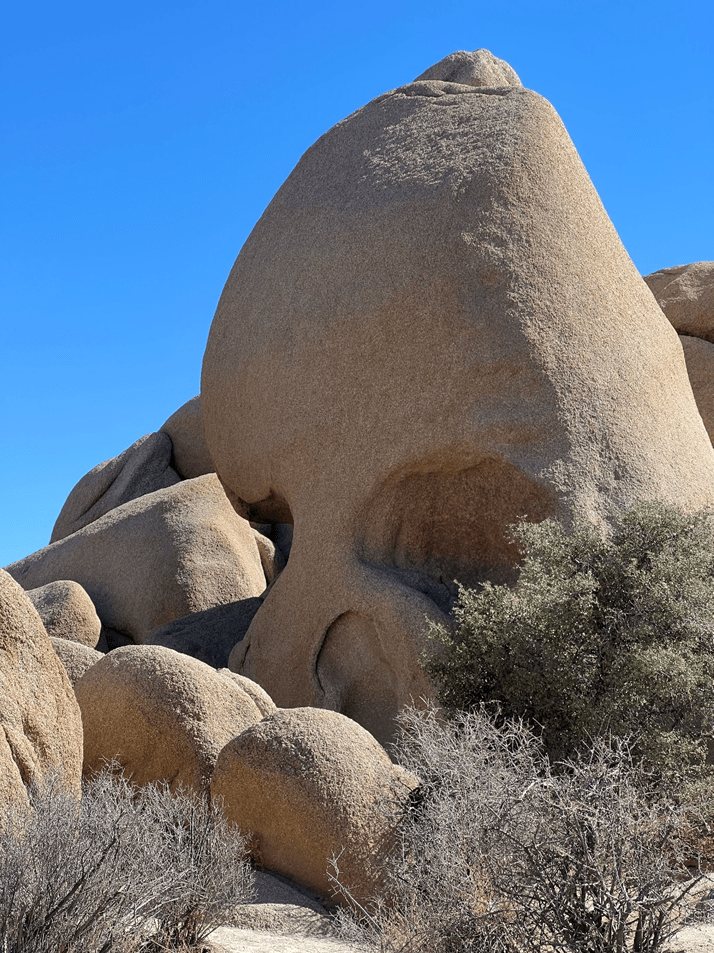
Skull Rock:
The variety of shapes is endless!
Plants
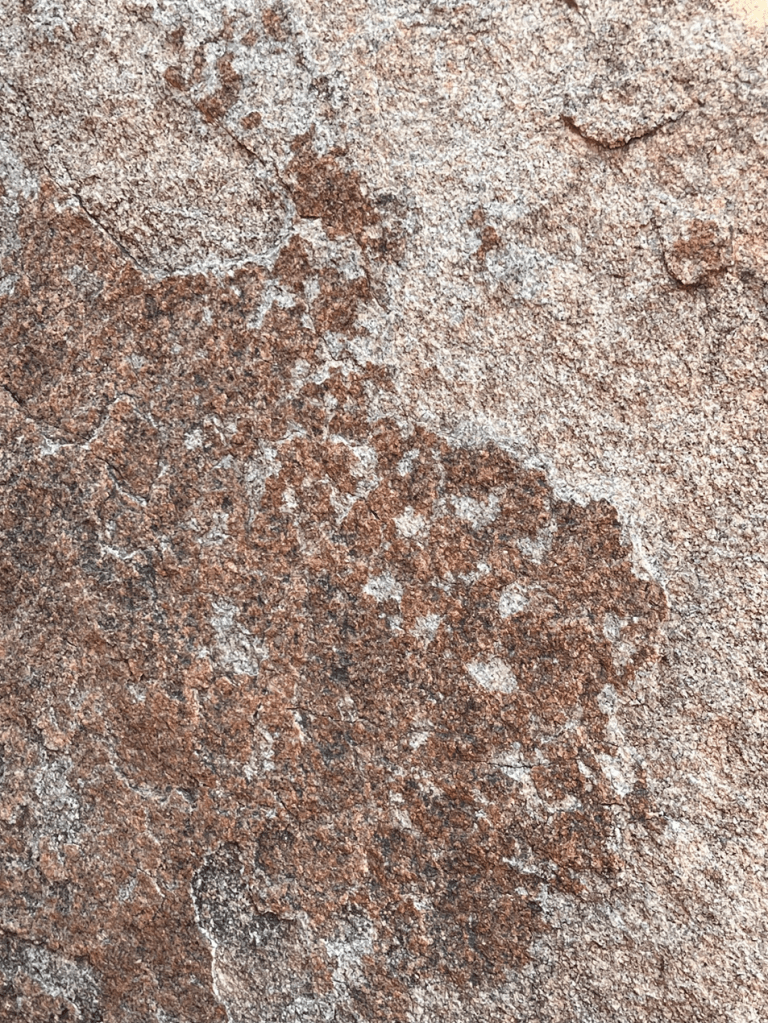
Aside from the Joshua Tree, the park is full of intriguing plants such as lichen, adhering closely to the rock:
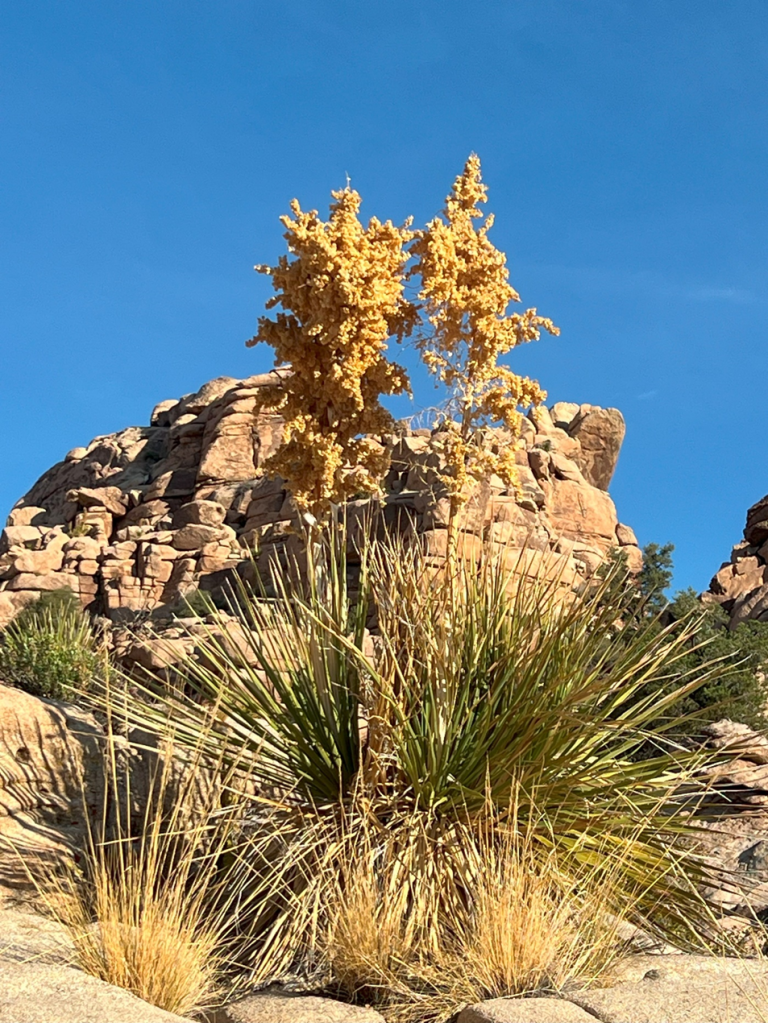
Here is Parry’s Nolina (Nolina parryi), with twin flowers:
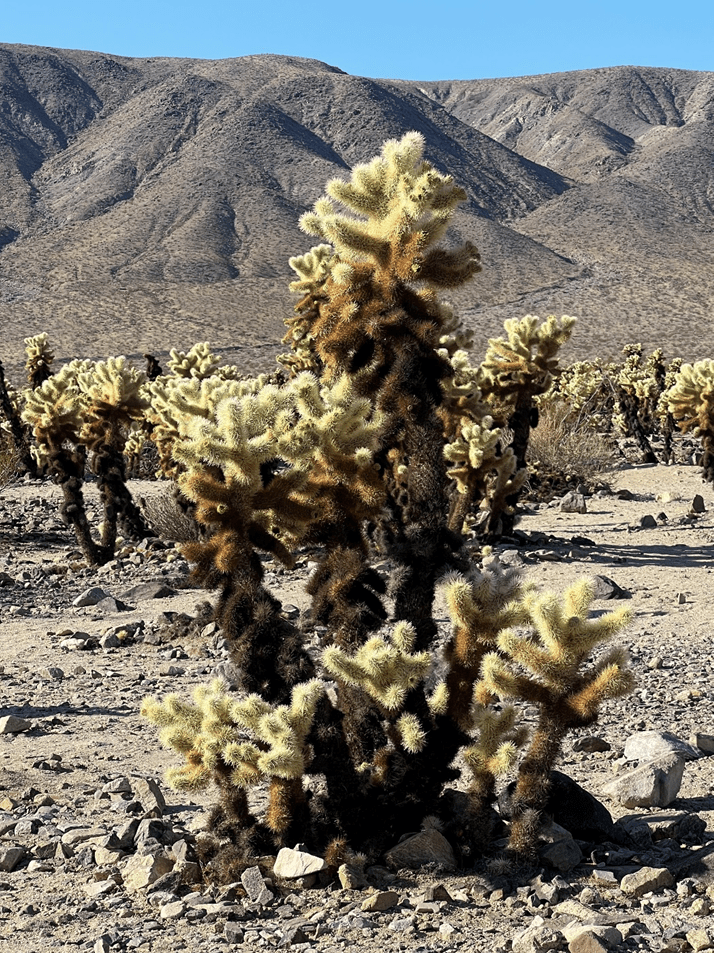
In the transition zone between the high and low dessert, we have the Cholla Cactus (Cylindropuntia bigelovii):
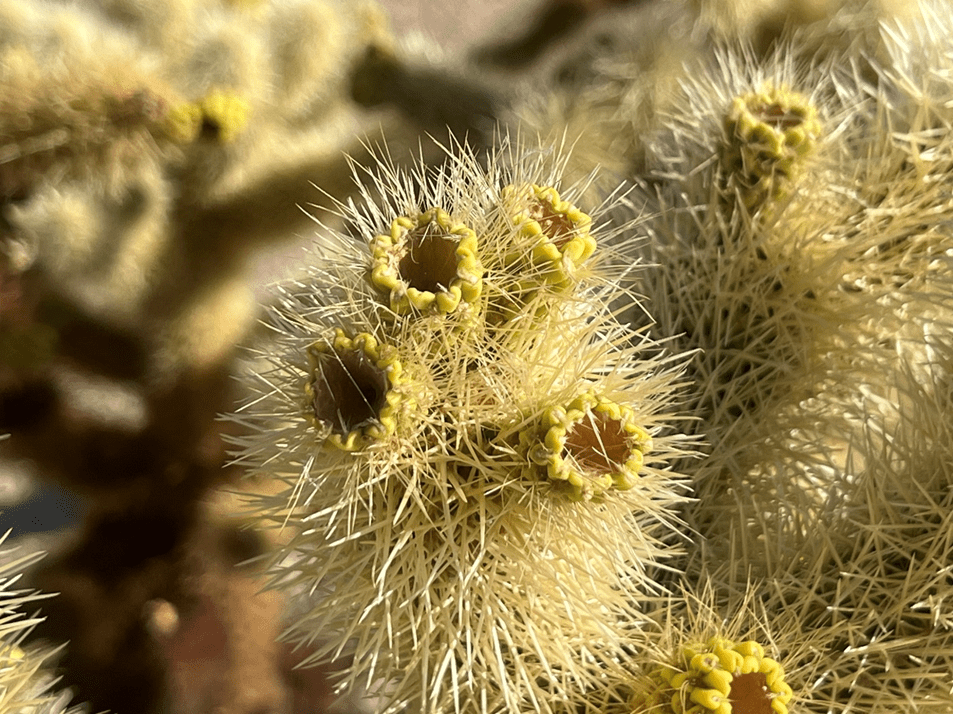
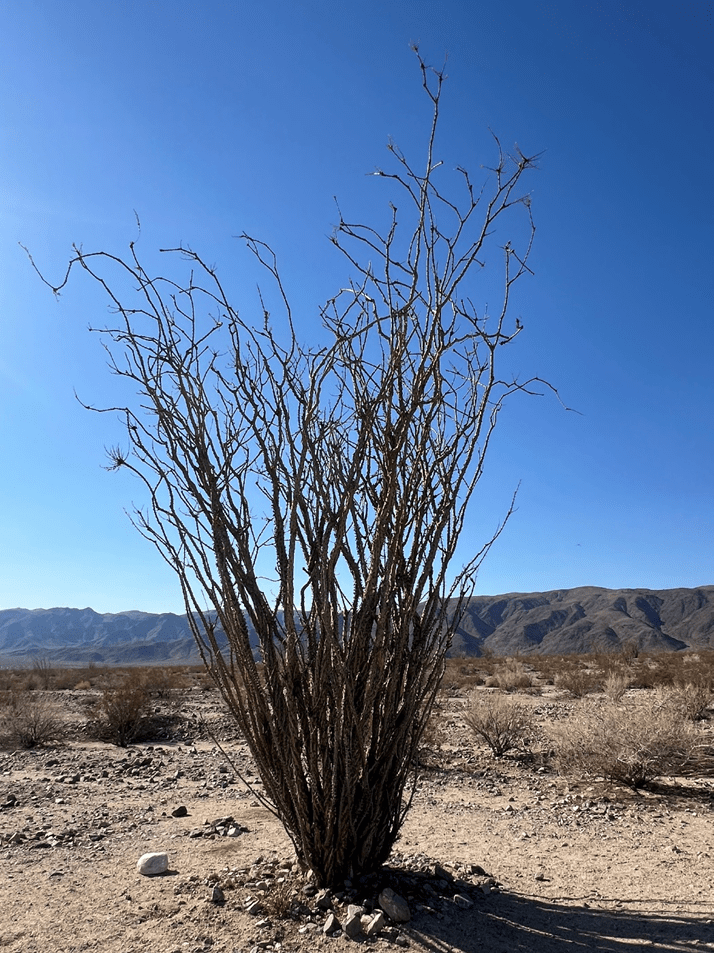
The Ocotillo tree (Fouquieria splendens) is dormant now, but ready to spring into bloom in the presence of moisture:
Animals
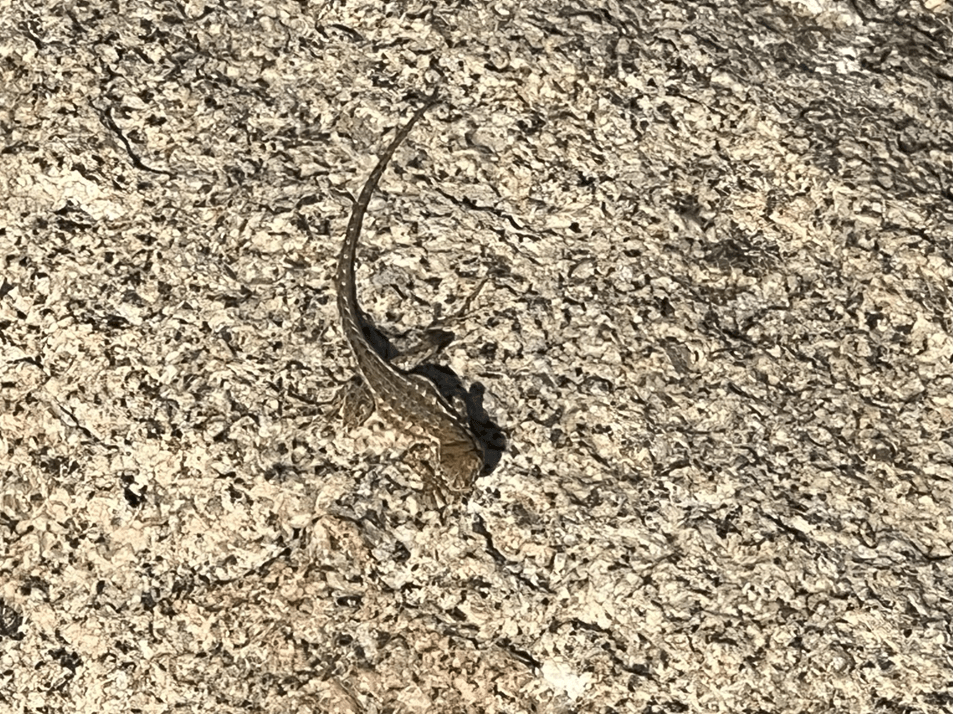
Reptiles are particularly well-adapted to desserts and there are plenty in the park including the western fence lizard (Sceloporus occidentalis):
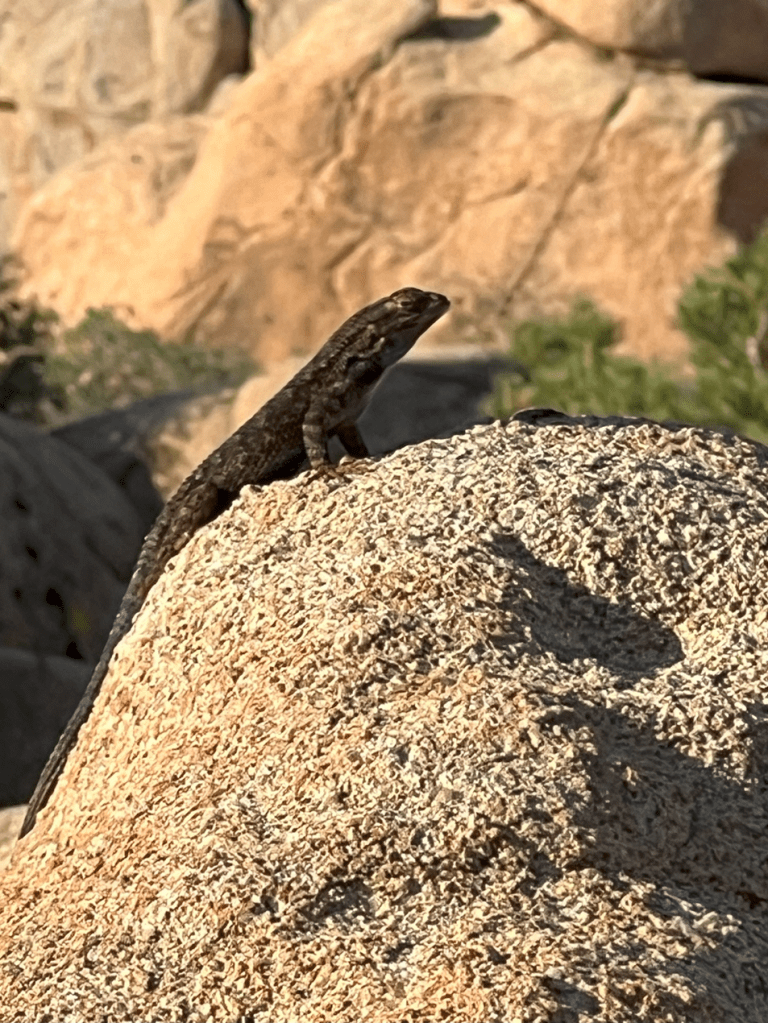
And a yellow-backed spiny lizard (Sceloporus uniformis):
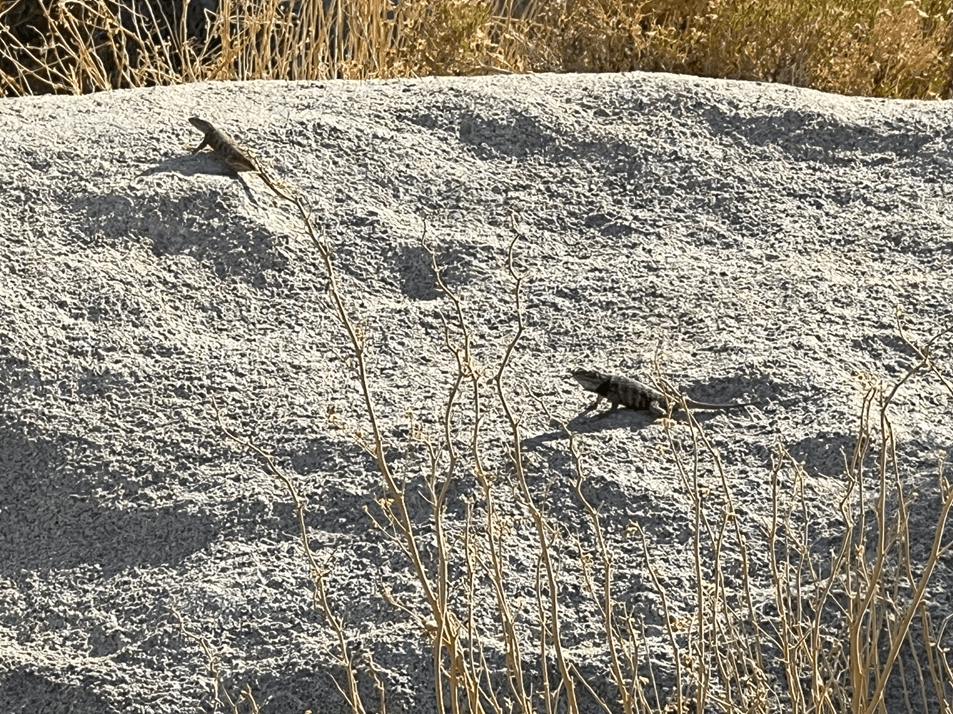
A pair of spiny lizards in a courtship ritual:
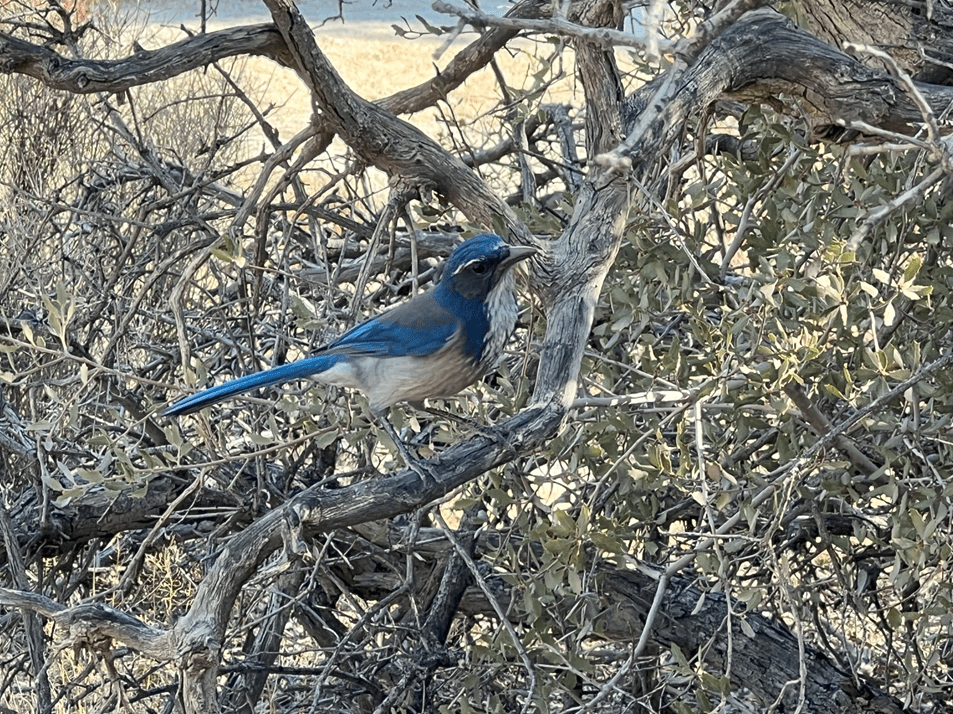
There is also a wide variety of birds, including colorful scrub jays (Aphelocoma californica):
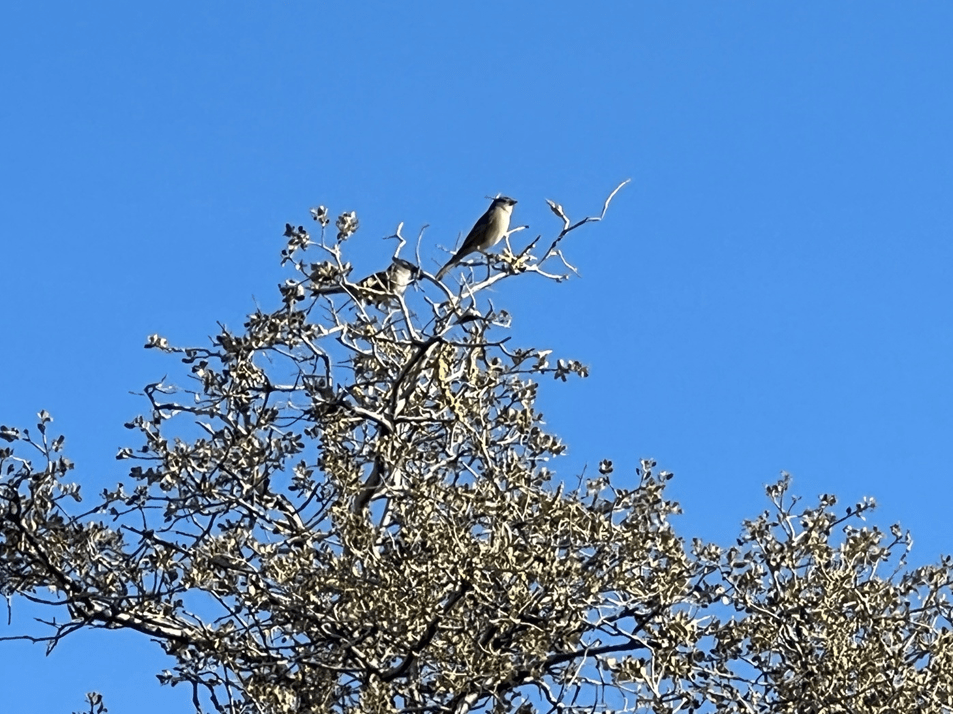
And what looked to me like Bewick’s wren (Thryomanes bewickii):
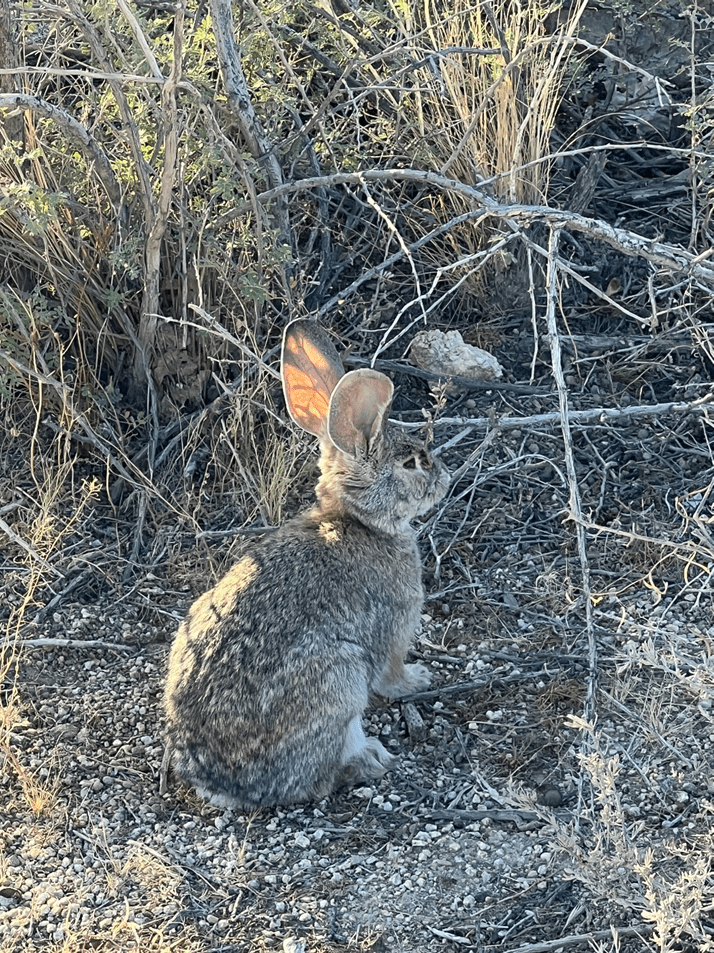
Mammals were a little elusive; I did get close to a desert black-tailed jackrabbit (Lepus californicus) with the large ears that help it regulate its temperature:
Unfortunately, I was unable to document my most memorable animal sighting. In the early morning, as I was enjoying the desert sunrise, a greater road runner (Geococcyx californianus) ran across my field of view—fun to watch, but not all that uncommon. What was much more remarkable was that, about 15 seconds later, a coyote (Canis latrans mearnsi) ran across the same path in the same direction. For a while I was convinced that Wile E Coyote lives!
Keys View—San Andreas Fault
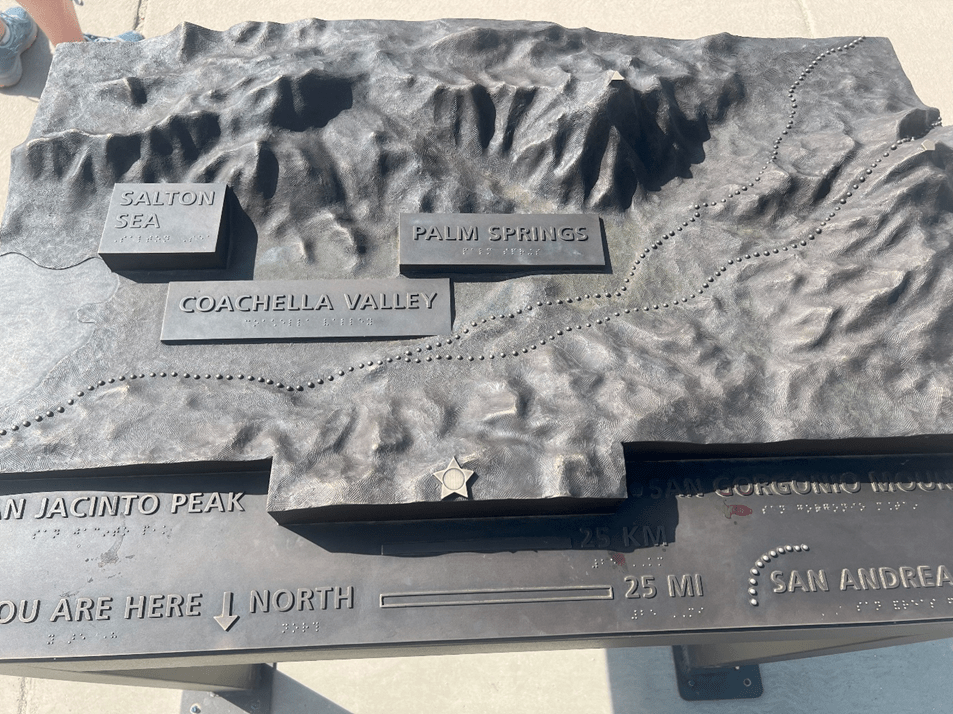
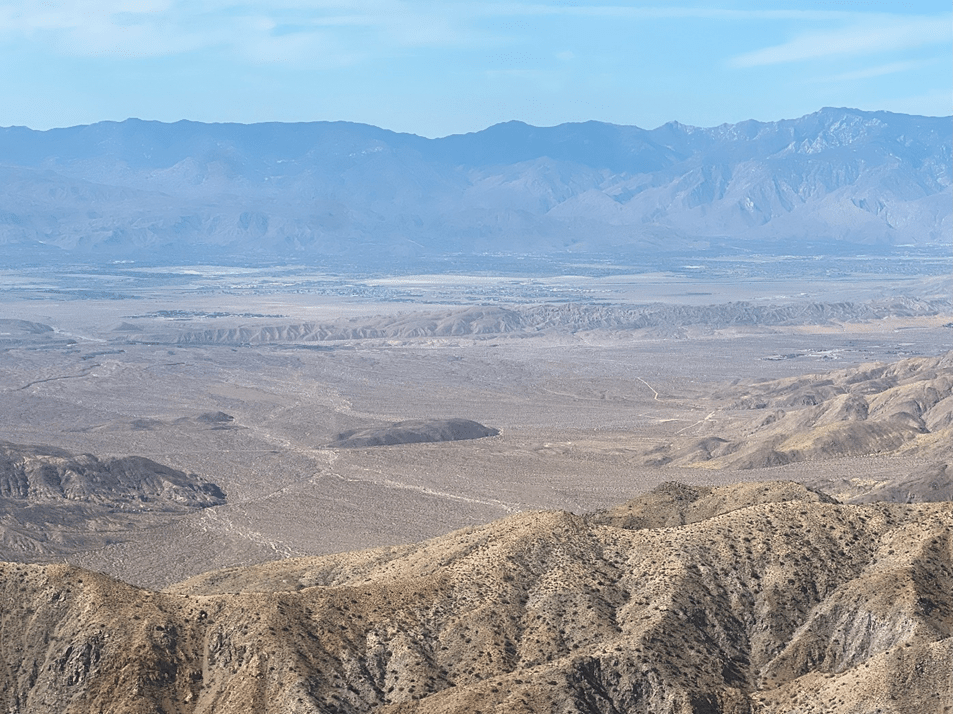
A short drive to Keys View (named after Bill Keys a well-know local pioneer settler) provides a great view of the San Andreas Fault. This diorama provides an orientation to the view across the Coachella Valley:
Looking towards Palm Springs, one can see the fault as a transverse ridge in front of the city:
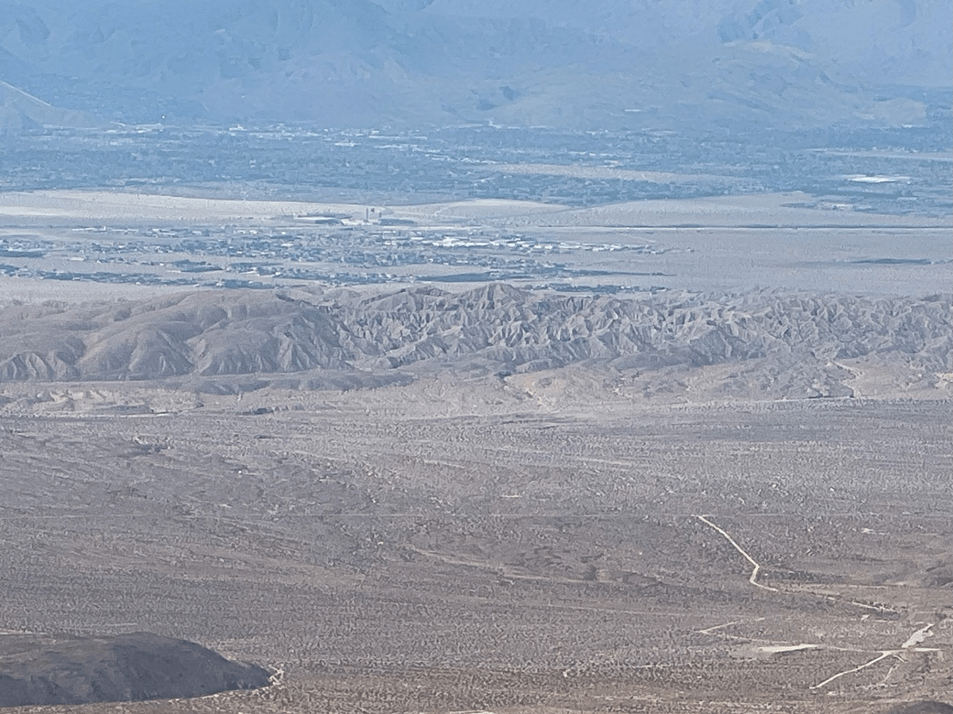
Here is a closeup of the ridge with Palm Springs beyond:
Sonora Desert—Pinto Basin
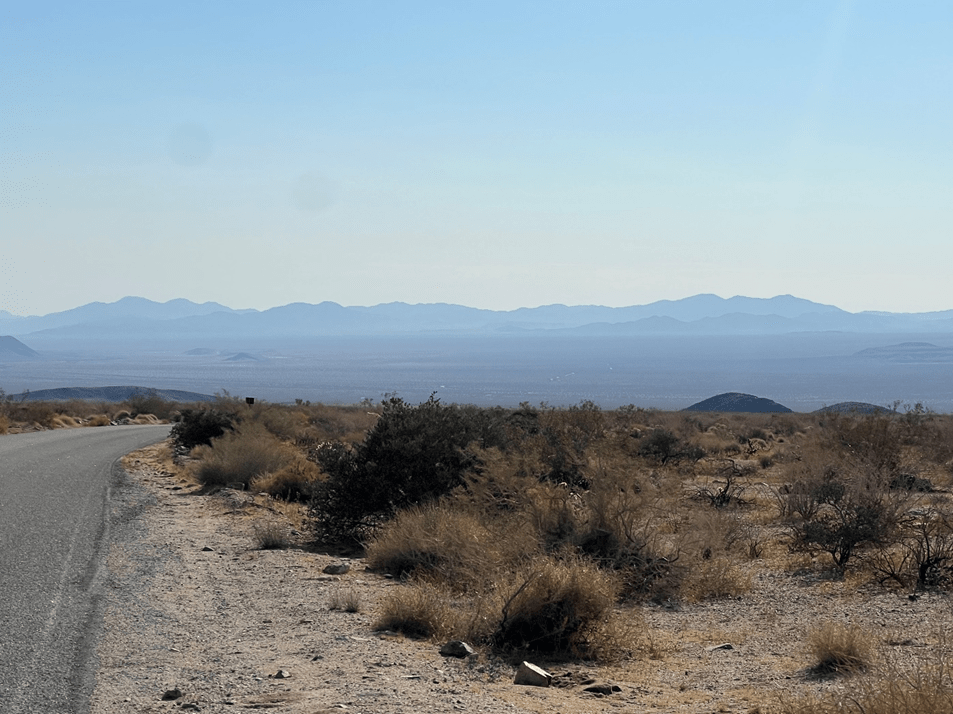
I took a “dip” in the Sonora Desert by driving into the Pinto Basin which consists of flats, surrounded by mountains below the ridge from which this picture is taken:
The flats are dominated by creosote shrubs (Larrea tridentata), probably the most common (though to me not the most attractive) plants in North American deserts:
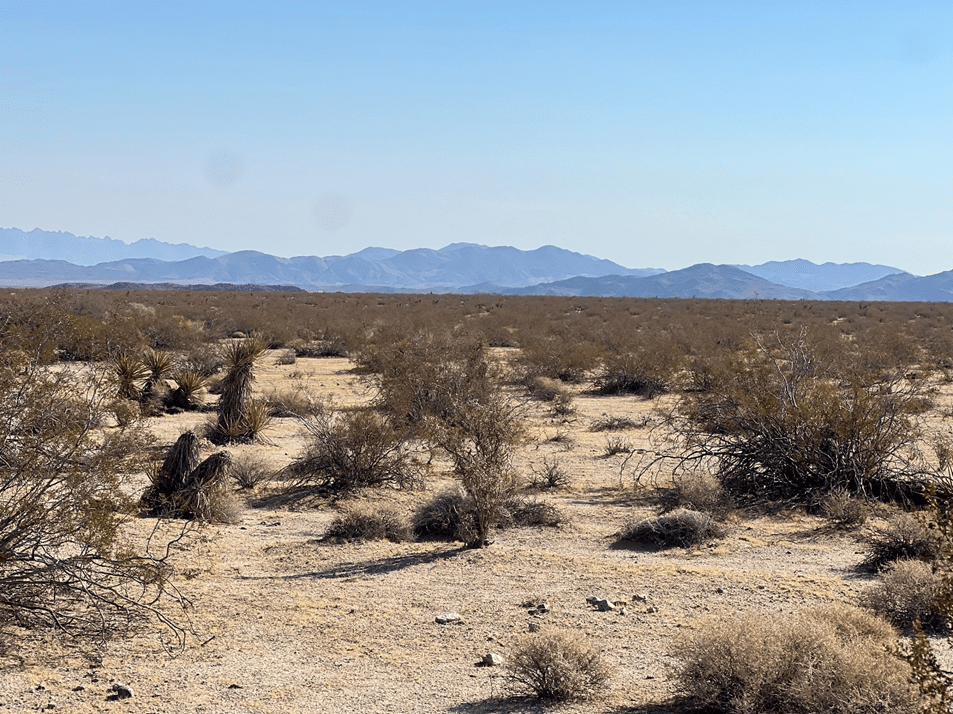
The root systems of mature creosote plants are so efficient at absorbing water that nearby fallen seeds from other plants cannot accumulate enough water to germinate, effectively creating dead zones around each creosote plant.
Cottonwood Spring Oasis
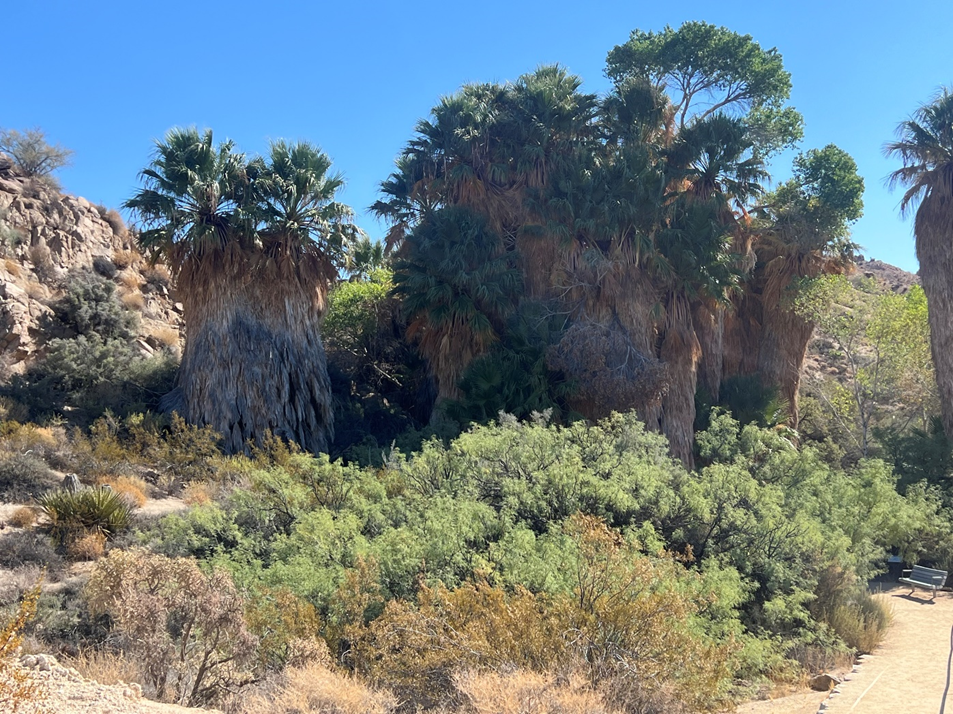
At the end of the road through the desolate Pinto Basin is an oasis growing around Cottonwood Spring, the most reliable source of water in the park:
Hidden Valley
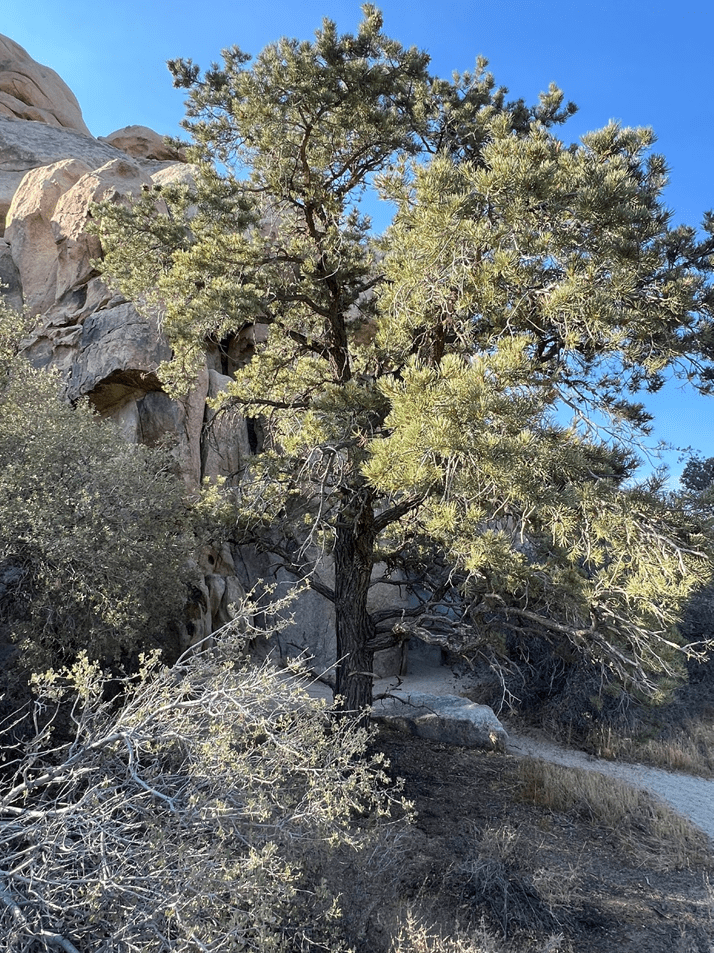
Perhaps my favorite place in the park is Hidden Valley, which is entirely surround by rock formations, with an entry point that is nearly hidden. The beautiful valley has a microclimate which permits plants not commonly found in the surrounding desert, such as the Pinyon Pine (Pinus pinaceae):
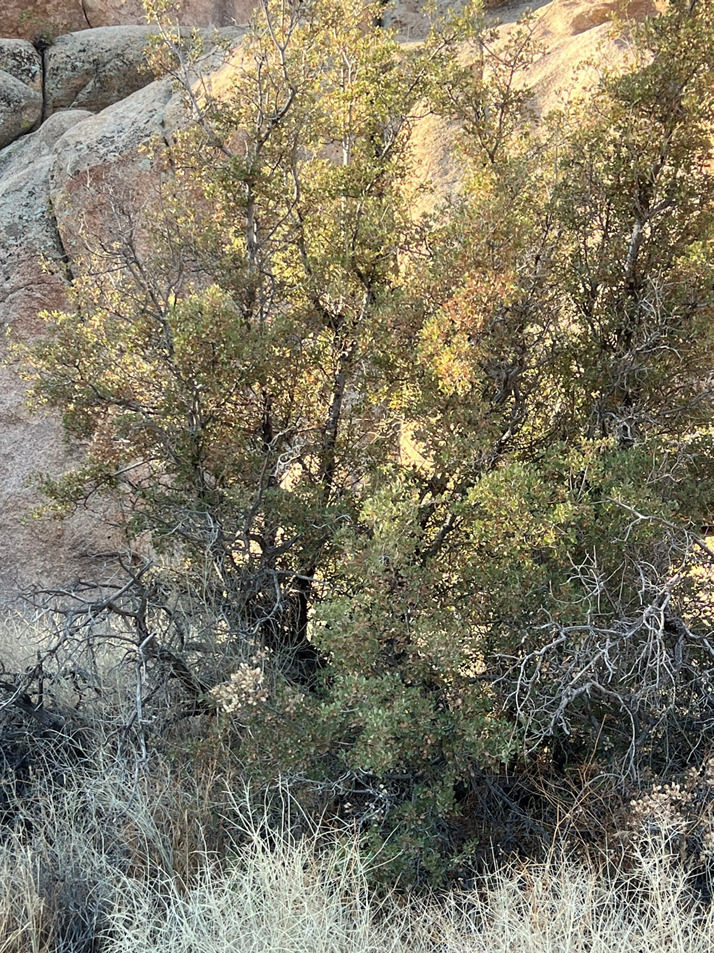
The Muller oak (Quercus cornelius-mulleri):
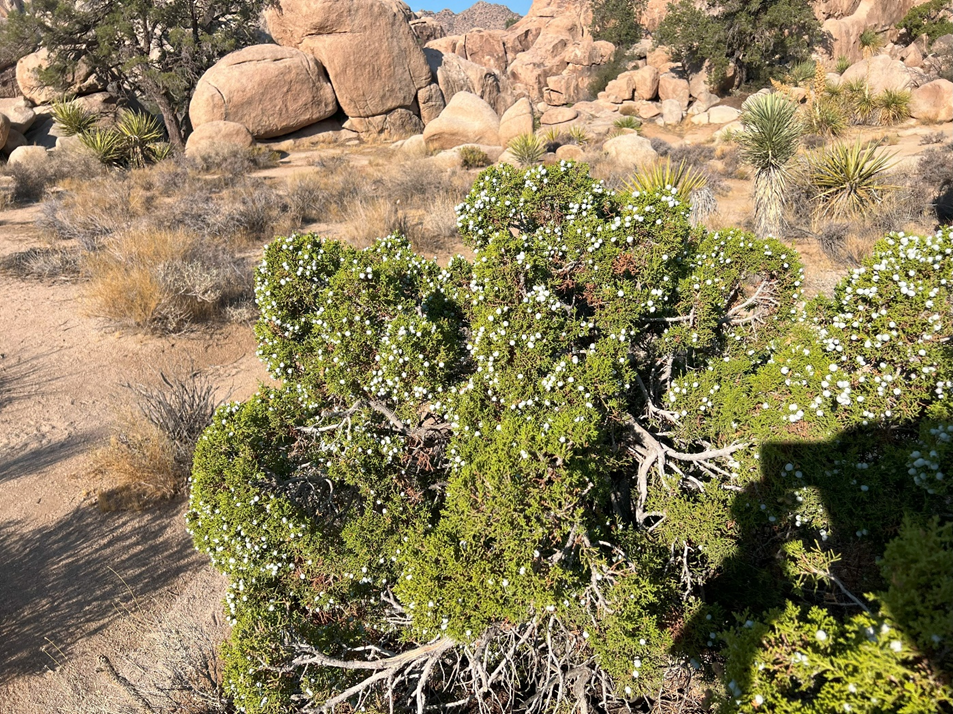
And the blue elderberry:
After lingering for some time in Hidden Valley, it was time to say farewell to the Joshua Tree National Park—but not the desert. Next stop: Saguaro National Park!


Leave a comment