Yellowstone National Park sits on a massive hot spot:
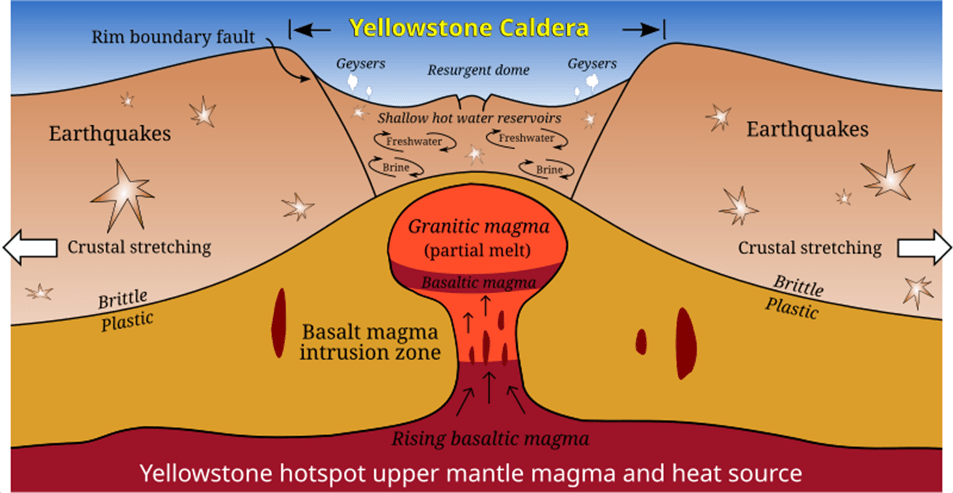
This is the source of most of the local geological activity including the spectacular geysers and magnificent hot springs.
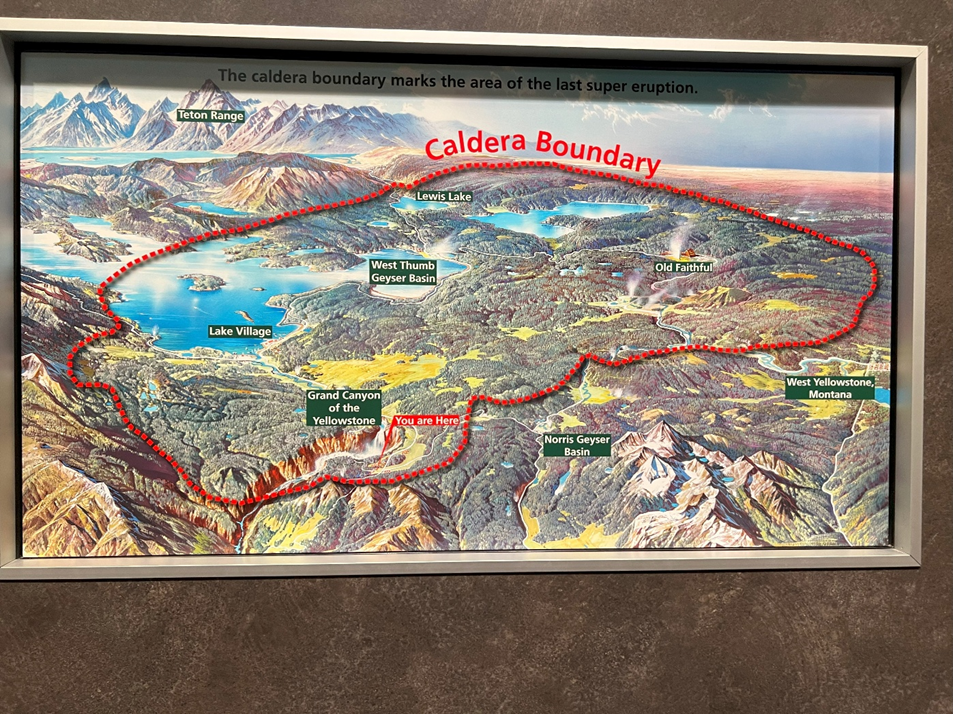
There was an enormous volcanic eruption here 630,000 years ago, which left a huge caldera (30x45mi) that now encompasses much of the park’s area of 3,500 square miles.
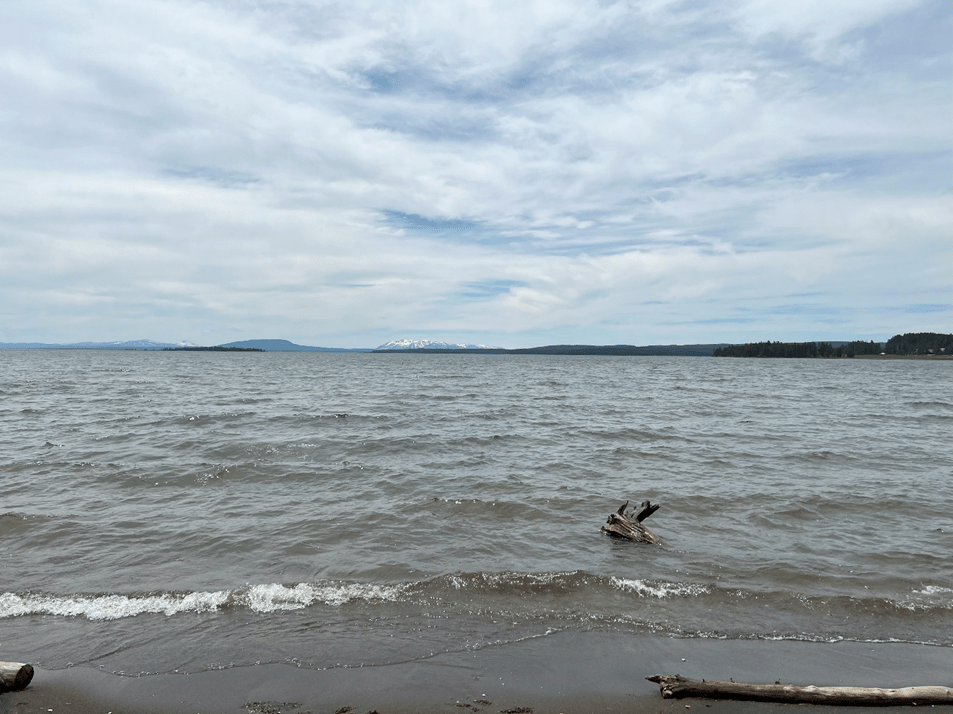
The next largest feature is Yellowstone Lake which covers 136 square miles with 110 miles of shoreline:
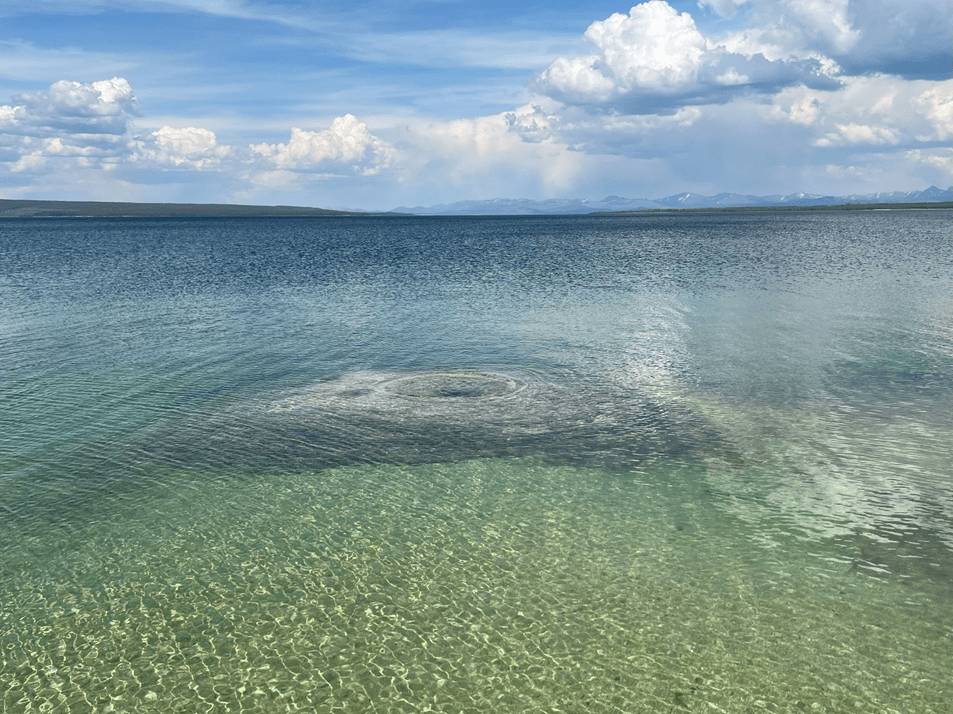
There are many hot springs on the bottom of the lake; here is one of them (Fisherman’s Cone) that is close to shore:
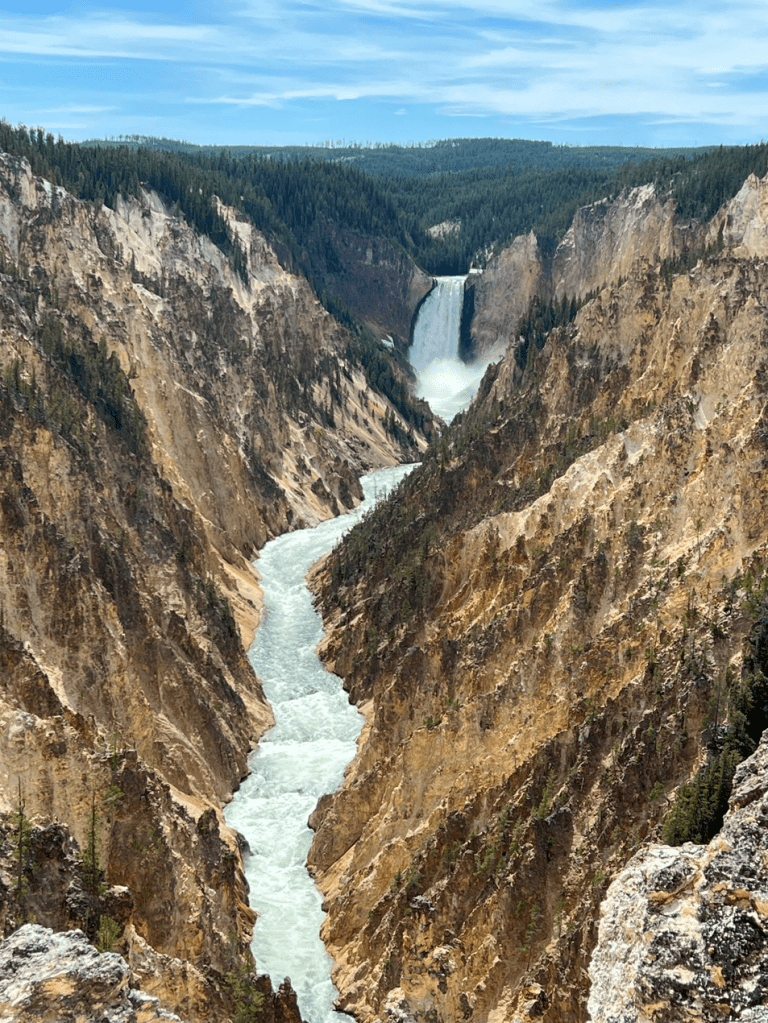
Another massive feature is the Grand Canyon of the Yellowstone, carved out by the Yellowstone River after the volcanic eruptions created cracks and weaknesses in the stone:
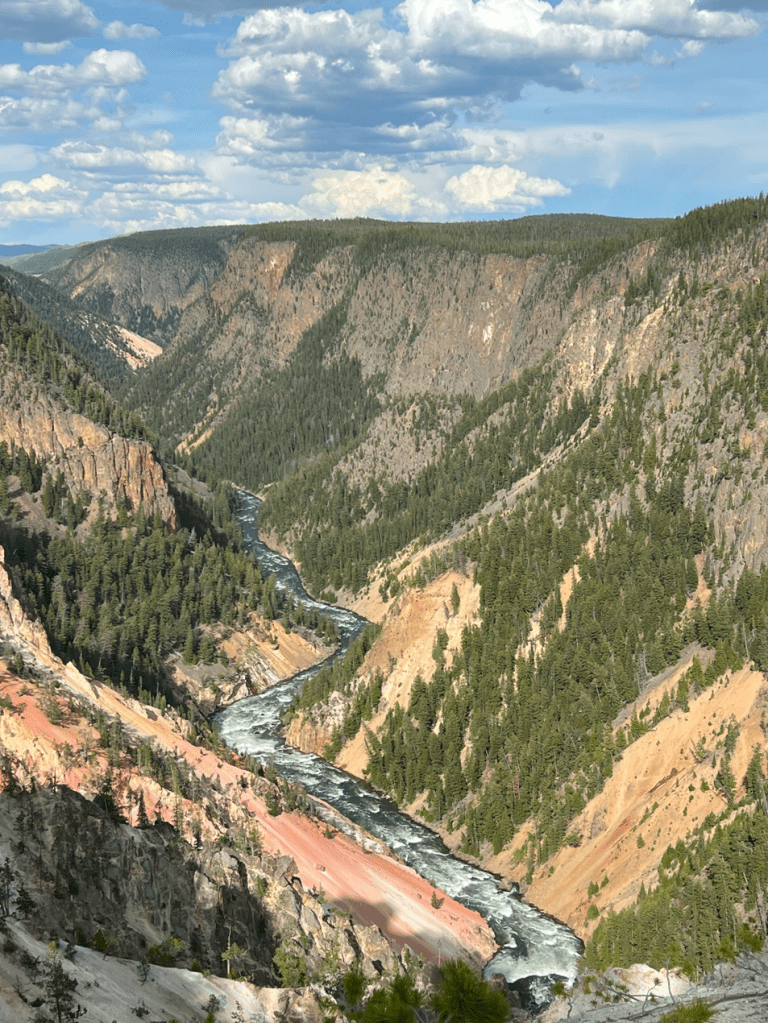
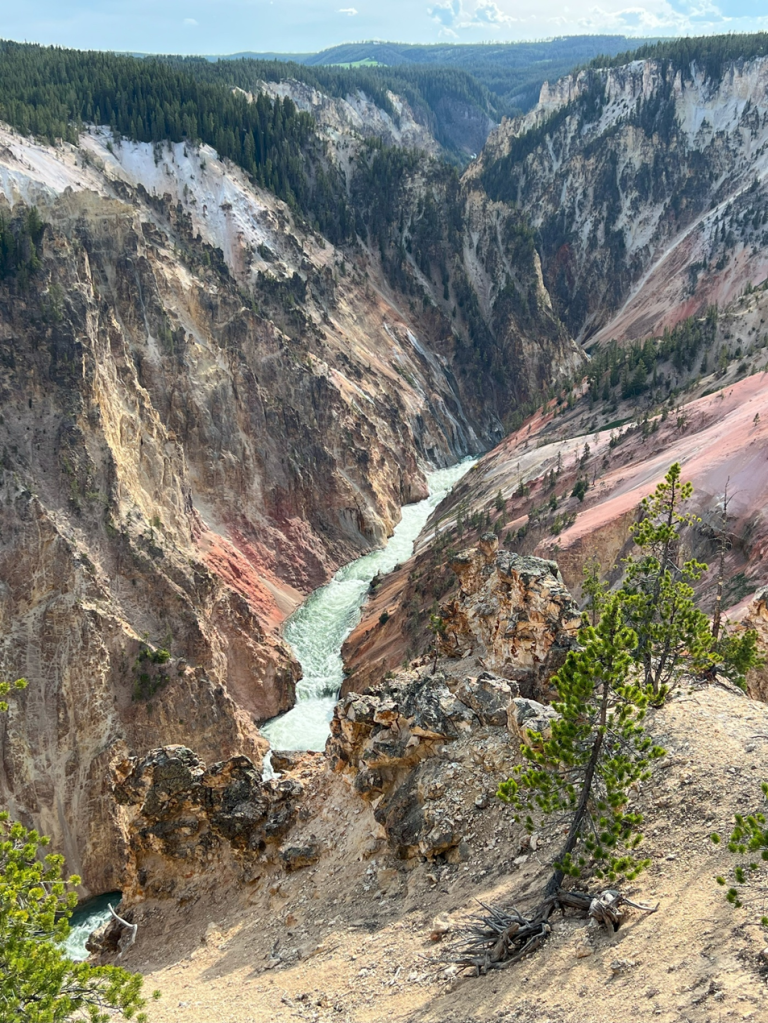
There is a spectacular waterfall as the Yellowstone River enters the Canyon:
Geysers, Hot Springs and Mudholes
Water seeps into the ground, is heated by the underlying hotspot and rises back up to the surface either as hot water or as steam; if the path is obstructed or narrowed this can result in a buildup of pressure and the water erupts in a spectacular geyser. The pressure is released and then builds up and is then released in a series of cyclic eruptions.
The most famous of these geysers, which erupts in a predictable way is Old Faithful:
Geysers, Hot Springs and Mudholes
Water seeps into the ground, is heated by the underlying hotspot and rises back up to the surface either as hot water or as steam; if the path is obstructed or narrowed this can result in a buildup of pressure and the water erupts in a spectacular geyser. The pressure is released and then builds up and is then released in a series of cyclic eruptions.
The most famous of these geysers, which erupts in a predictable way is Old Faithful:

The resulting eruptions are spectacular and exciting, like a huge firework display:
Most geysers are not so regular; this is a picture of Steamboat Geyser on June 19, the world’s tallest geyser—when it is erupting (here, it is just emitting steam):

The wait for the next eruption can be rather long:

Here is the impressive looking Castle Geyser:

While geysers are breathtakingly exciting when they are erupting and Yellowstone is home to more than 500 geysers (more than half of all the Geysers in the entire world!), I tend to prefer the tranquil beauty of the hot springs. Heare are a few lovely examples:
Abyss Pool:
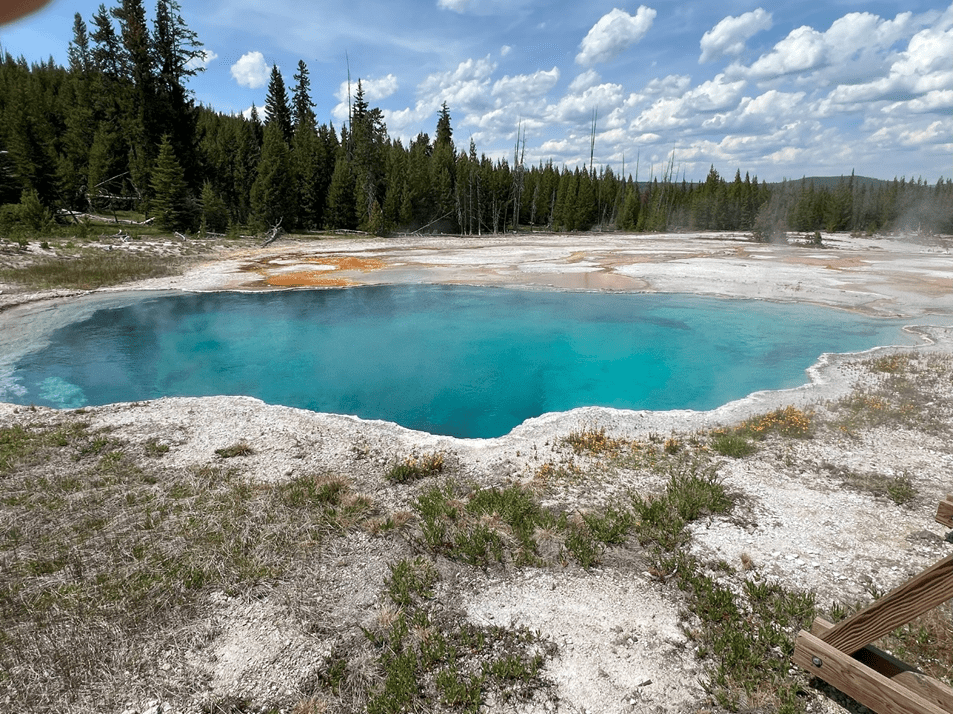
Black Pool (near the lake):
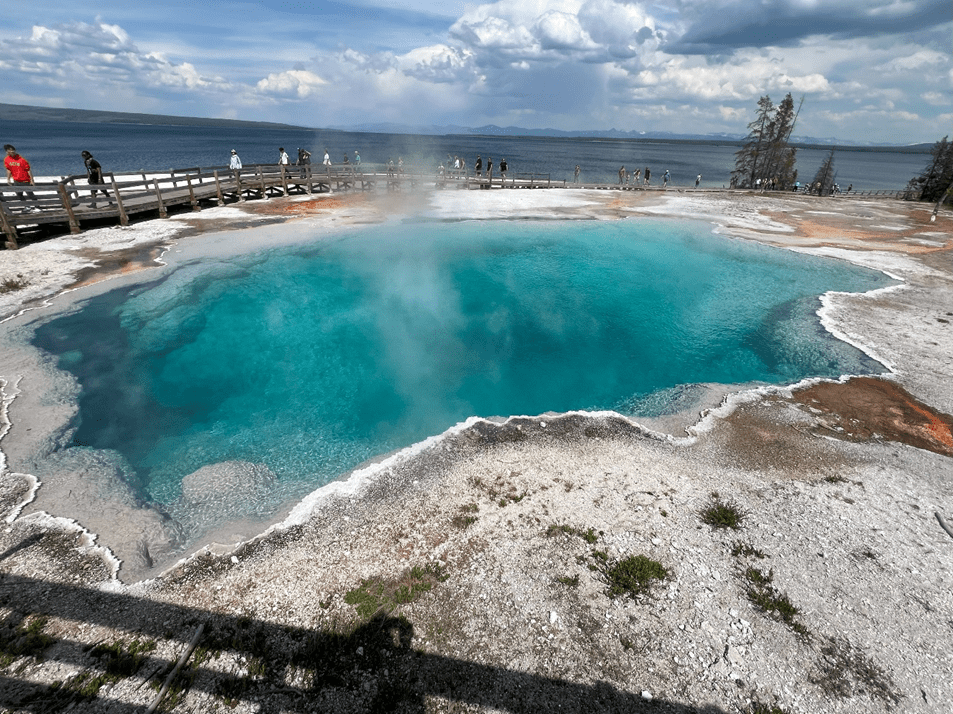
Heart Spring:

South Scalloped Spring:
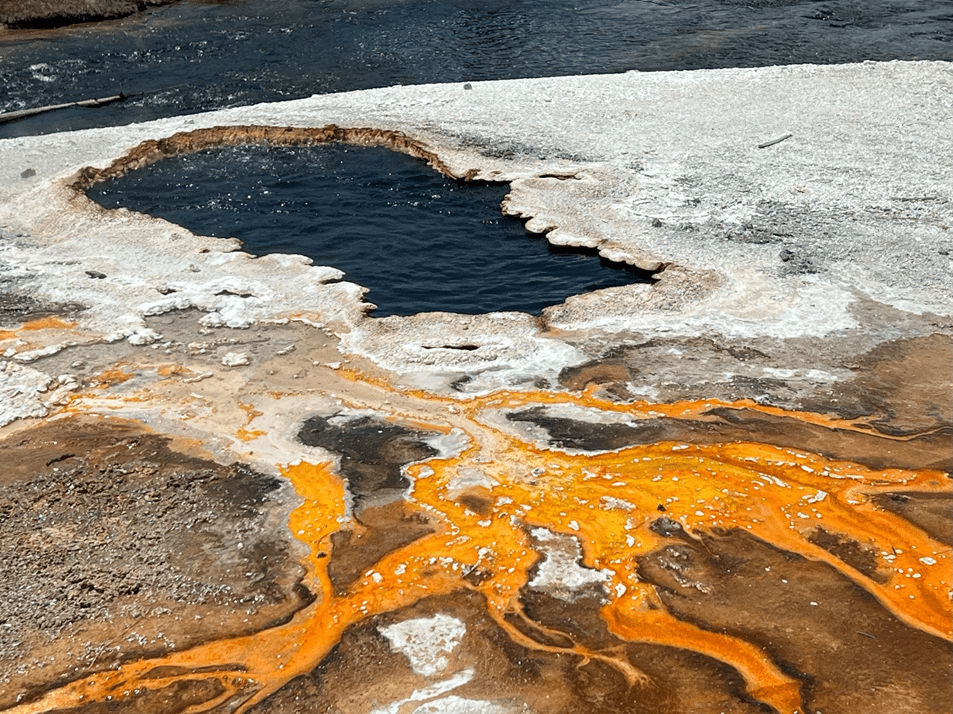
Emerald Spring:

Colloidal Pool:

Celestine Pool:
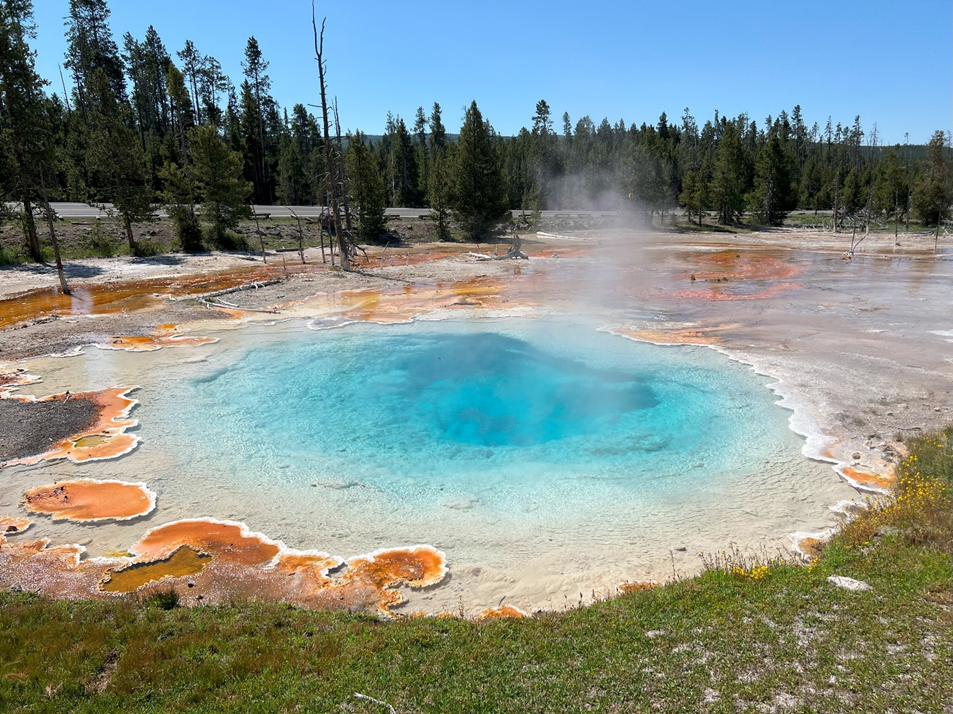
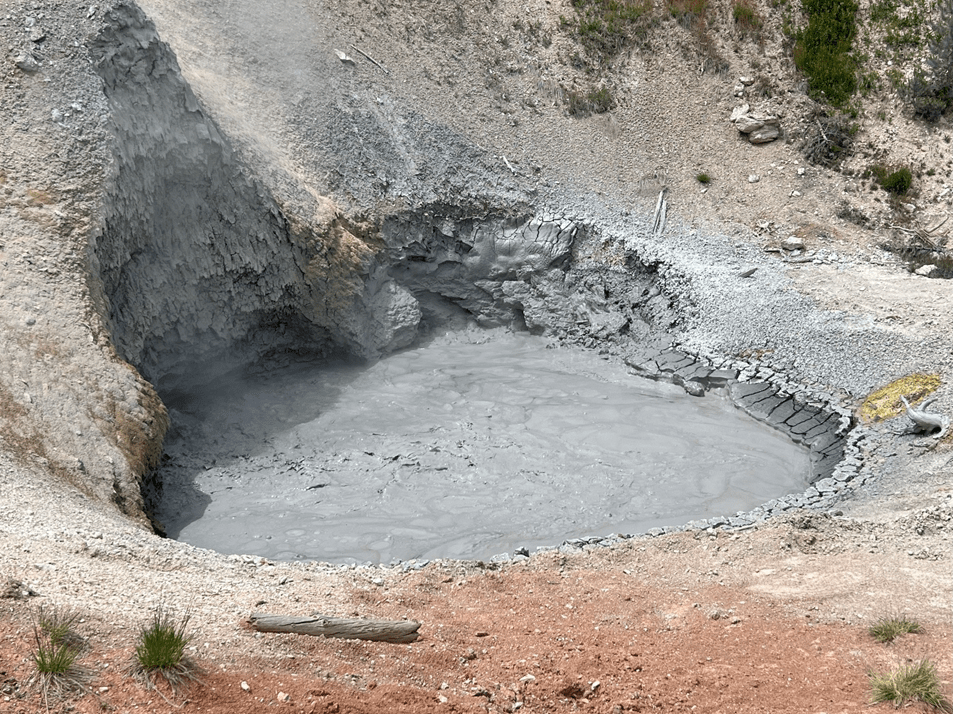
If the water in the hot spring is acidic, the surrounding rock is dissolved and the result is a bubbling mud pot; here is the Mud Volcano:
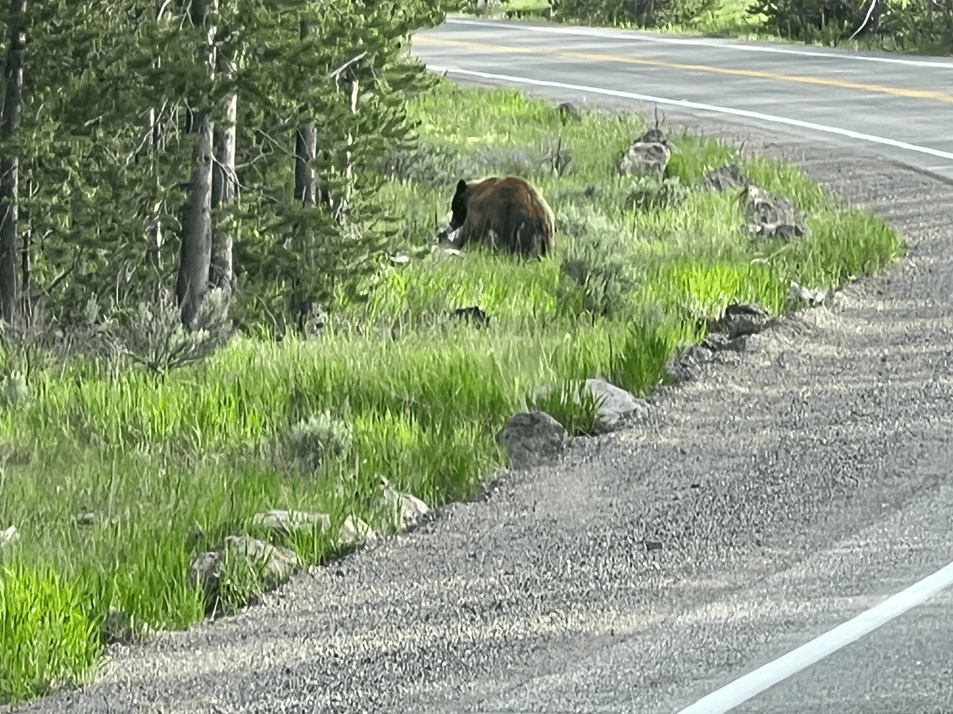
I would be remiss if I did not mention the plentiful wildlife; here is a bear by the roadside:
Here is a herd of elk:

And a herd of bison:

I glimpsed a pair of wolves on the Lamar Valley but unfortunately was unable to capture any images. Oh well, maybe next time…
At Mammoth Hot Springs hot water rises through limestone dissolving it through the action of carbonic acid and redepositing it at the surface of the form of travertine, which forms beautiful terraces at the surface.
Here is the Mound Terrace:

And the elaborate Minerva Terrace:

The visit to Yellowstone has been quite wonderful! Now I’m going to take a break to attend the Rotary Convention in Calgary, followed by a tour of the Canadian Banff and Jasper National Parks.


 Journey Across America
Leave a comment