A geologic “hotspot” is an area of the Earth’s mantle from which hot plumes rise upward, forming volcanoes on the overlying crust. Hotspots generally do not move with respect to the Earth’s mantle, but overlying crustal plates move over the hotspot. There are two well-known hotspots in the US, the Yellowstone Hotspot and the Hawaiian Hotspot.
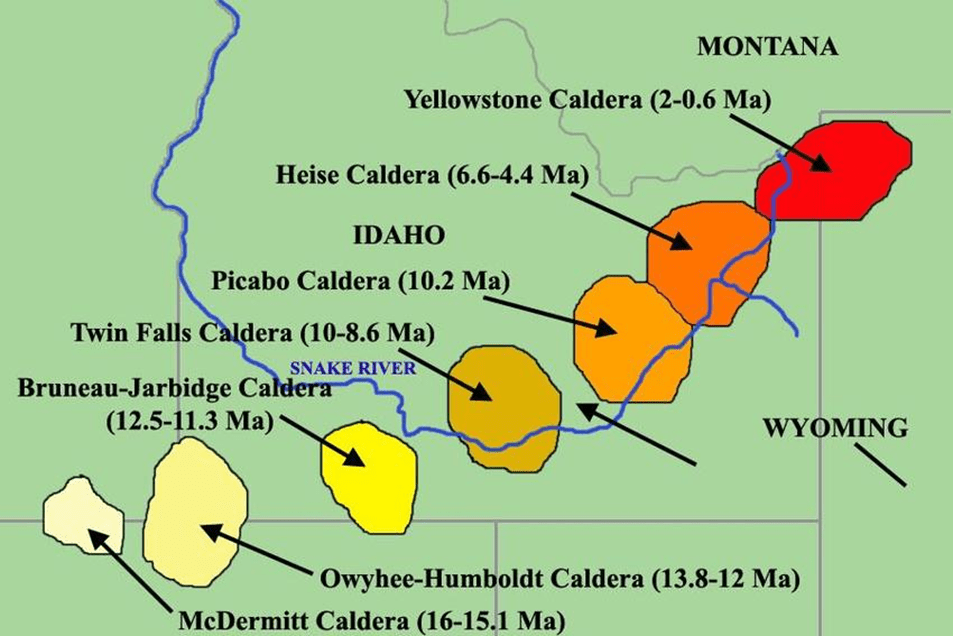
The apparent movement of the Yellowstone Hotspot is shown below:
The Craters of the Moon National Monument is located at the site of a recent eruption (2000 years ago) along the path of the Yellowstone hotspot. The results of the lava flow and craters resemble the surface of the moon:
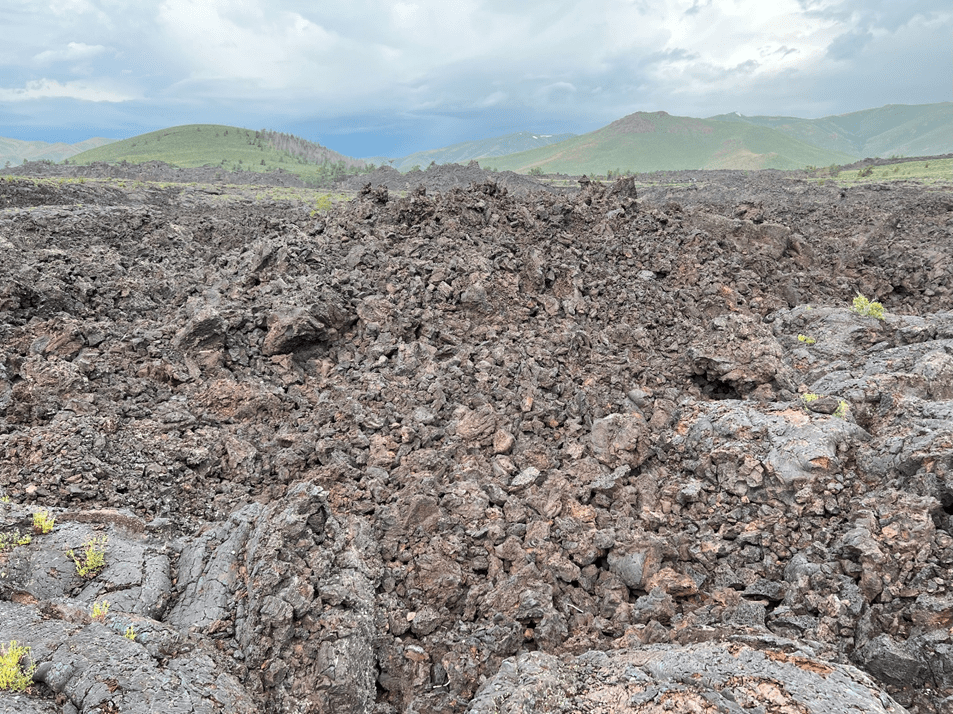
Along the North Crater trail, there are a number of crated fragments “rafted” here by the lava flow:
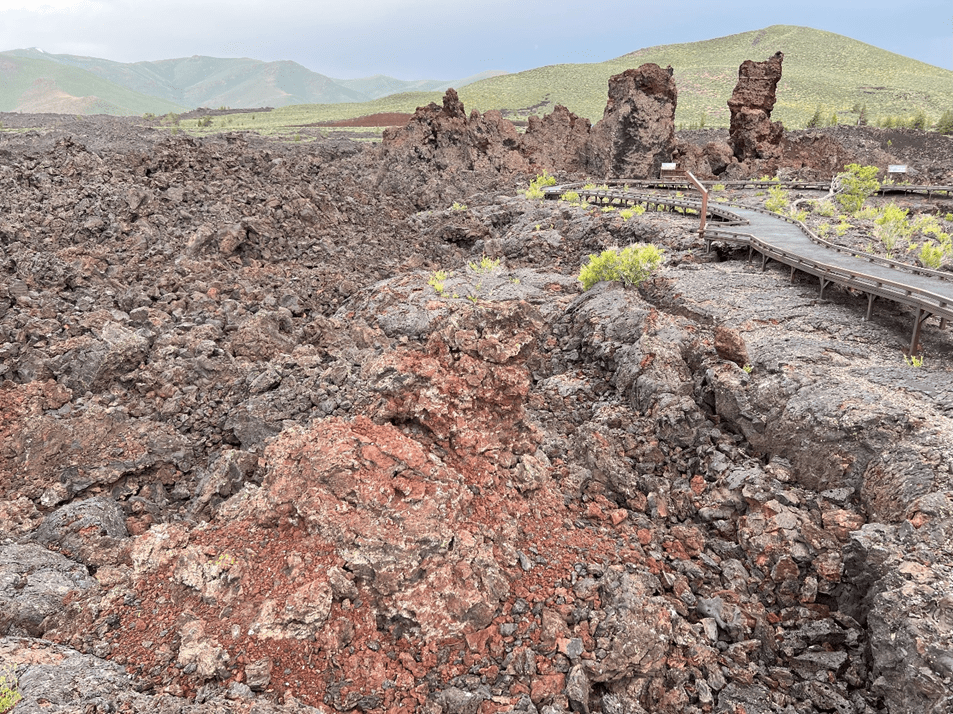
In spite of the general bleakness of the landscape, life has found many footholds:
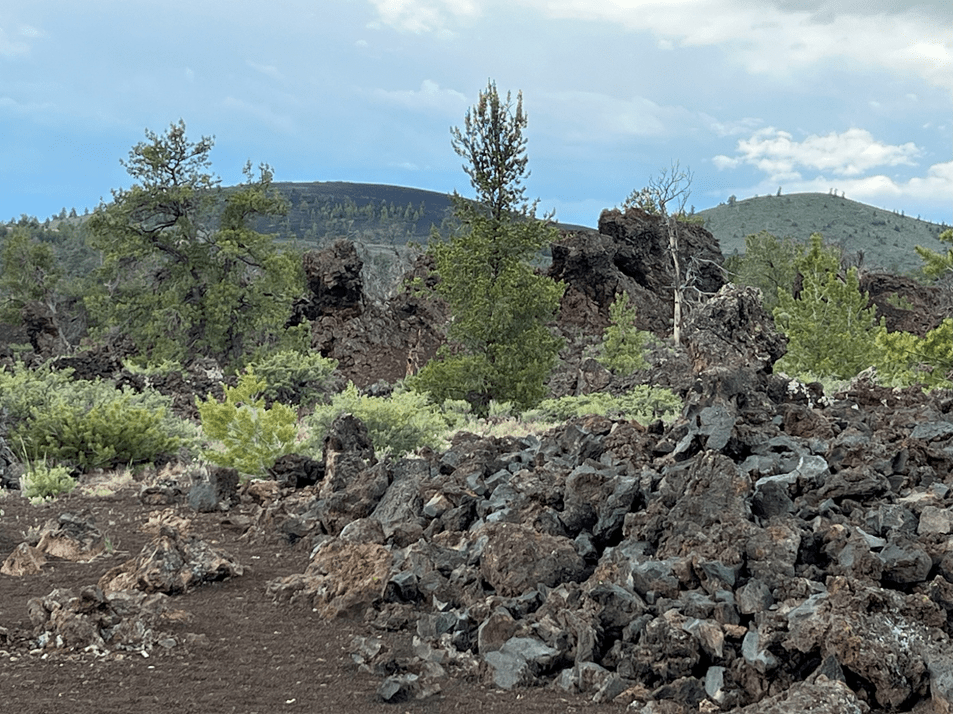
There are plenty of beautiful wildflowers:

Among the more intriguing features are the lava tubes; here is the entrance to Indian Tunnel:

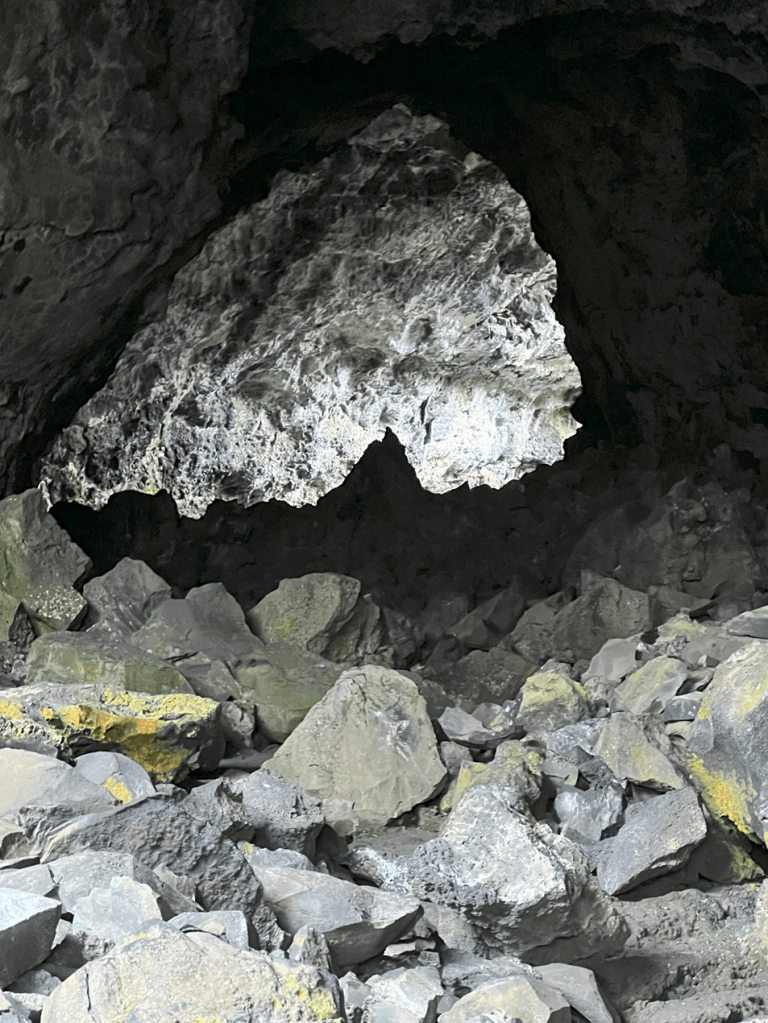
And here is part of the tunnel itself, the roof towering more than 30 ft above the surface:
Here is Inferno Cone, a dark cinder cone; it looks like an easy climb to the top:
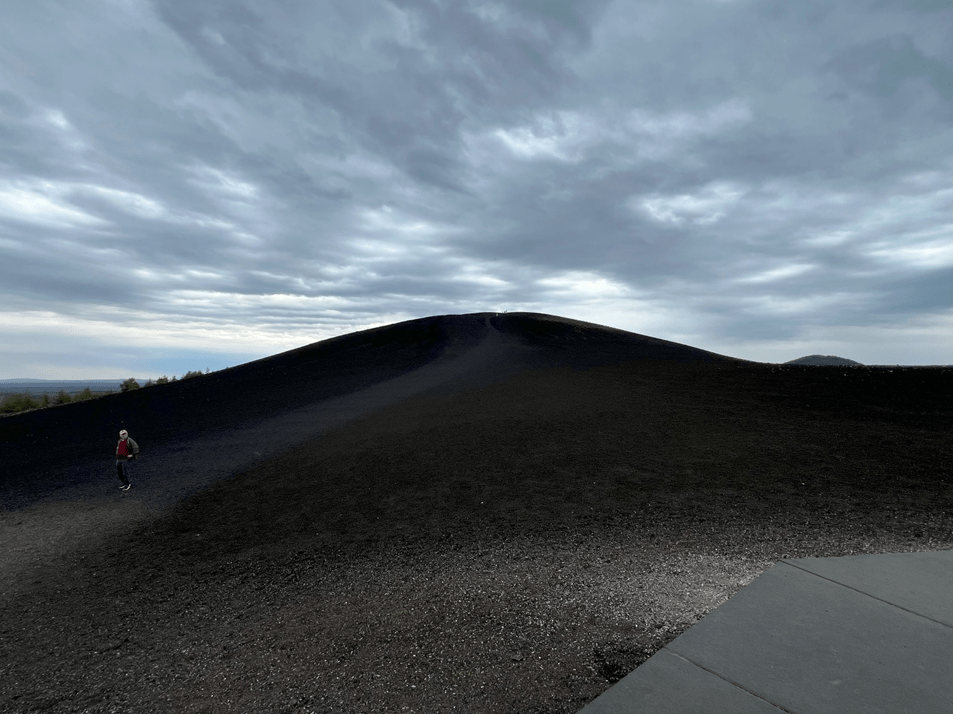
Looking from the side, one can see that the climb is a lot longer than it appears from the base:

Nearby are some “splatter cones,” the sites of ejected lava, forming some evocative patterns:
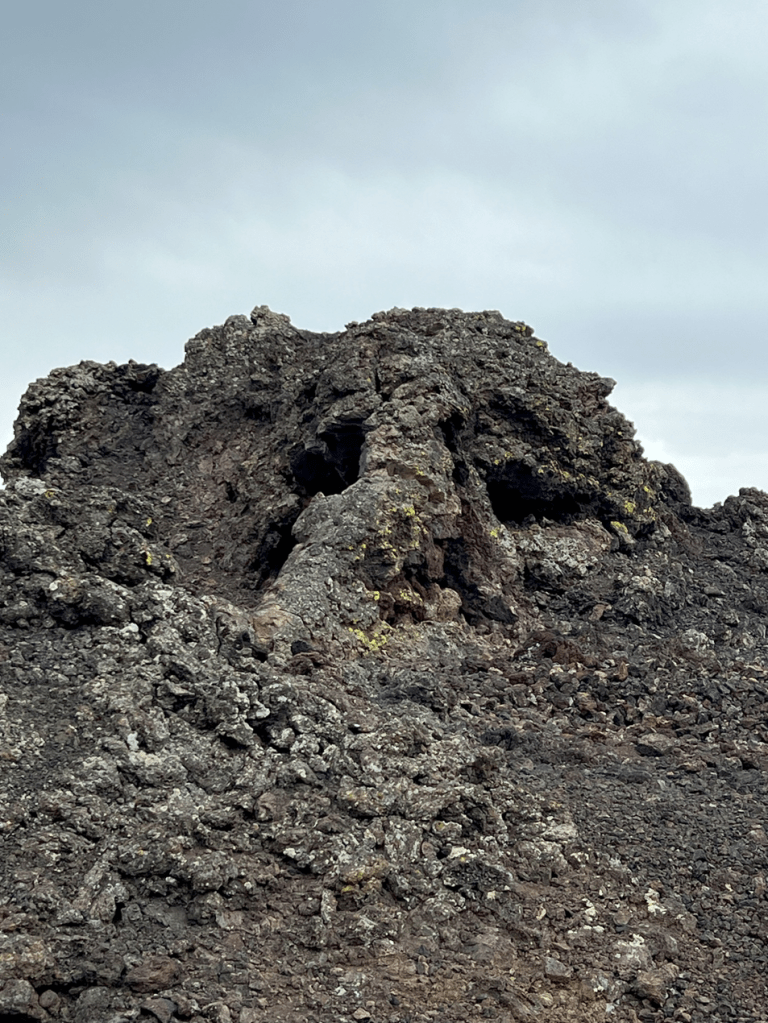
The craters are very deep inside:

Now I’m going to follow the “path” of the hotspot towards Yellowstone.

 Journey Across America
Leave a comment