
The Great Basin is a region lying northwest of the Colorado Plateau bounded by mountain ranges with no external drainage. The Great Basin National Park lies close to the border between Nevada and Utah, on the Nevada side; it overlooks the southern end of the Great Salt Lake Desert:
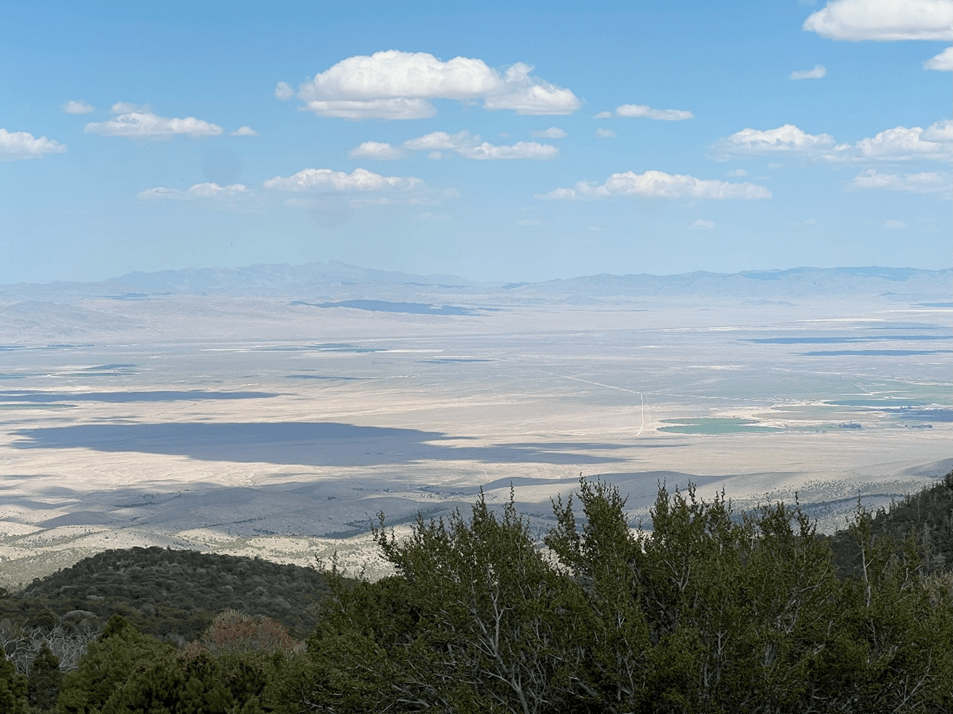
Mountains and Forests
The park rises from the desert floor through 8,000 feet and includes Wheeler Peak at 13,063 ft. and encompasses no fewer than seven distinct ecosystems; after my time in the beautiful, but arid, Colorado Plateau, I was most interested in the subalpine montane forest system (I spent 37 years in the Pacific Northwest and this felt very much like home). Here is a view of Wheeler Peak from the top of the sub-alpine zone:

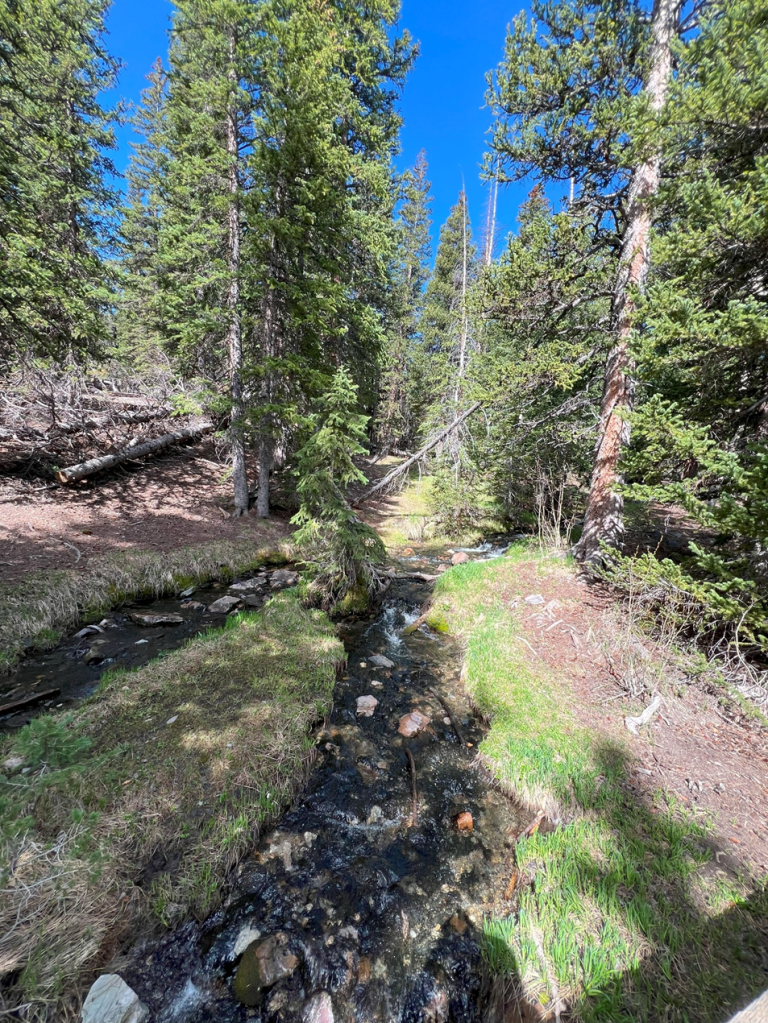
Small streams flowing through forests:
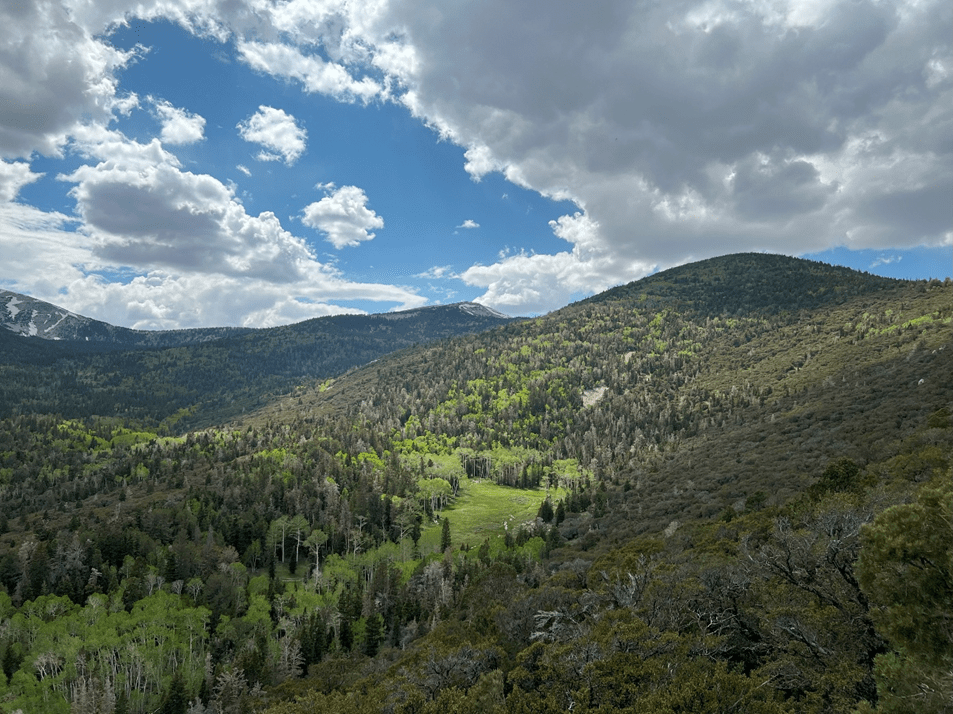
Green landscapes:
Snow on the trails:

Aside from luxuriating in the forest, I focused on two features in the Park. One was the extensive cave system (40 caves) the other was the bristlecone pines.
Lehman Caves
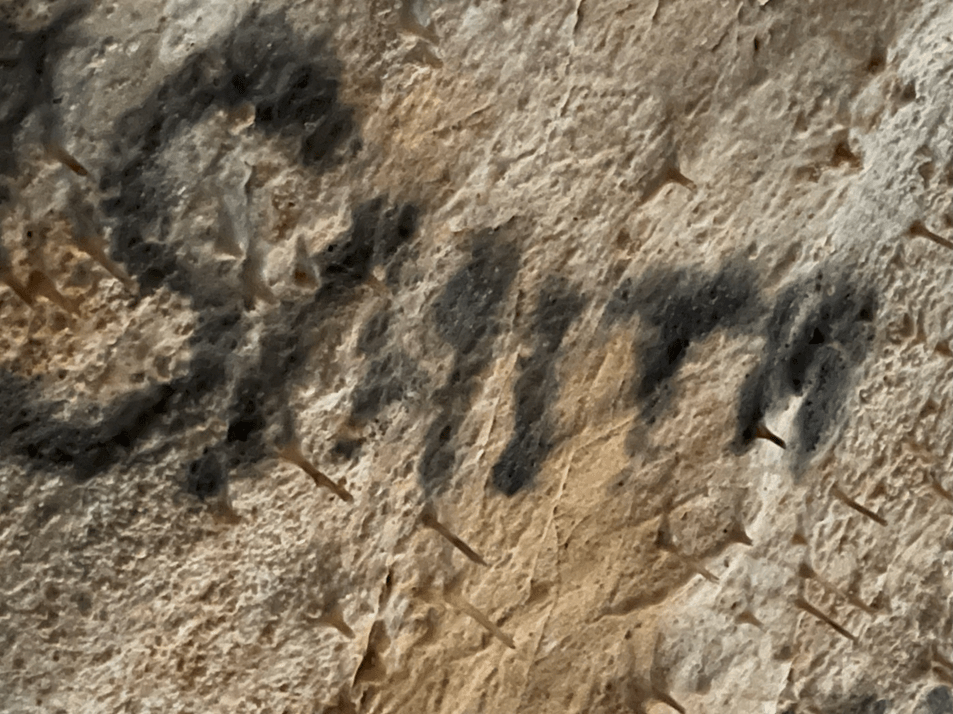
The Lehman Caves are the longest cave system in the state of Nevada. These caves were used as burial locations by Native Americans; the remains were initially removed for study but have now been restored. The caves were “rediscovered” by Absolom S Lehman and tours of the caves started in 1885. The early tourists used candles for illumination and some left carbon signatures on the ceilings of the entrance caves. These are now sufficiently old that they are being preserved by the National Park Service:
These limestone caves have many beautiful features:

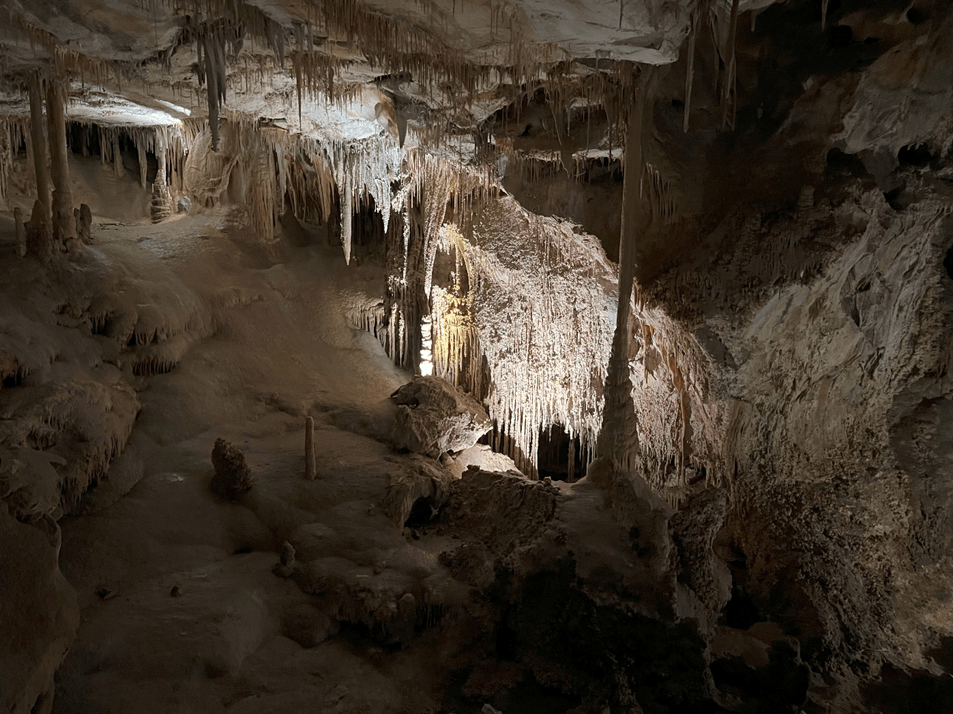
But the most iconic feature of these caves are parachute shields:

There are more than 500 shield formations in the Lehman Caves and these are rare in other limestone caves (e.g., Carlsbad Caverns).
Bristlecone Pines
Bristlecone Pines are the oldest living things on earth; some are nearly 5,000 years old—as old as recorded history. They thrive at about 10,000 feet, just below the treeline. There are only two places in the US where they can readily be seen (the other one is in the White Mountains of California).
Here are a couple of bristlecones; note the characteristic “bristle-like” shape of the needles on the branches:

Here is another iconic example:
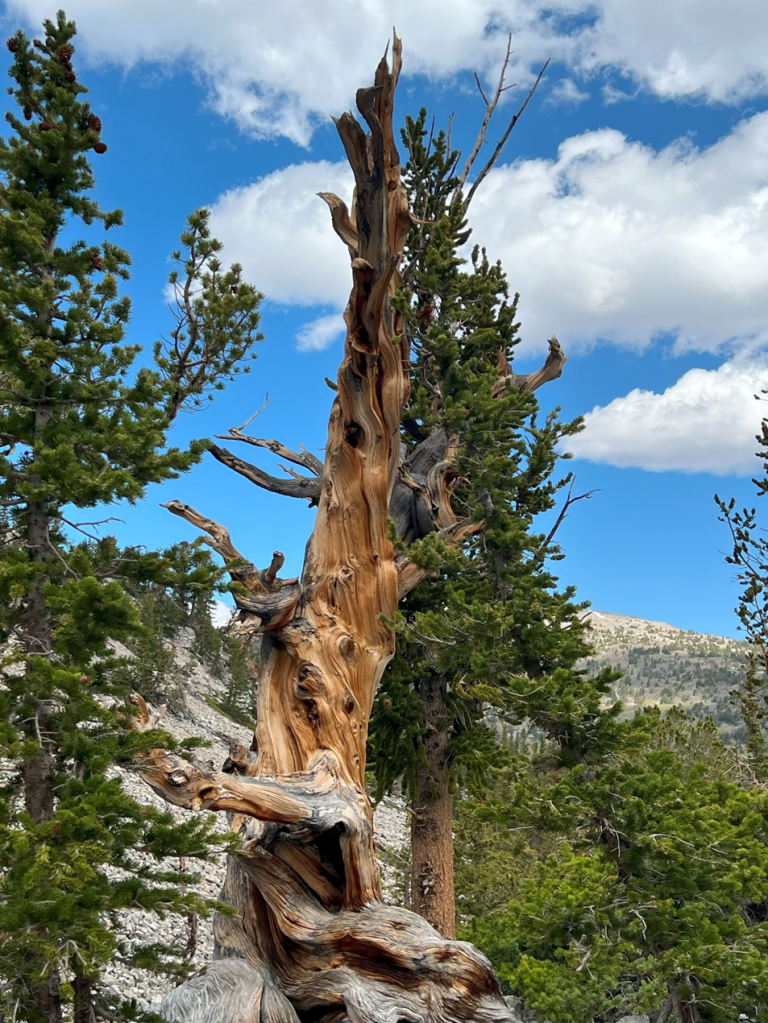
The tree below was born somewhere between 950 and 1100 BCE, during the Egyptian New Kingdom and probably somewhat before the biblical Exodus.

Now I’m heading into lands shaped by volcanic fire, starting with the Craters of the Moon.

 Journey Across America
Leave a comment