Geology
Carlsbad Caverns consist of solutional limestone or “karst” caves. They are generally formed when water containing dissolved carbon dioxide (forming a mild acid) seeps down through the limestone to the top of the water table, where they dissolve part of the limestone at the interface:
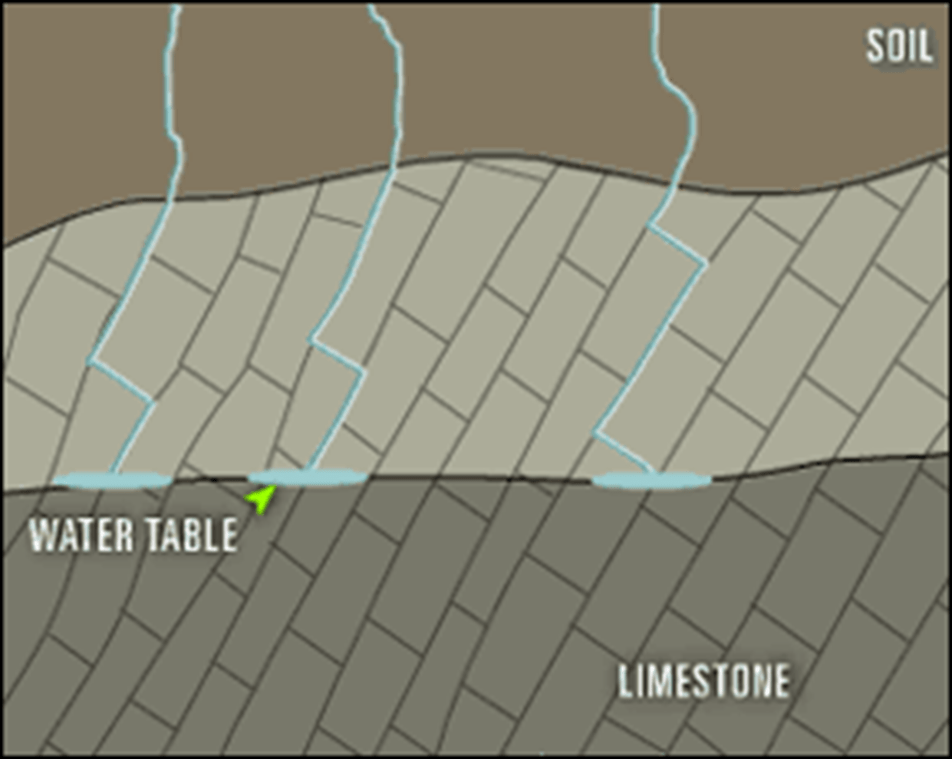
This process forms the caves, and as the water table falls (and/or the caves are uplifted) the carbonated water starts to seep through the ceiling of the caves forming the characteristic formations (stalactites, stalagmites, columns and so on):
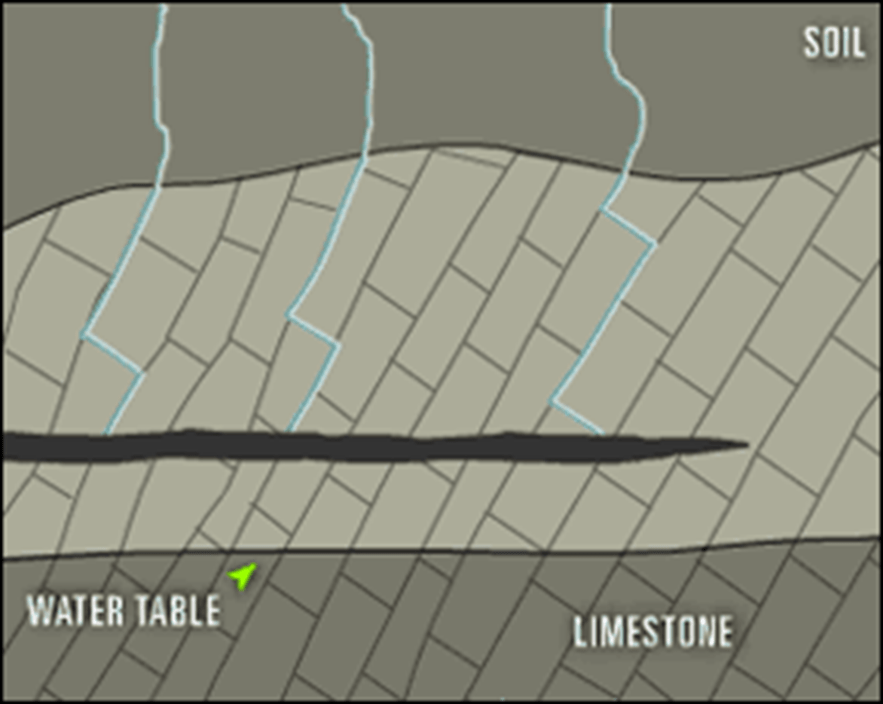
(The above diagrams were copied from a PBS Nova website.)
At Carlsbad, a portion of the acid forming the caves is sulfuric acid formed when hydrogen sulfide gas rises from reservoirs of petroleum below.
Accessibility
From the Visitor Center at the surface, I was whisked down 850 ft in an elevator to the entrance to the “Big Room,” the largest cave chamber in North America (4000 ft long, 635 ft wide and 255ft at the highest point):
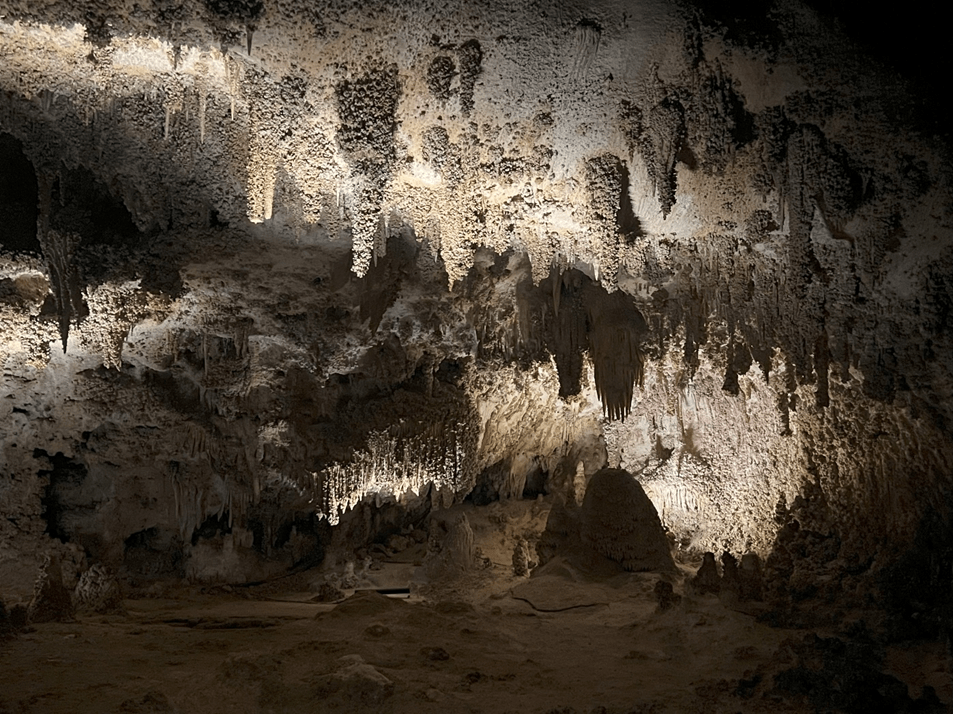
I could not help but marvel, not only at the spectacular cave, but also at how accessible the National Park Service had made these wonders. Of course, there is a trade-off between accessibility and solitude. When I was younger, I placed a larger value on solitude, but as my knees become creakier, I am placing an increasingly higher value on accessibility. In any case, the cave was sufficiently large that (after my fellow elevator travelers had dispersed) I did not encounter many people and was able to observe many of the wonders in contemplative silence.
Formations
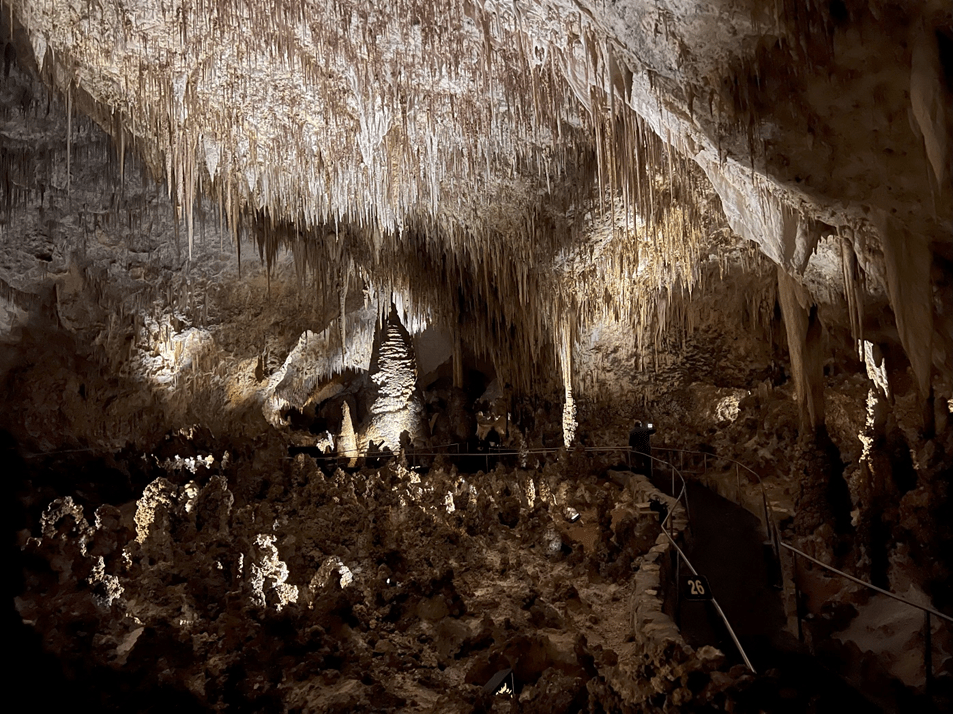
As water containing dissolved limestone drips from the ceiling, it can solidify into straw-like structures:
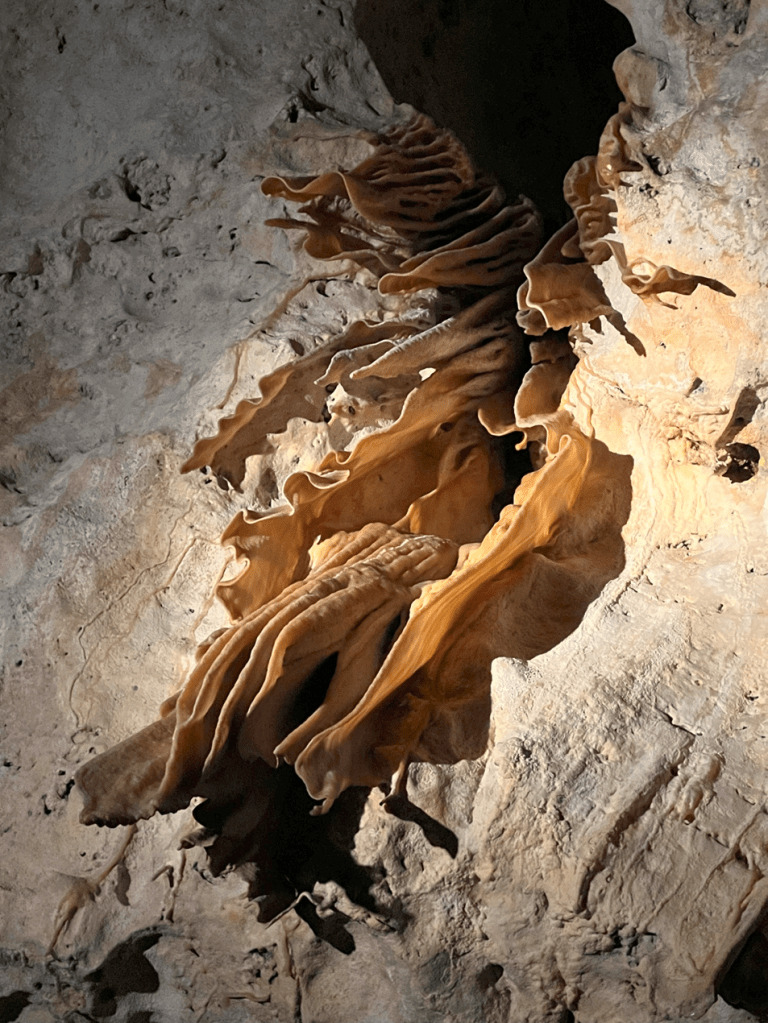
Formations resembling delicate draperies can also form:
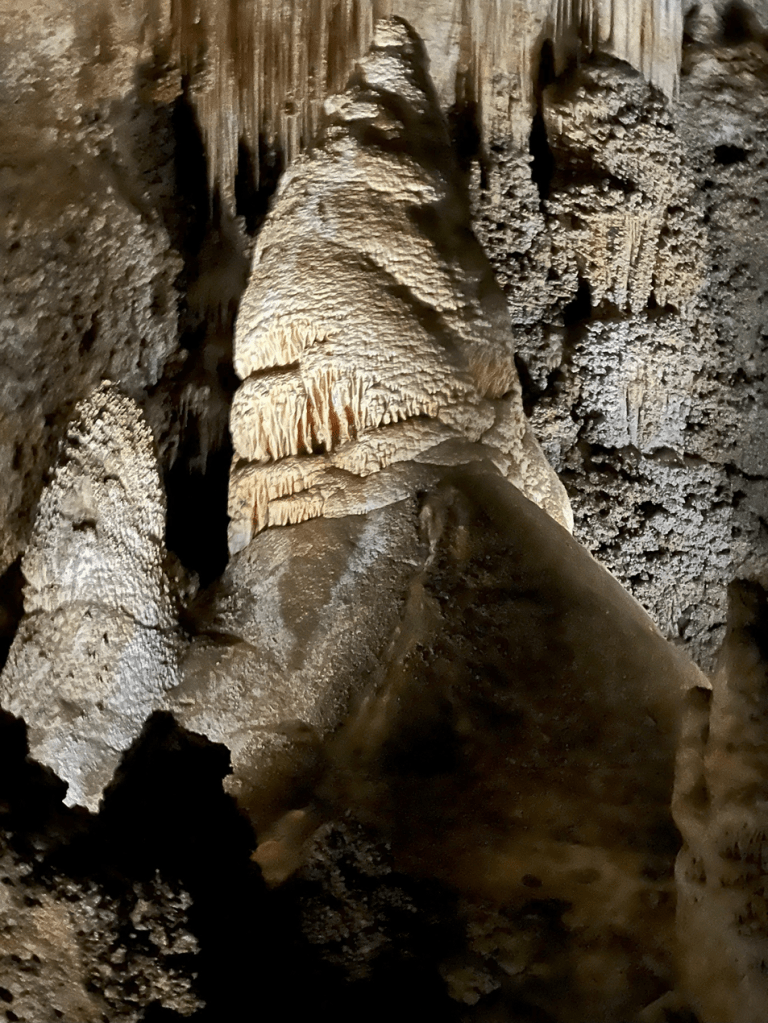
Over time, the dissolved limestone dripping on to the floor forms stalagmites, which can grow into very substantial structures:
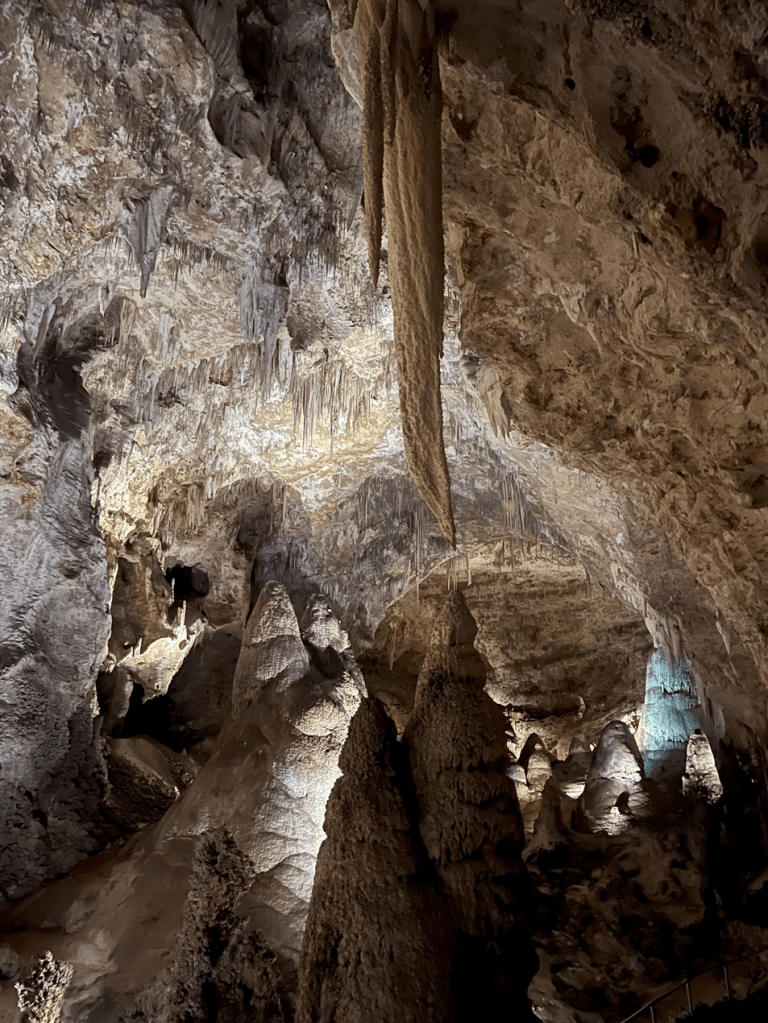
Stalactites can grow downward to meet stalagmites and form columns; this stalactite has nearly met the stalagmite beneath it:
For these two, contact has been achieved:
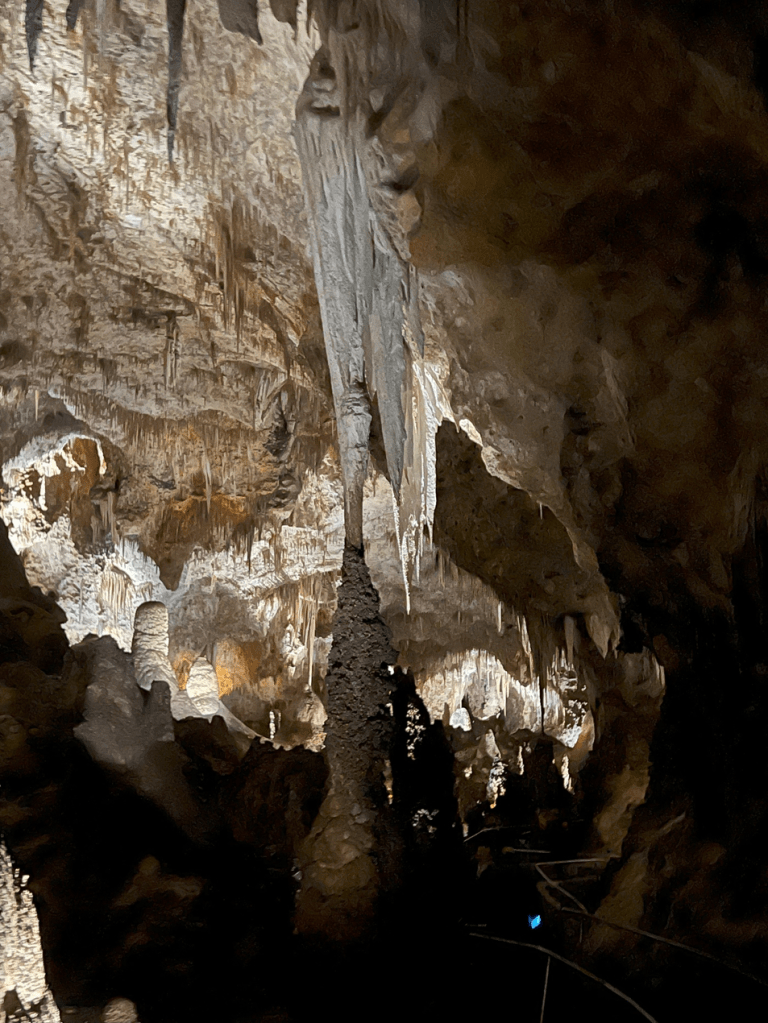
Post-contact, the flow pattern changes, forming new “decorations:”
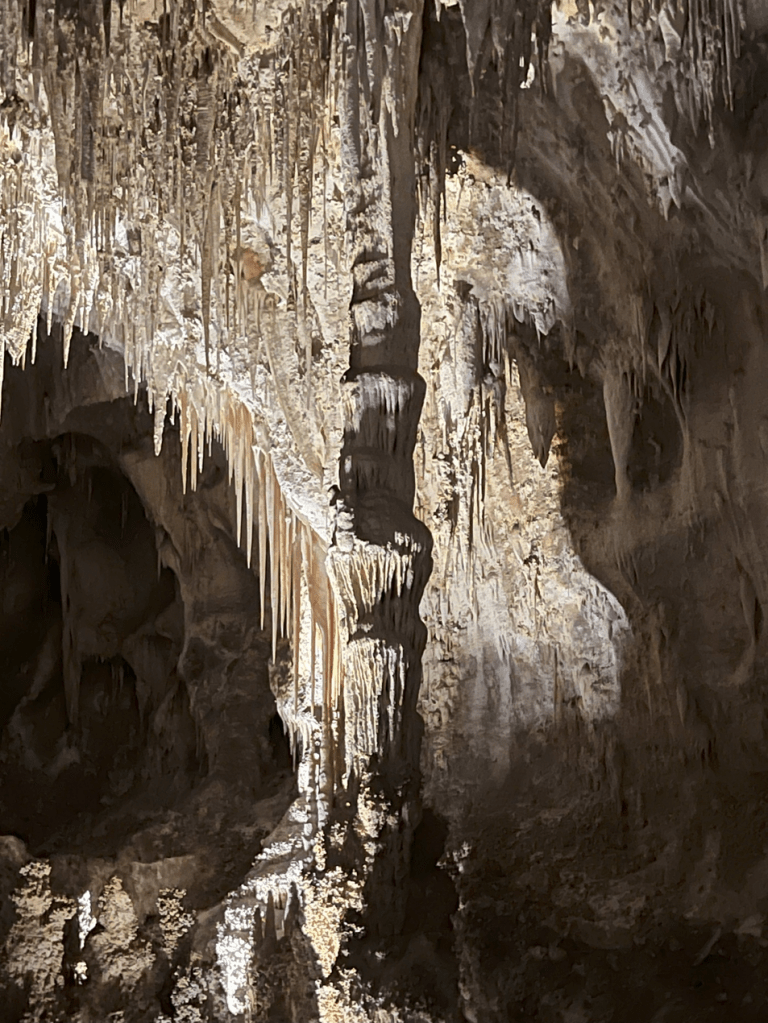
In addition to the limestone structures there are beautiful clear pools:
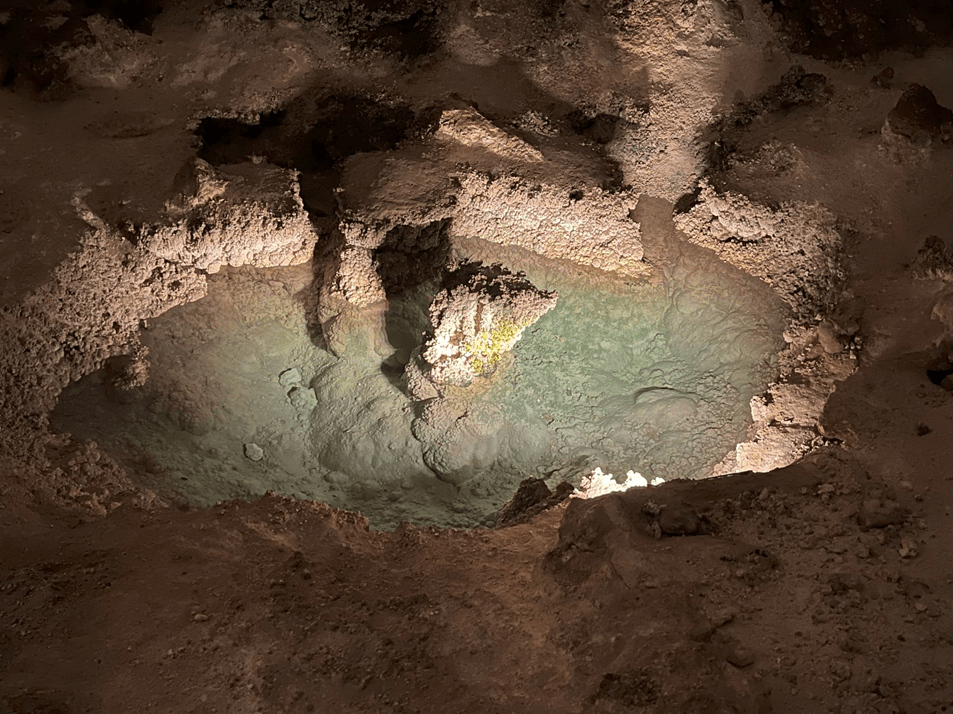
And a “bottomless” pit:
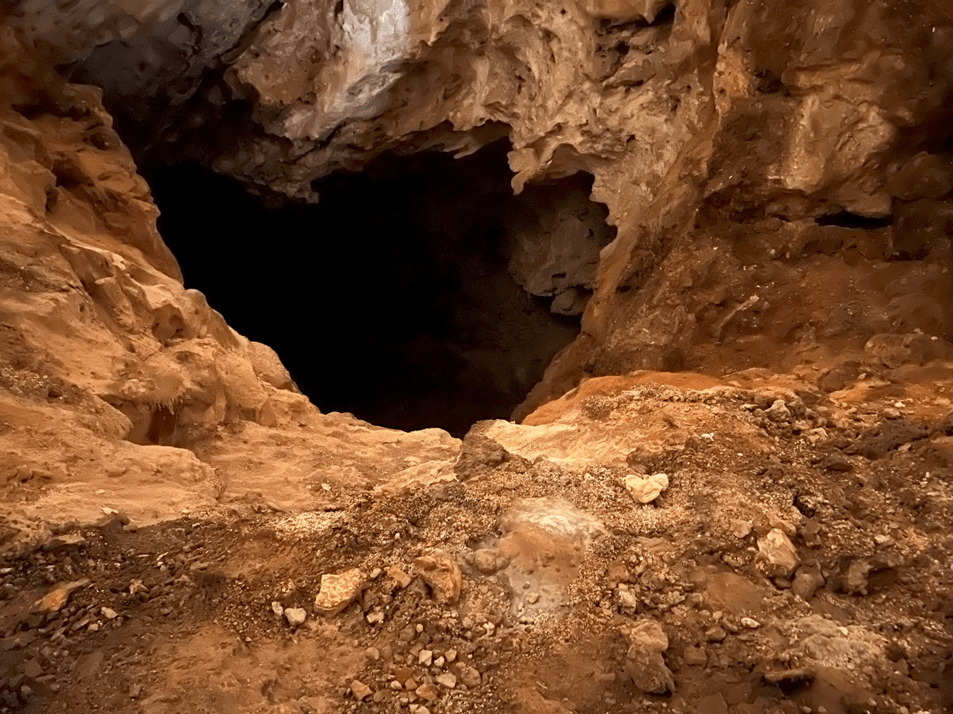
The “Bottomless Pit” is actually about 140 ft deep; it acquired its name because there is a layer of compliant material at the bottom and rocks thrown into the pit make a soundless (soft) landing, creating the illusion that they never hit bottom.
Evocative Formations
The shapes of the formations in the cave really stimulate the imagination and many of them have acquired names; these structures resemble lily pads:
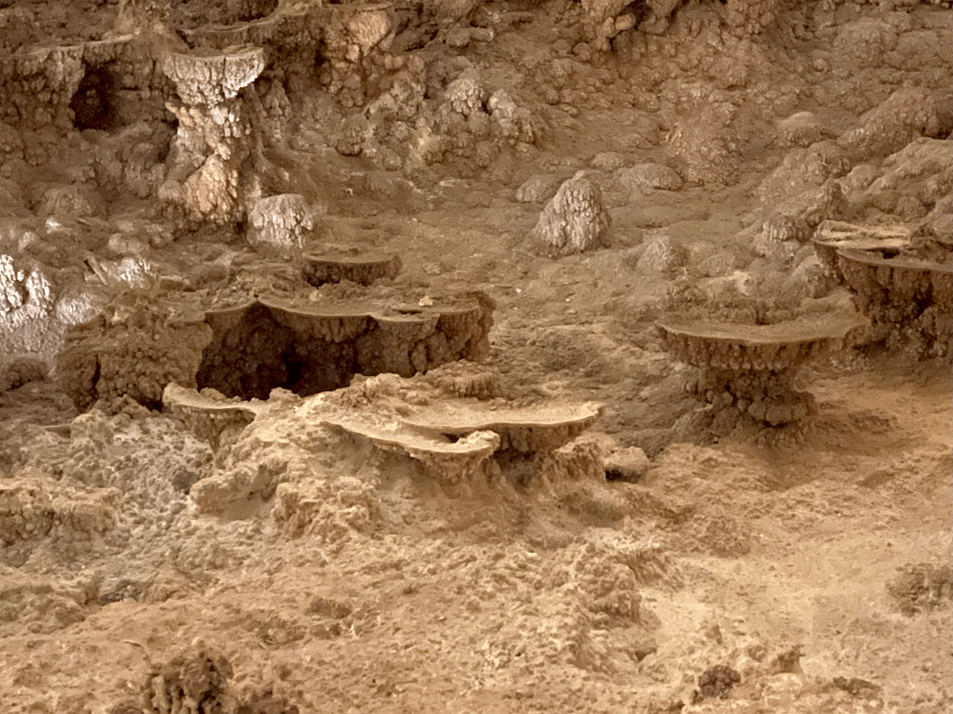
The largest stalagmite in the cave has acquired the name “Silent Bell:”
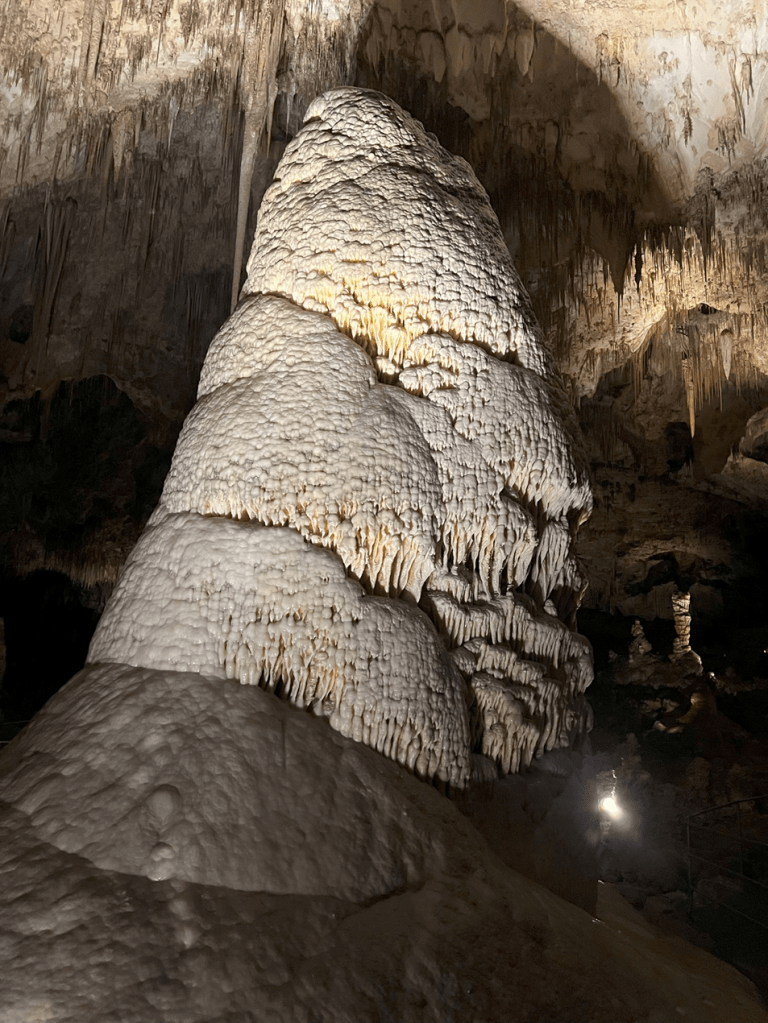
This collection of structures has been called “Fairyland:”
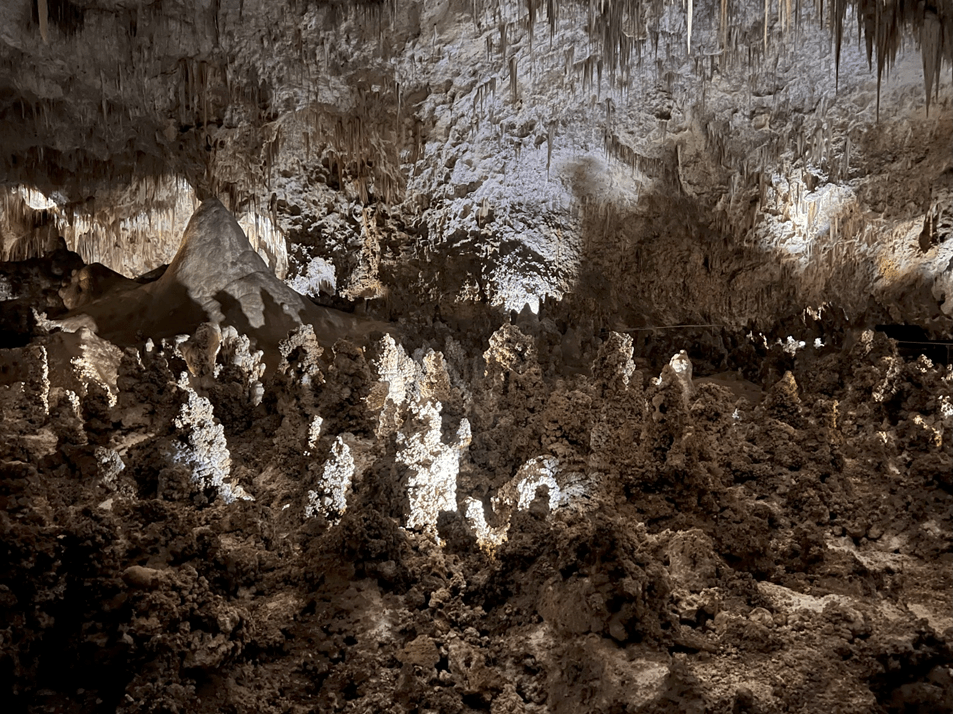
The “Temple of the Sun:”
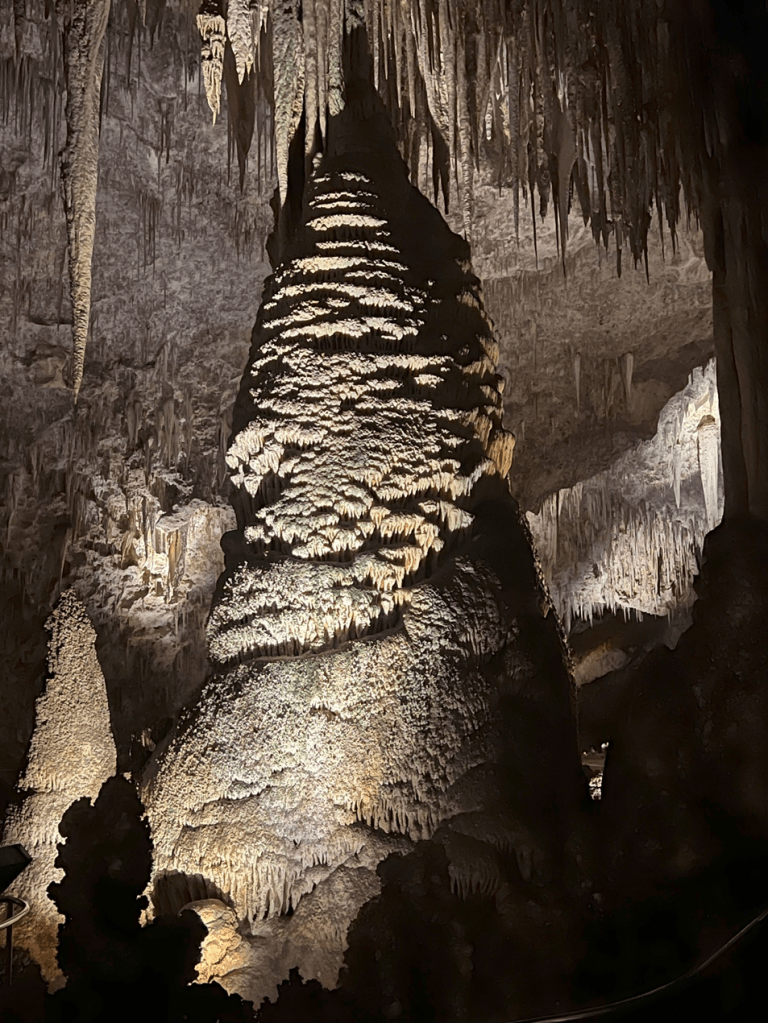
Some of the stalactites terminate in “knobby cave decorations; this one reminds me of a shrunken skull:
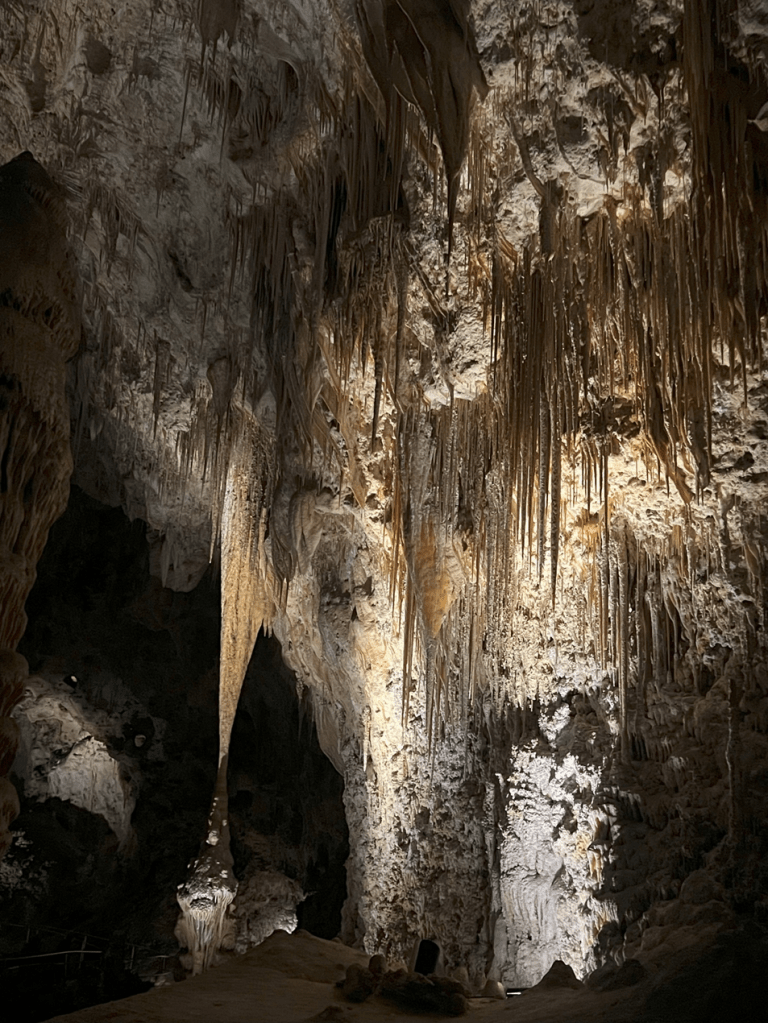
My favorite group of formations is the this one, which I think of as the “hall of sages:”
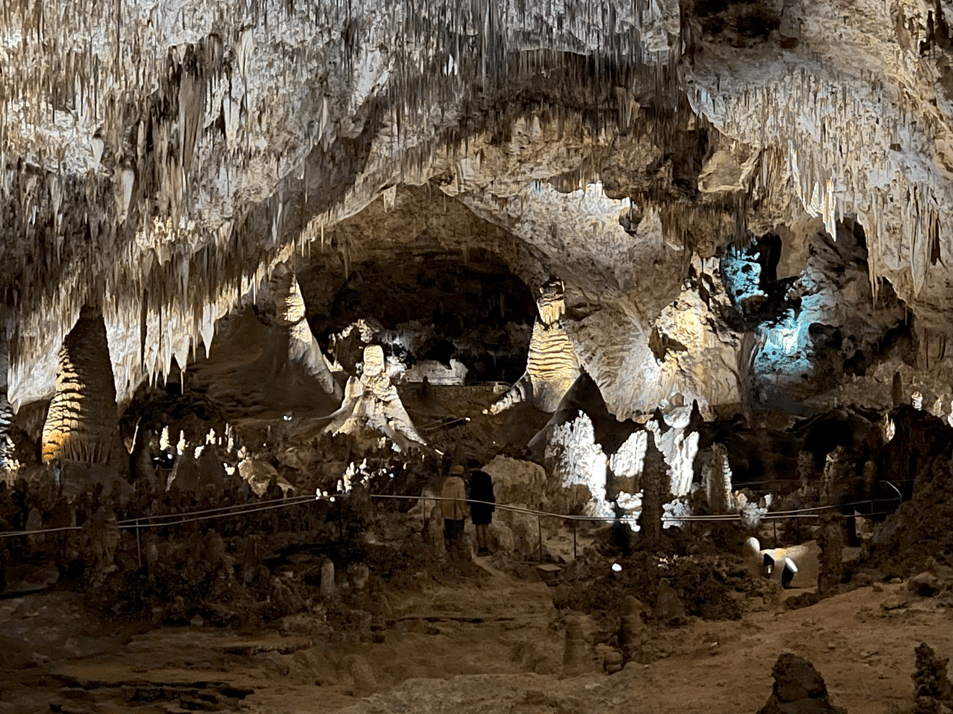
The three principal “sages” in conference:
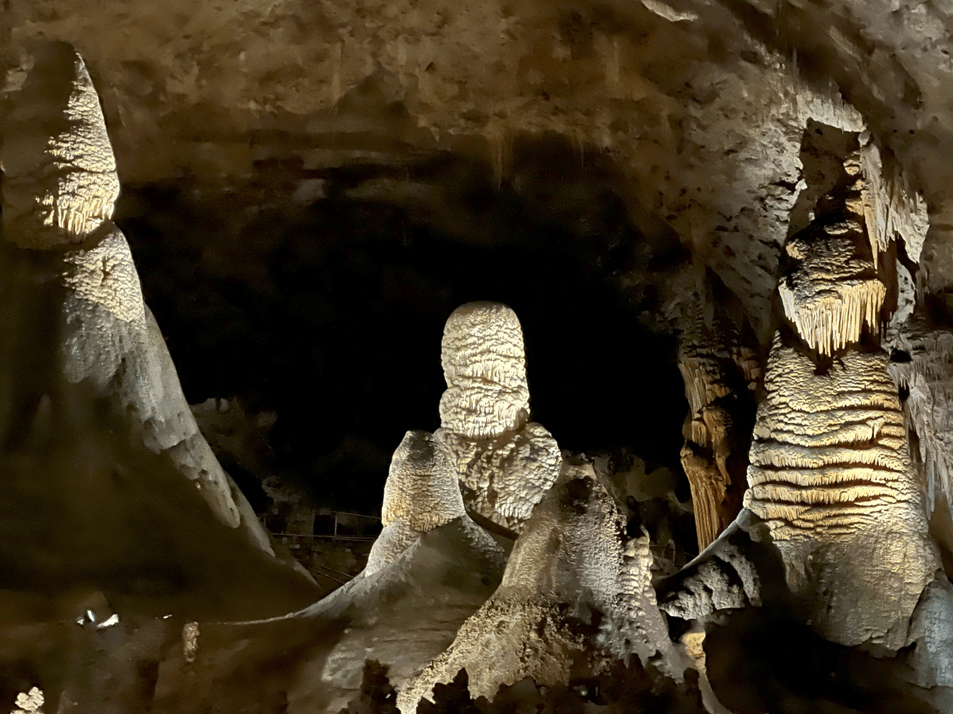
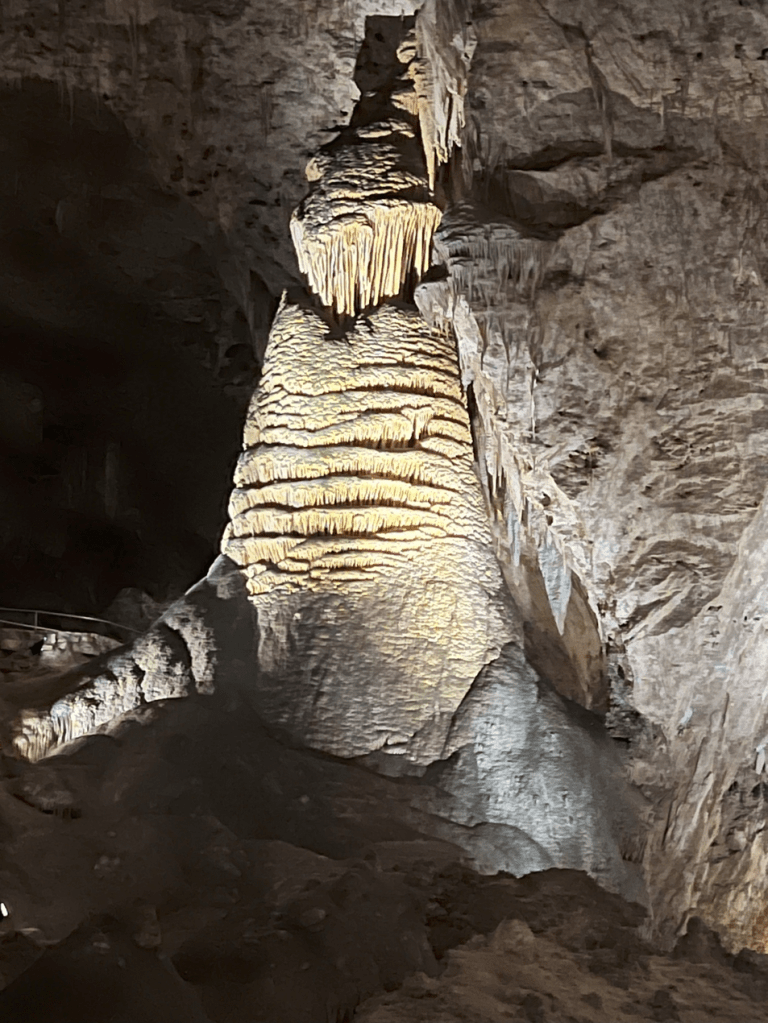
The one on the right has acquired the impressive name “Rock of Ages:”
There are many more caves in this system (two dozen named caves and more than one hundred unnamed ones):
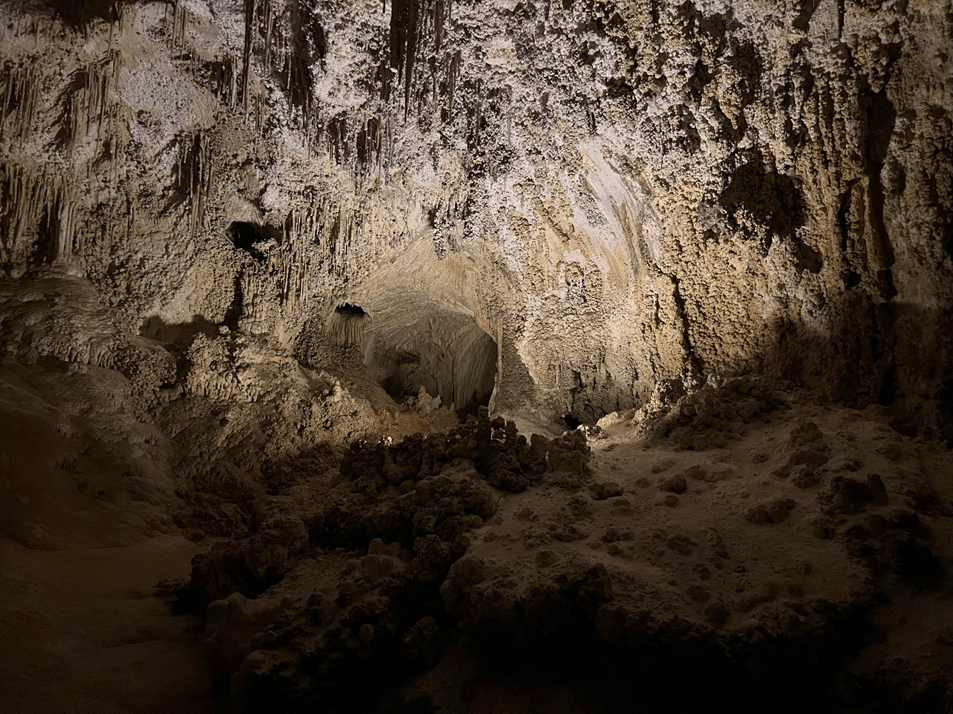
But the Big Cave provides a good introduction to most of the types of structures.
Bats
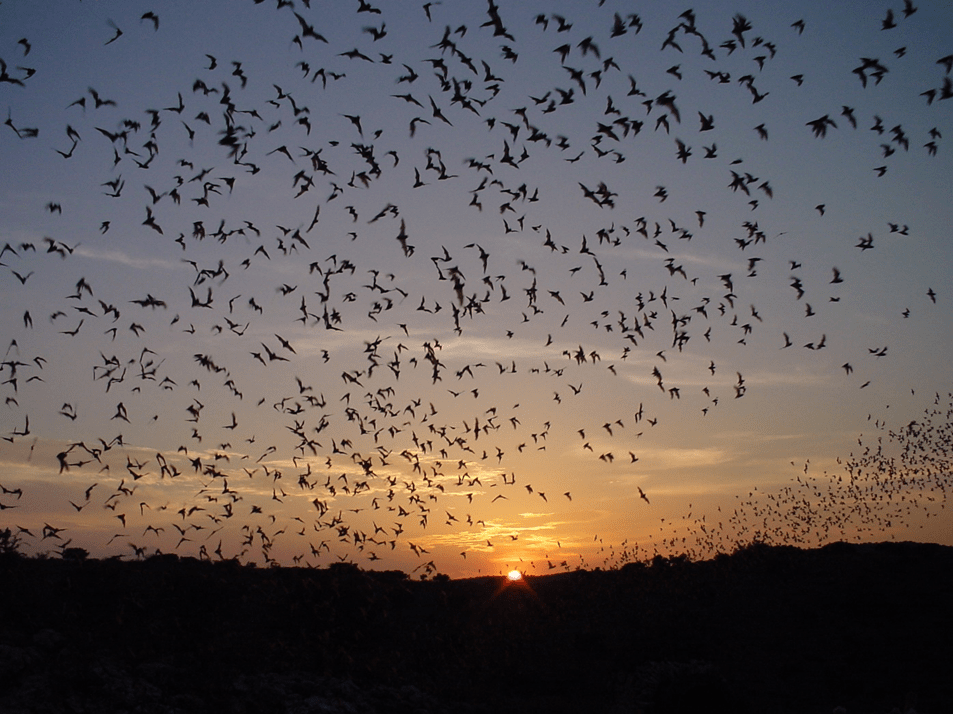
From May to October, the caves are visited by large numbers of Brazilian Free-Tail Bats (Tadarida brasiliensis) (millions of these bats arrive in Texas each spring). They move rapidly and forcefully. Watching these bats emerge at dusk from the Natural Entrance is one of the greatest wildlife spectacles that I have ever seen! Unfortunately, no electronic devices are permitted in the vicinity to protect the bats; here is a picture published by the National Park Service:
Farewell to these amazing caverns; next stop is to gain a better understanding of the geologic feature in which these caves are embedded, at the nearby Guadalupe Mountains National Park.

 Journey Across America
Leave a comment