Sonora Desert
The Tucson area, where the Saguaro National Park is located, has more than three hundred days of sunshine per year. Yet the Sonora desert here is quite lush compared to the section of the Sonora desert in the Joshua Tree National Park (JTNP) because it enjoys two short wet seasons in summer and winter. Winter storms, originating over cold pacific waters, can swing south, producing both rain and snow in the surrounding mountains. In summer, tropical moisture from the Gulf of California surges into Arizona in the form of intense thunderstorms. Because of this relative abundance of moisture, the advantage for creosote bushes in very arid climates is not as apparent as in the JTNP part and many other desert plants flourish, especially a wide variety of cactuses.
The Saguaro National Park consists of two separate tracts east and west of Tucson. The original Saguaro National Monument, created in 1933, was built around the most spectacular cactus forest in Arizona; unfortunately, this was severely damaged in an intense cold snap in 1937, but it has now partially recovered.
The Saguaro Cactus
The most prominent feature of the park is the giant saguaro cactus (Carnegiea gigantea) which can grow to a height of up to 50 feet and weigh up to 6 tons. Each is built around an internal framework of woody ribs:
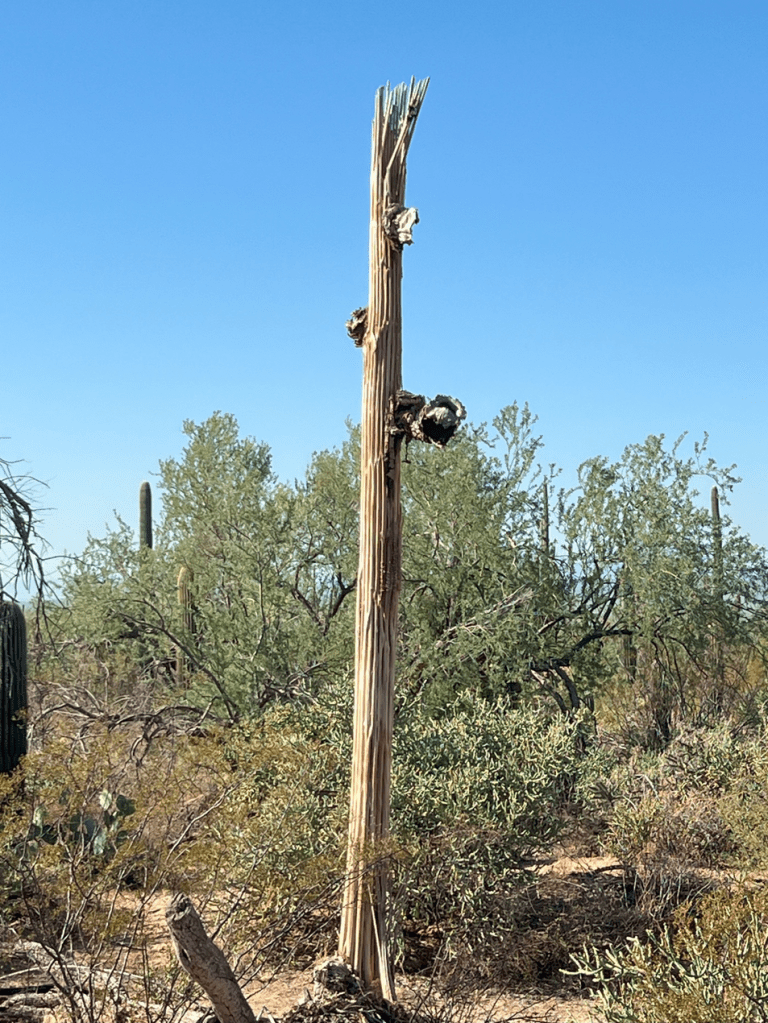
This is surrounded by a water-storing tissue called cortex, which is in turn is encased in a tough waxy skin:
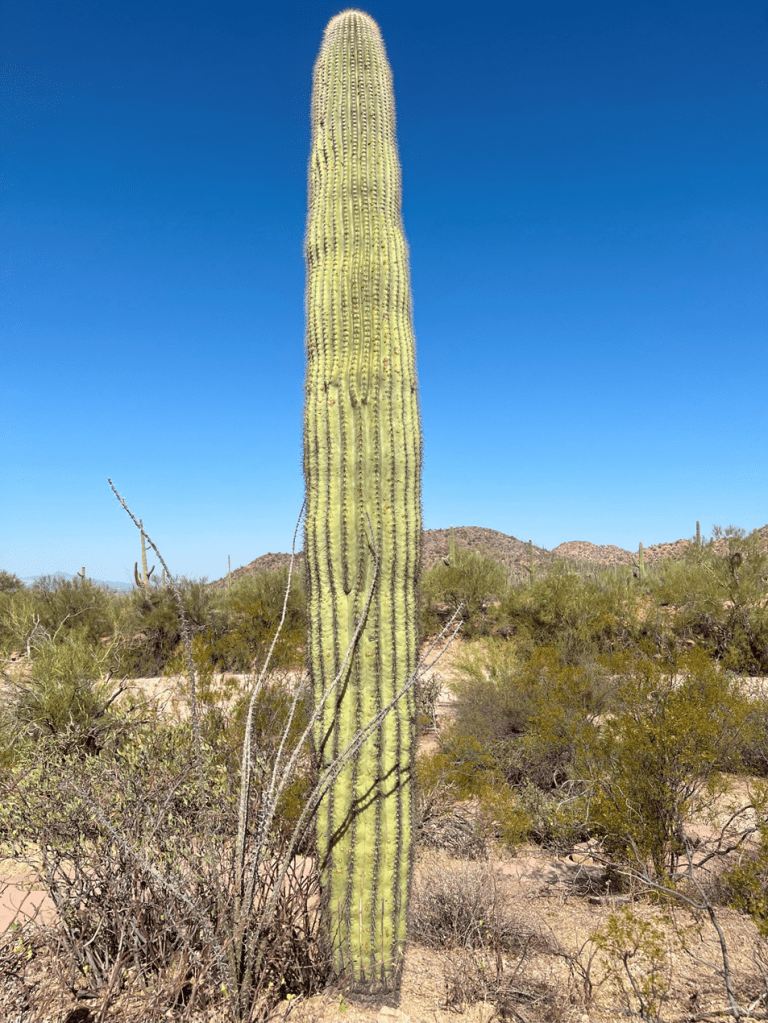
The “trunk” can develop “branches” and the mature plant can have a wide variety of shapes and sizes:

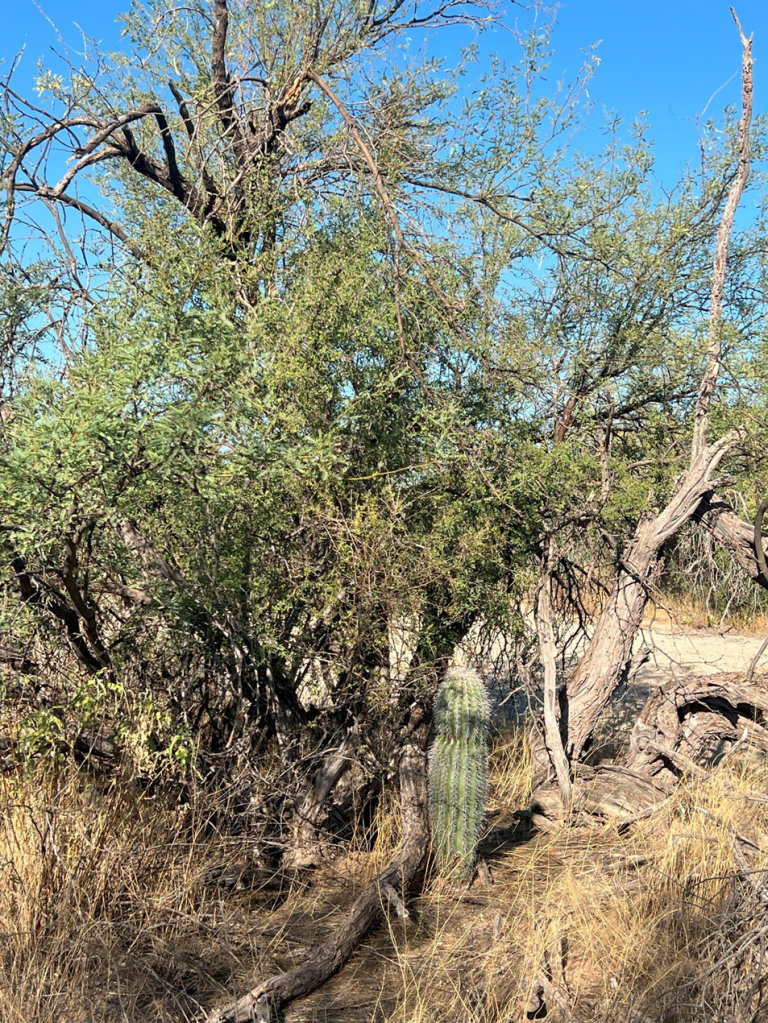
The cactuses do not grow in isolation but are often sheltered by trees (especially in the long, early part of their lives). To me, the most attractive of these is the Foothill Palo Verde Tree (Parkinsonia microphylla), which has distinctive green bark:

Another tree, often serving the same function, is the Velvet Mesquite Tree (Prosopis velutina):
Other Cactus Plants
Other cactuses prominent in the park include the Teddy Bear Cholla (Cylindropuntia bigelovii):

The barrel cactus (Ferocactus cylindraceus):

And the Engelmann Prickly Pear (Opuntia engelmannii):

A splash of color is provided by the desert Christmas cactus (Cylindropuntia leptocaulis):

Arachnids, Amphibians and Reptiles
Next to the western tract of the Saguaro National Park is the Arizona-Sonora Desert Museum, a remarkable facility with many exhibits illustrating life in the Sonoran Desert including a park, a zoo and aviaries. Most desert animals are nocturnal and shy, so it is hard to capture pictures of them during the day, and meeting some of them at night can be alarming.
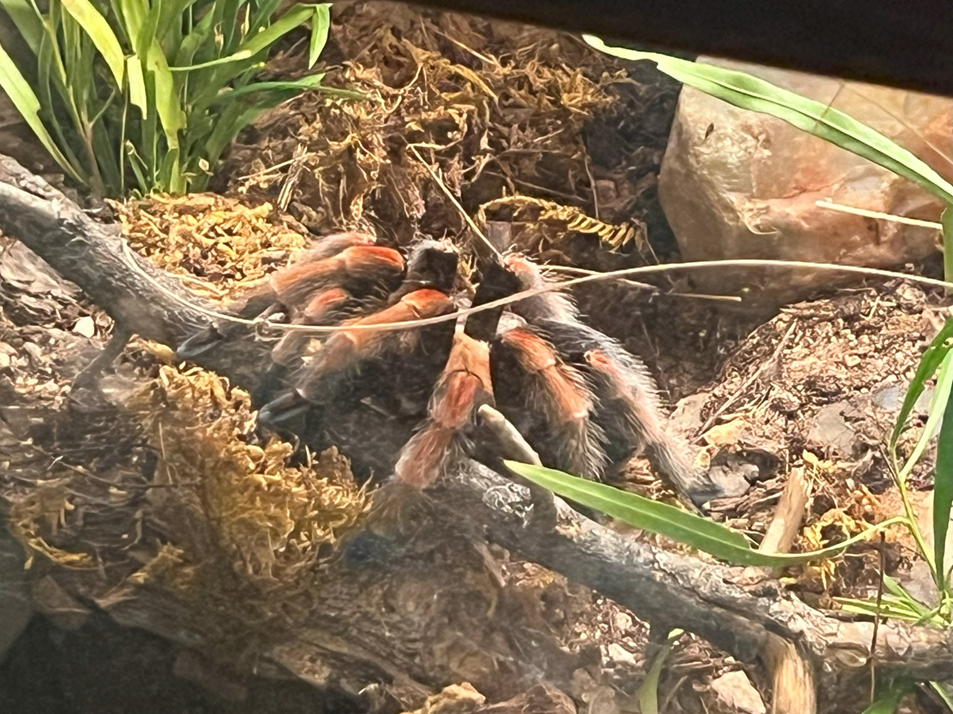
Here are a few of the more interesting ones, starting with a desert tarantula (Aphonopelma chalcodes):
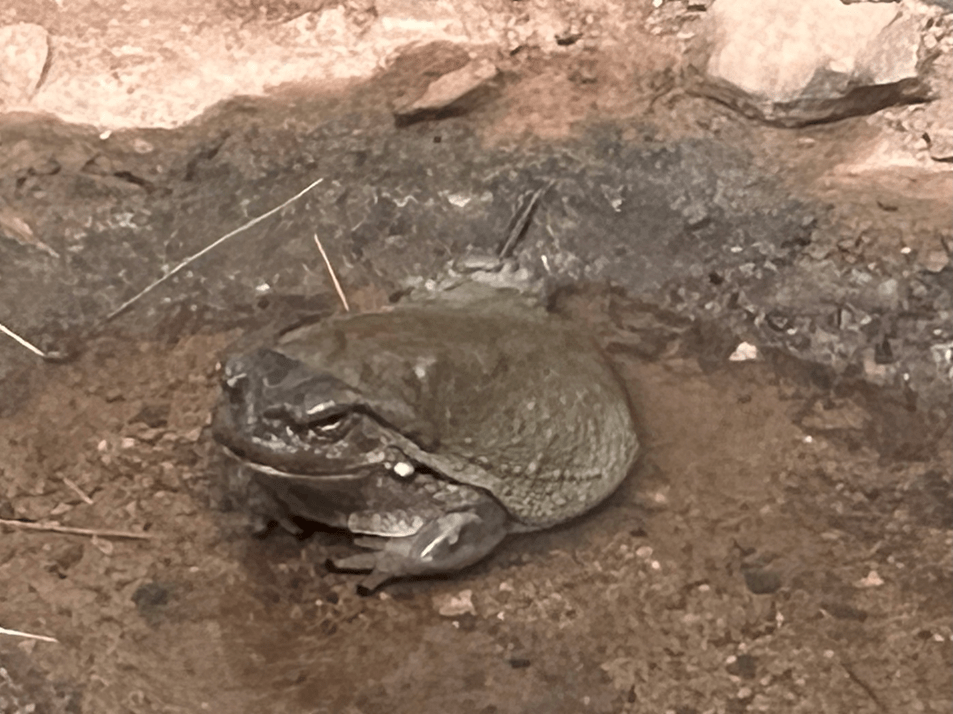
The Sonoran Desert toad (Incilius alvarius):
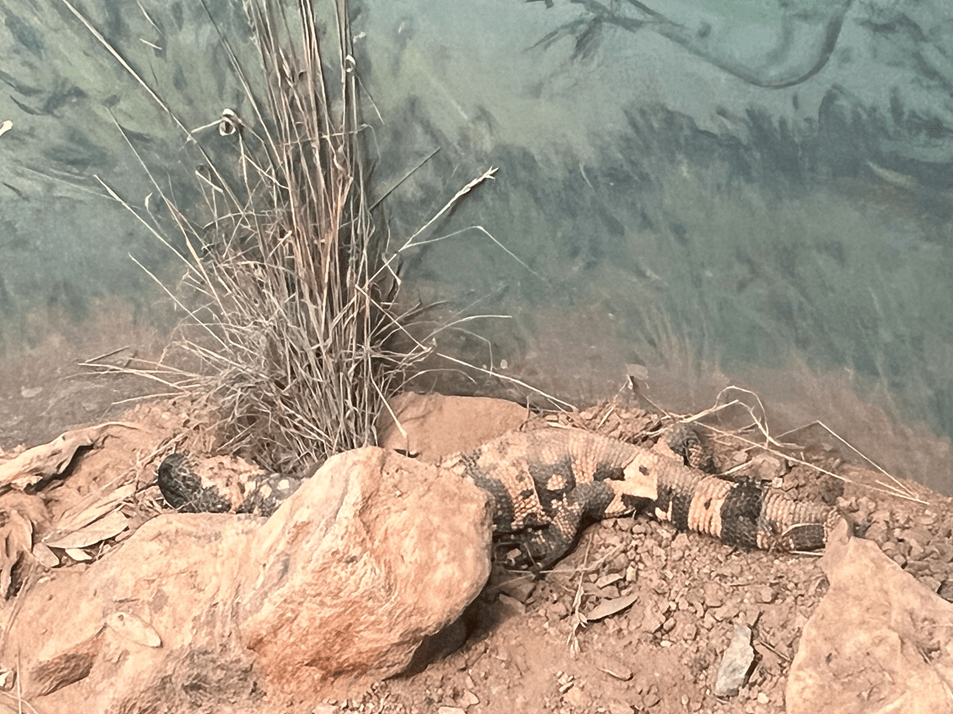
The Gila Monster (Heloderma suspectum), one of only two venomous lizards in the world:
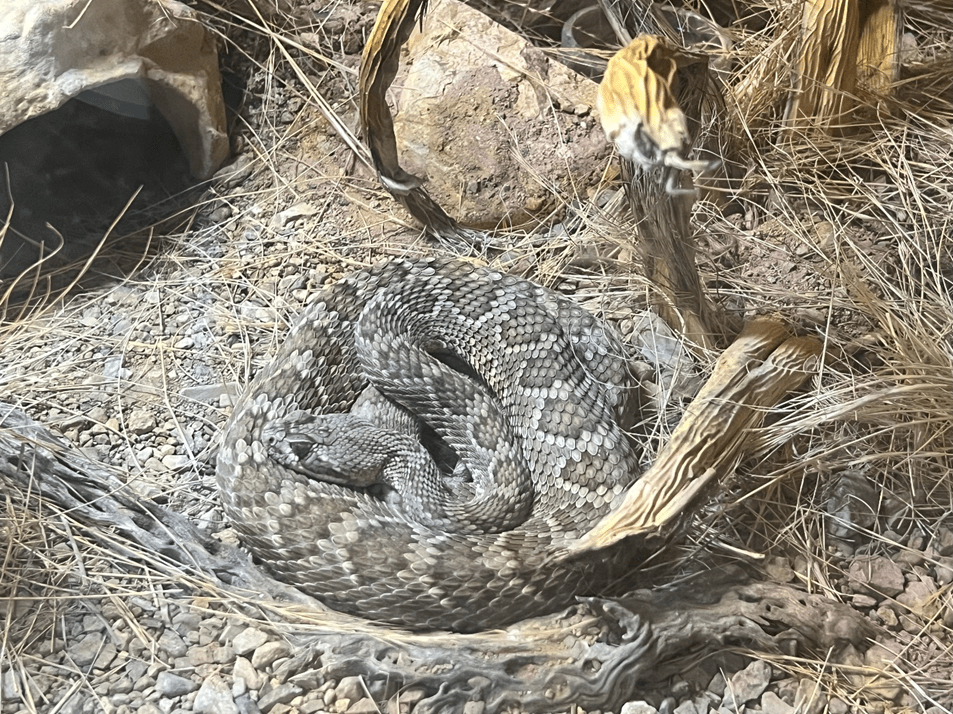
The western diamond-backed rattlesnake (Crotalus atrox):
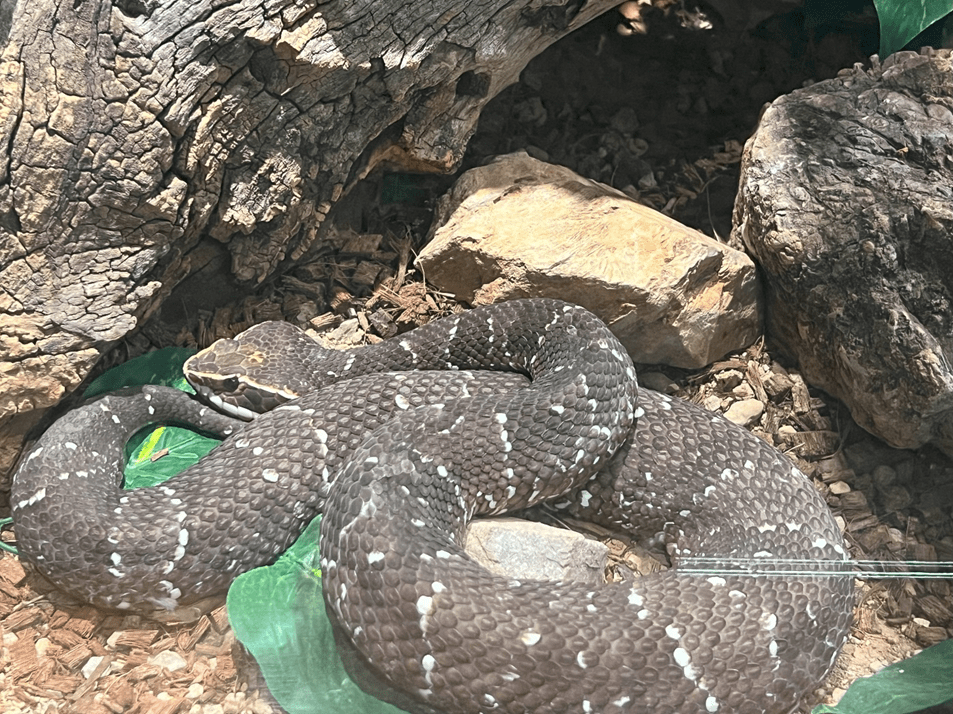
And the Arizona black rattlesnake (Crotalus cerus):
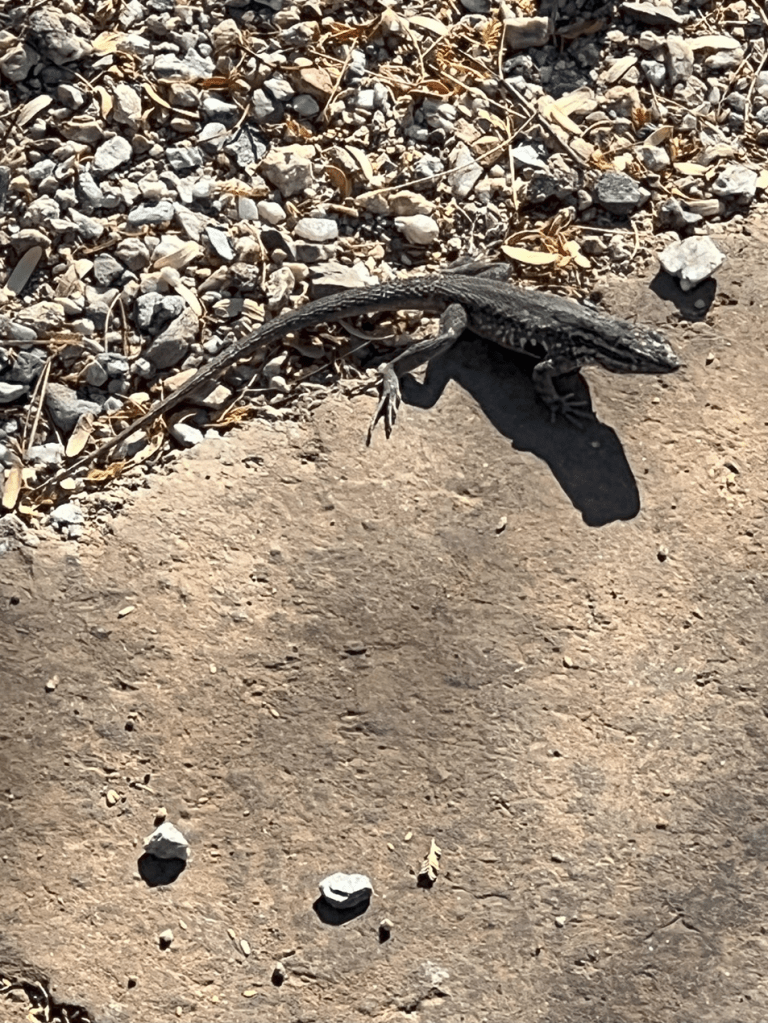
Thankfully, the only reptile that I met in the park was the desert spiny lizard (Sceloporus magister):
Birds
The most colorful bird was the northern cardinal (Cardinalis sinuatus):

Mammals
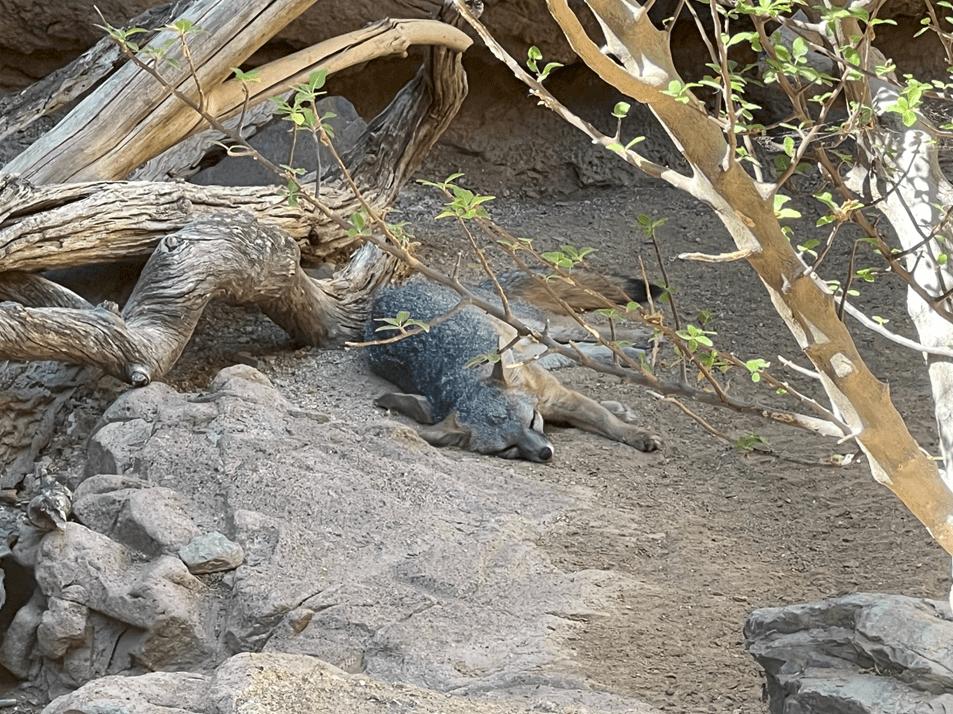
Courtesy of the desert zoo, I was able to view an unenergetic gray fox (Urocyon cinereoargenteus):
And an exceedingly rare Mexican gray wolf (Canis lupus spp. Baileyi):

Departure

Finally, it is time to leave the desert. For something completely different, the next stop will be the Carlsbad Caverns National Park.

 Journey Across America
Leave a comment