Off the coast of California, the isolated Channel Islands have a unique set of flora and fauna because there has never been a land bridge connecting them to the mainland and because they lie at the confluence of two ocean currents: the California Current and the Southern California Counter Current creating a unique transition zone between the cool currents of the north and the warm currents of the south. This results in a very diverse ecosystem with more than 2,000 species of plants and animals, 145 of them unique to the islands. The Chanel Islands have been called the “Galapagos Islands of North America.”
I visited Santa Cruz, the largest of these islands, 22 miles long and 2-6 miles wide.
The Dolphins
The day that I visited was shrouded in fog. On the way there, we were entertained by the antics of hundreds of common dolphins (Delphinus delphis):

The island suddenly emerged out of the fog just before we disembarked at Scorpion Anchorage.
Island Gigantism and Dwarfism
When animals are isolated on an island, they may grow drastically larger than their relatives on the mainland (island gigantism) or much smaller (island dwarfism). Large species decrease in size when food is limited while small species grow big where there is no significant predation pressure.
The island scrub jay (Aphelocoma insularis), which lives only on Santa Cruz island is a good example of island gigantism, being about a third larger than its mainland counterpart:

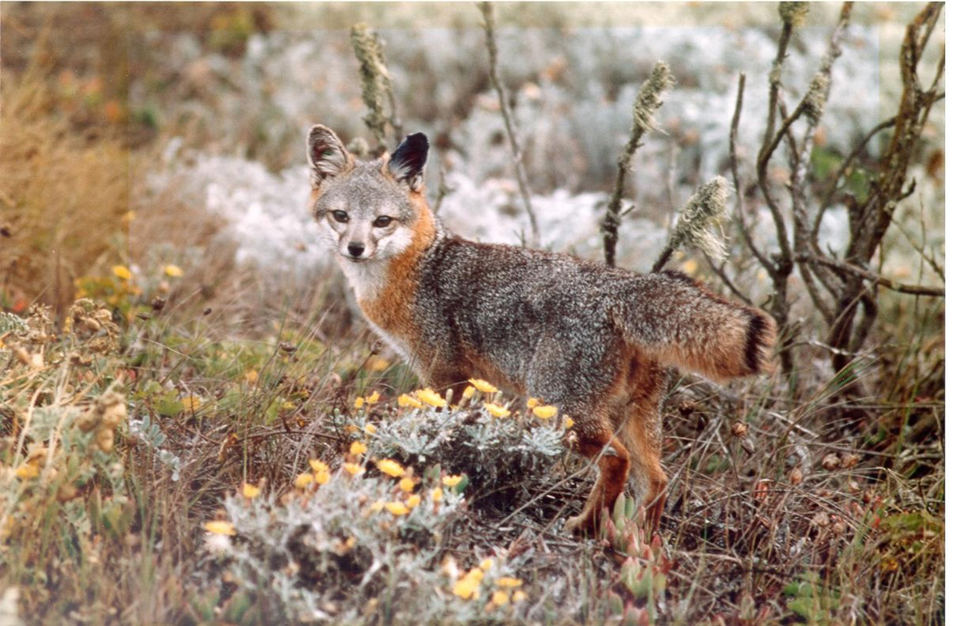
The island fox (Urocyon littoralis), weighing in at only 4-5 lb, is a descendant of the mainland gray fox (weighing in at around 12 lb) and is a poster child for island dwarfism.
The population of these foxes declined catastrophically during the 1990s, and their restoration is a remarkable story. As a byproduct of rancher activity on the island, pigs were released into the environment and proliferated. Meanwhile DDT caused the decline of the native bald eagles (who fed on contaminated fish). The young, tasty pigs attracted golden eagles to the island, who also became efficient predators of the foxes, causing their decline. Removal of the pigs from the island, coupled with removal of the resident golden eagles and reintroduction/reestablishment of foxes and bald eagles restored the original balance so that the fox population, which had declined to less than 80 was restored to the current level of more than 3000.
Unlike many foxes, the island fox is diurnal and relatively comfortable around people. In spite of multiple sightings, I was unable to get a good photo. The image below is from Wikipedia (https://en.wikipedia.org/wiki/Island_fox):
Other Animals and Plants
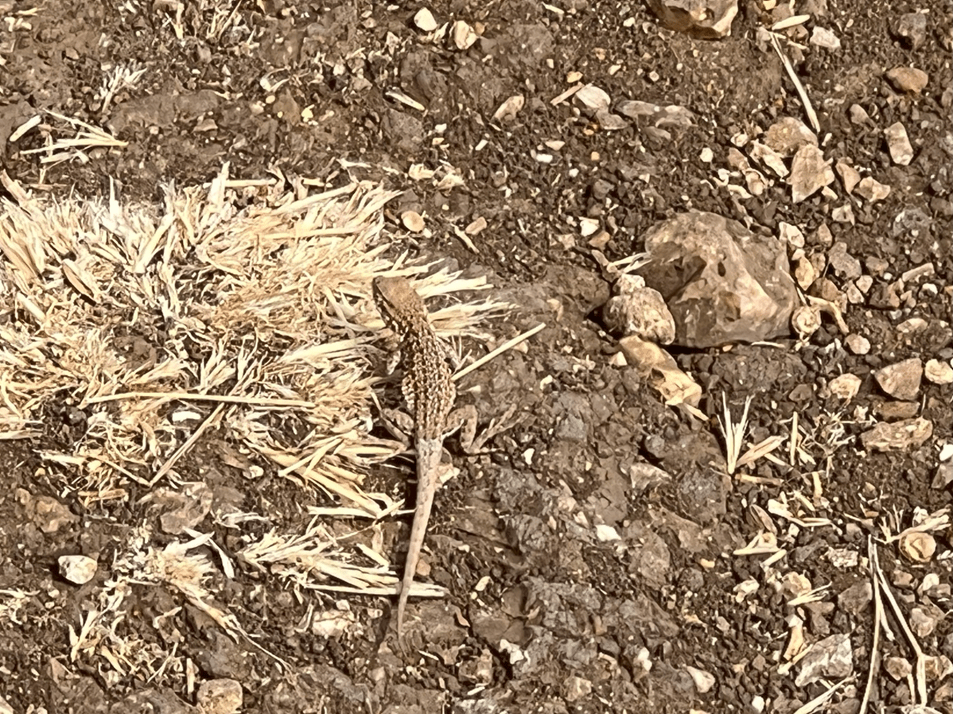
I encountered a number of other animals, including an island fence lizard (Sceloporus occidentalis becki), endemic to the island:
The most aggressive (and perhaps most intelligent) animal was the common raven (Corvus corax):
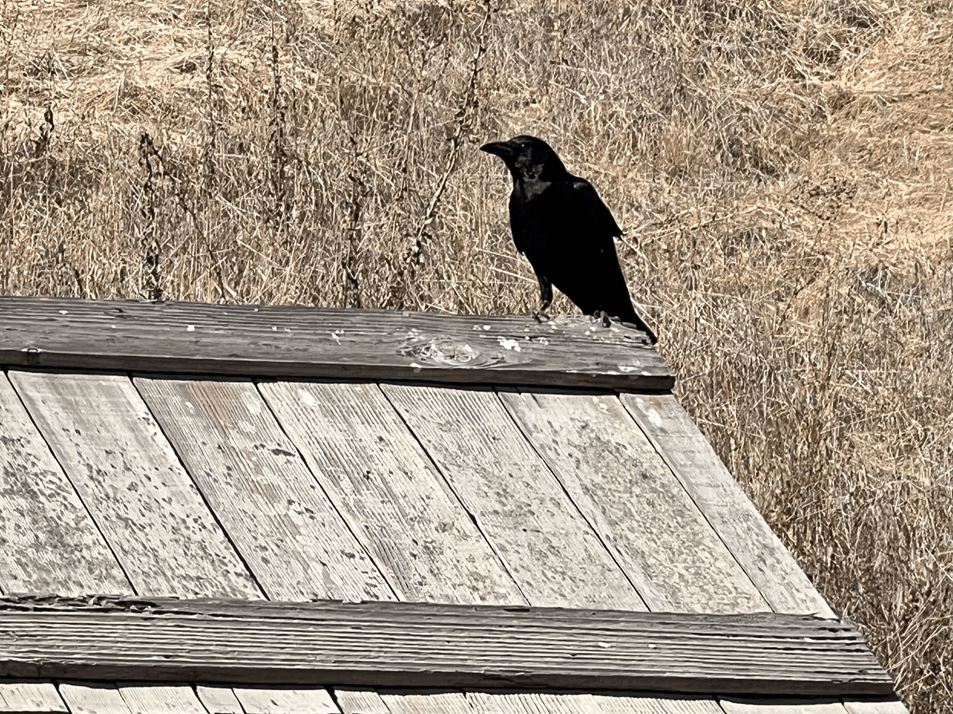
I often felt myself to be under the close observation of these birds.
The most prominent flower was the island morning glory (Calystegia macrostegia s. macrostegia), found only on Santa Cruz Island:

Walking up to the cliffs, a good deal of diatomaceous earth (made from the fossilized remains of diatoms), which seemed to underlie much of the topsoil, was revealed:

Scenic Views
I walked along the top of the cliffs on the northern side of the island. Initially the view was obscured by the heavy weather; then, almost magically, great features loomed out of the gradually receding fog:

Massive Cliffs were revealed:

I was especially taken by the offshore rocks which are a major roosting area for the California brown pelican (Pelecanus occidentalis):

I spent quite some time watching the arrival and departure of these beautiful birds:

Sea Caves
Santa Cruz Island is also home to some of the world’s most spectacular sea caves (including Painted Cave—one of the world’s largest). We caught a glimpse of these as we were leaving the island:

On the return journey, we were once again accompanied by hundreds of joyful dolphins.
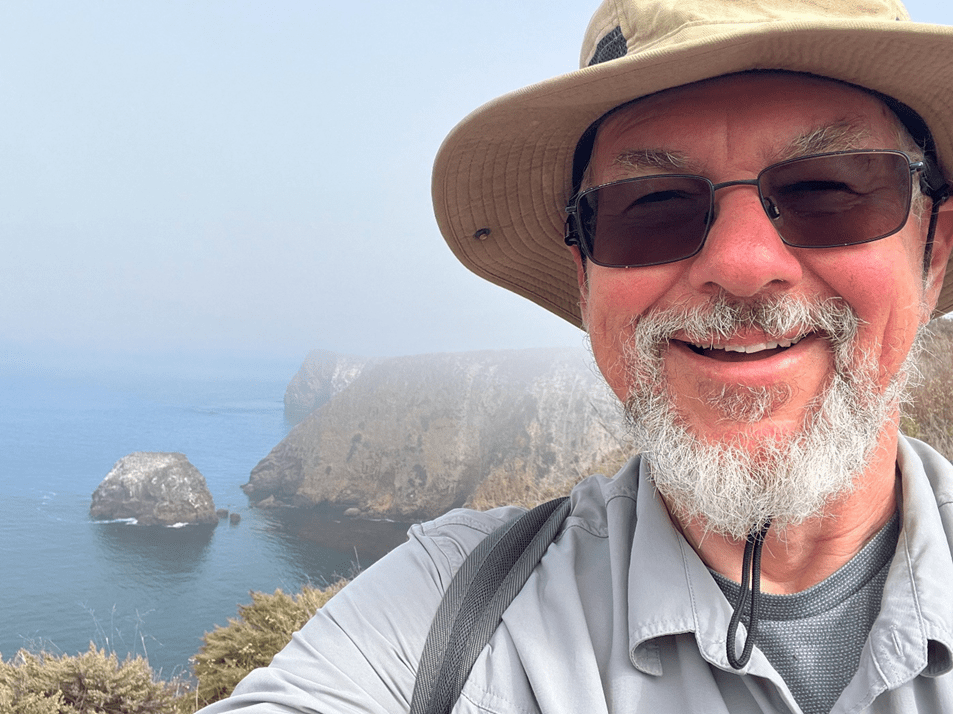
End of my brief visit to the Channel Islands; next stop (after a short break): Joshua Tree National Park!

 Journey Across America
Leave a comment