Kings Canyon and Sequoia National Parks are operated as a single unit and about half of the world’s remaining giant sequoia trees (Sequoiadendron giganteum) are contained in these parks. They are distinguished from the Coastal Redwoods (Sequoia sempervirens) by being larger in volume (bigger girths) but not as tall. A schematic comparison between these two trees (and some other large objects) may be found at the Giant Forest Museum:

The tallest coastal redwood is in the middle, while the largest giant redwood is on the left.
A Walk to the General Grant Tree
I parked my Revel in the Azalea Campground and walked to the General Grant Tree. On the way, I passed a twin pair of redwoods:
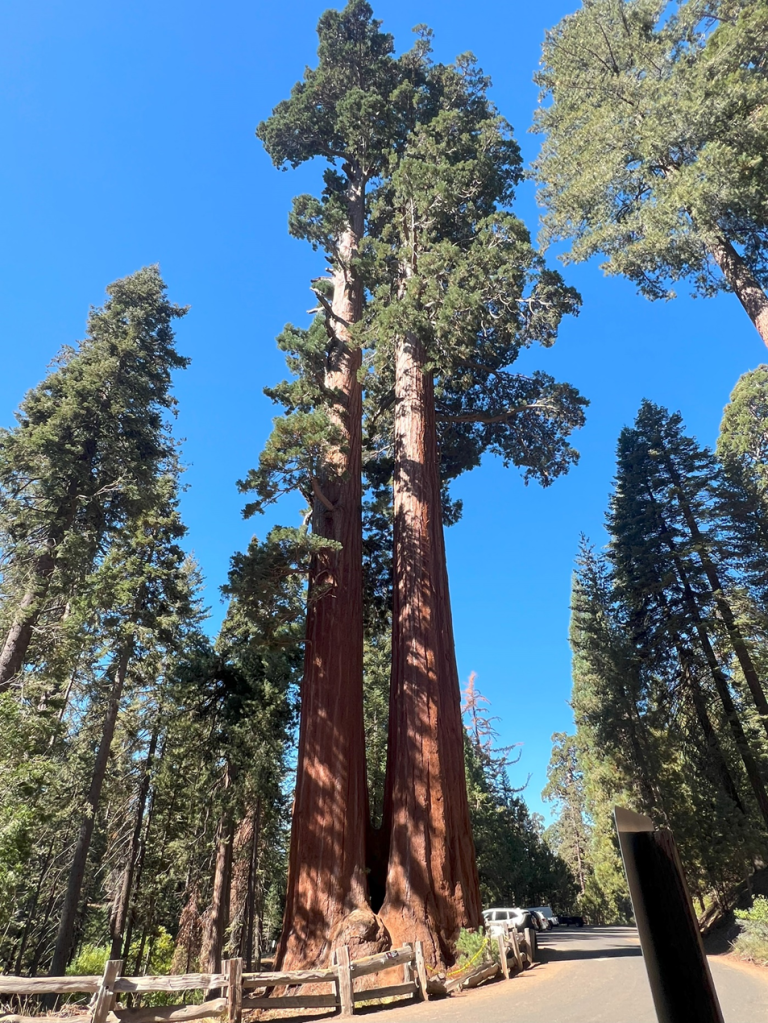
This reminded me of a short story that I had read as a boy about a woodman who settles in a forest in the shade of a giant redwood, building a cabin perhaps similar to the nearby Gamlin Cabin:

As he gets older, the redwood tree (already more than 1000 years old), remains the same. This causes the woodsman to become increasingly jealous and resentful. Finally, close to death, he can stand it no longer and attacks the tree with an axe. He suffers a massive cardiac infraction as sap from the minor injury he has inflicted on the tree drips upon him. When a visitor later comes to the woodsman’s cabin there is no sign of the woodsman, but the redwood tree overshadowing the cabin seems to have acquired a twin.
Nearby is a stump of a 24 ft-diameter tree:

The tree was chopped down by Westerners and shipped east to the Centennial Celebration presumably to impress the Easterners; unfortunately, it was dismissed as a hoax.
Also, nearby it is a plaque explaining that the National Park Service was founded around the idea of protecting these threes, one of which actually appears on the Park Service logo:
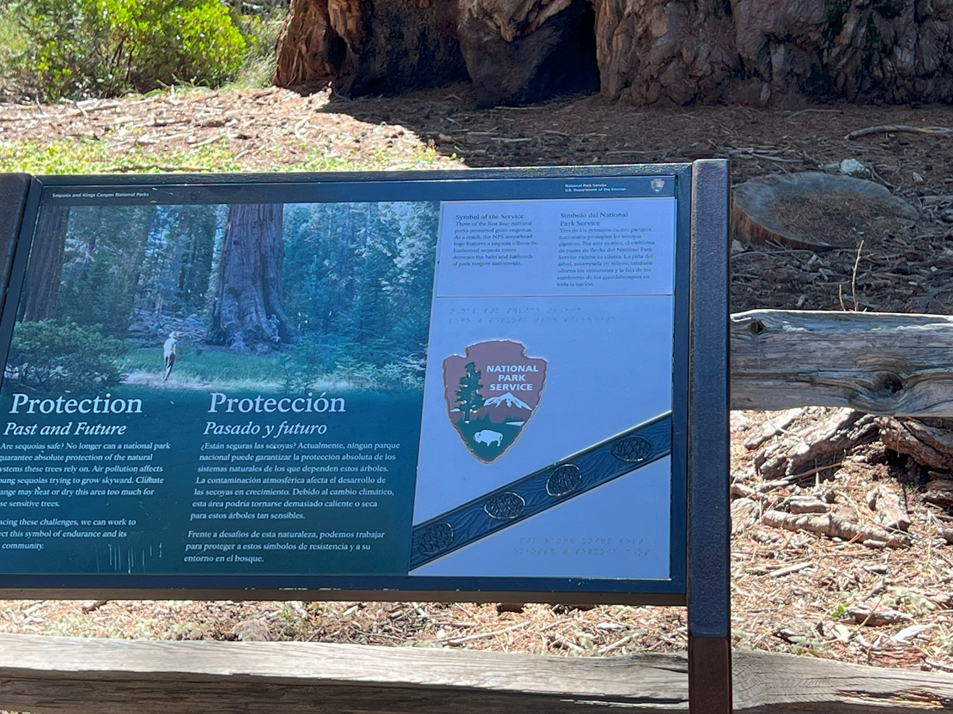
It is ironic that the early efforts to protect the trees involved suppression of fire, which provides the giant redwoods with a competitive advantage with respect to other trees (they have thicker bark and less-combustible sap) and even helps to germinate their seeds. The suppression of fires also lead to a proliferation of combustible material, which ultimately created more intense fires, hot enough to seriously injure the sequoias. Now the Park Service is studying how to ameliorate the effects of climate change; it is to be hoped that these efforts will be more successful.
Such thoughts prompted me to consider the hubris with which we treat these giant living entities, some of which have been around for 3,200 years. We have certainly demonstrated our ability to destroy them, but our ability to preserve them in the face of the massive irresistible changes sweeping our planet is yet to be demonstrated.
Another curious aspect of our hubris has been our tendency to name some of these trees after human notables. A case in point is the third most massive known tree of which we are aware—the General Grant Tree:
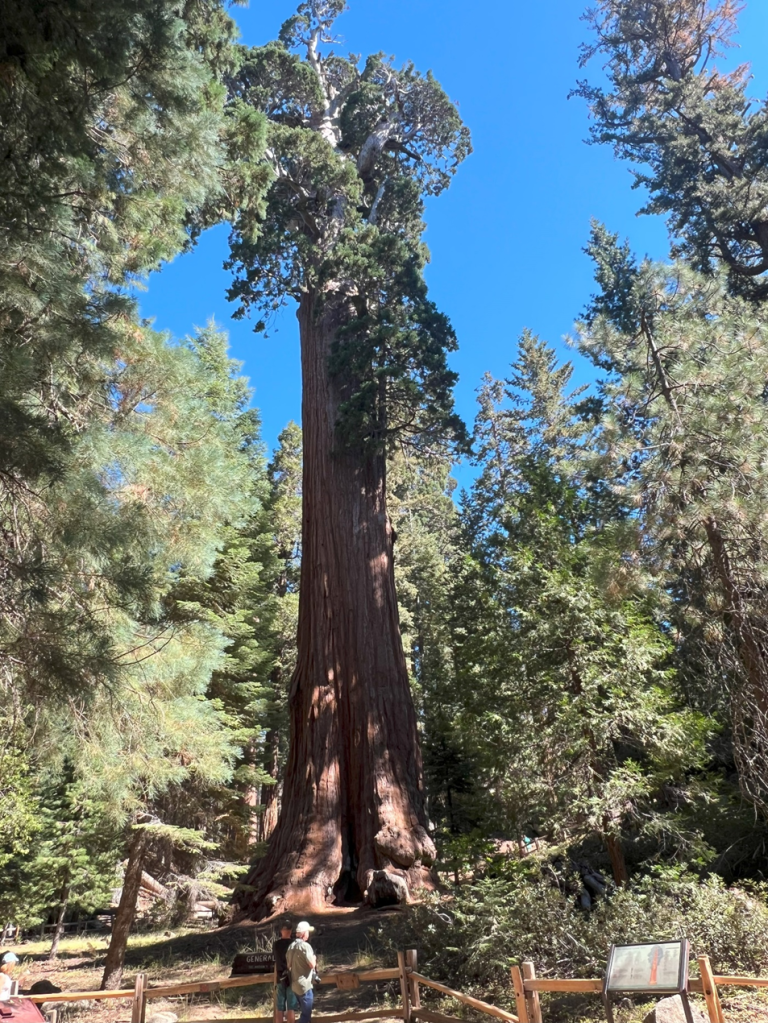

This tree was around more than 1,500 years before Grant was born; he achieved results which were perhaps necessary for our nation, but he did it by very destructive means and tree preservation was probably not very high on his agenda. It also seems unlikely that this tree could practically serve as a Christmas tree of any kind, ley alone the nation’s Christmas tree. Yet these (to me, somewhat absurd) appellations were clearly intended to recognize and honor this undoubtedly impressive tree, with a 107 ft circumference (largest know for a sequoia) and a calculated weight of 1,254 tons.
North Grove Loop Trail
Next, I took a walk along the North Grove Loop Trail. This was a very different experience from the crowded vicinity of the General Grant Tree. I met only one other hiker on this trail. There were no officially named trees in this grove, so I wasn’t distracted by historical associations.
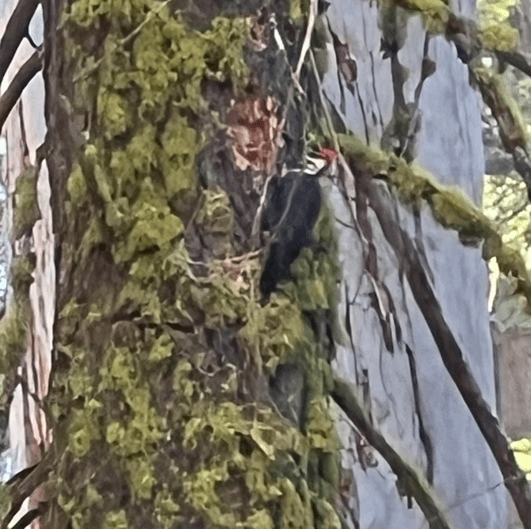
The first thing that I noticed was a pileated woodpecker, busily and very loudly at work:
There was certainly no shortage of giant fire-scarred trees:
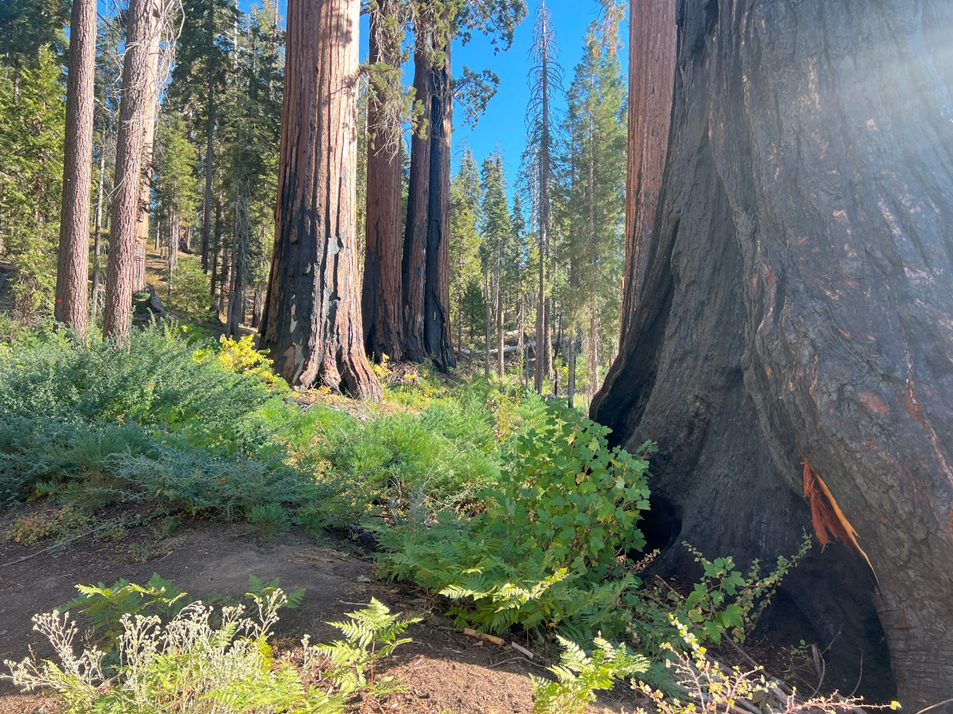

And blue elderberries (Sambucus cerulea) along the trail:

As well as plenty of deer:

Kings Canyon
Taking a break from the giant trees, I visited King’s Canyon:
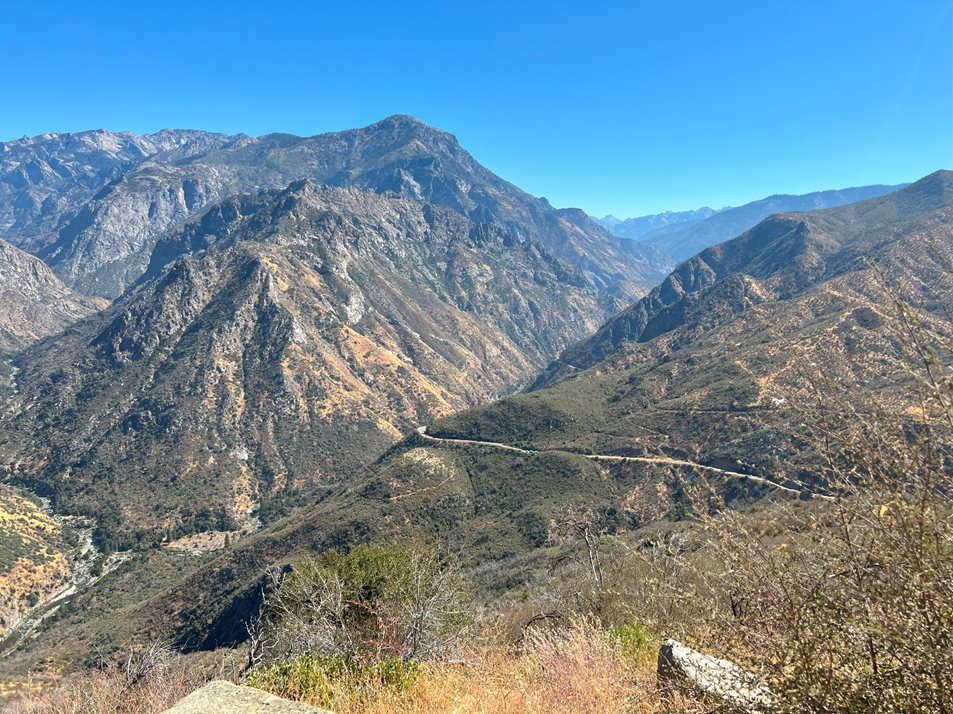
In many ways this reminded me of Yosemite Valley, with similar features, but on a somewhat smaller scale (and with a much smaller number of visitors).
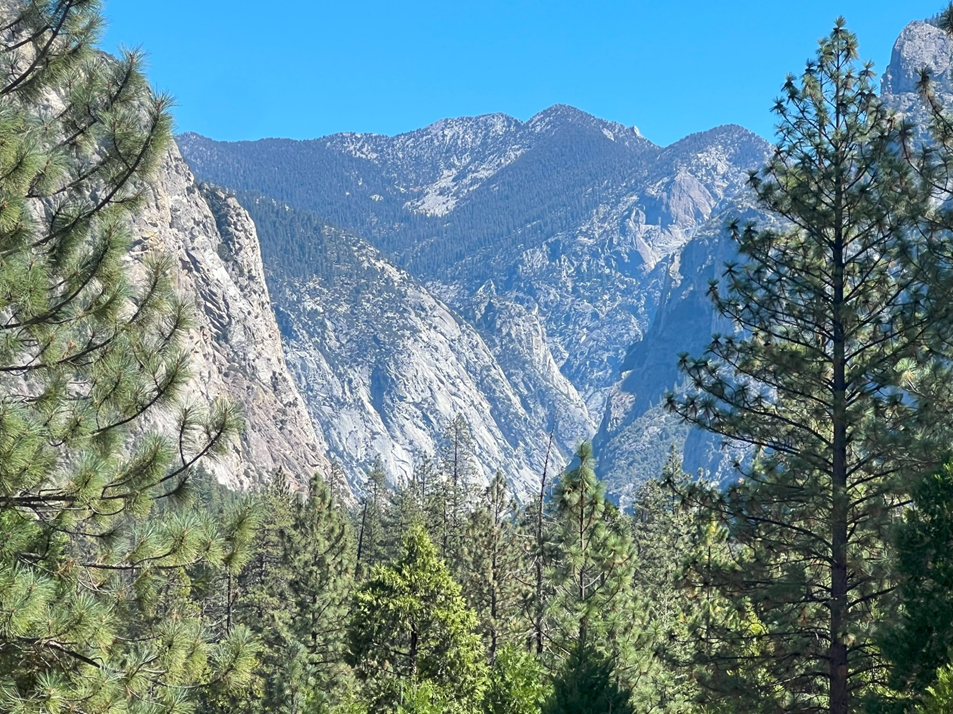
The valley has been carved out of huge slabs of granite with a “U-shape” and steep walls on the sides:

There is an impressive waterfall (Roaring Falls):

And multiple tributaries to the King River, which runs down the center of the valley:

There is also a beautiful meadow (the Zumwalt meadow):

Giant Forest
Then I returned to the land of the giants, first taking a short hike to view the General Sherman Tree, said to be the largest tree on earth (103 ft circumference with a calculated weight of 1,385 tons):
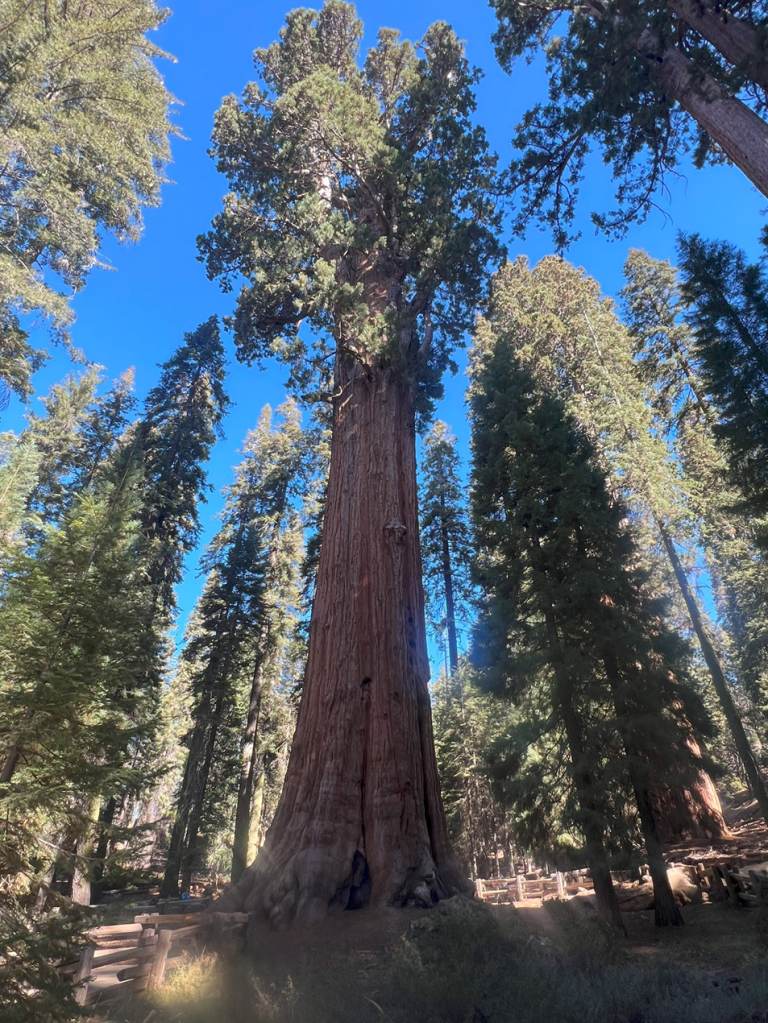
As I approached the tree a nonchalant interloper (Ursus americanus) crossed the trail, drawing the attention of many visitors:

Wandering along the Congress Trail I saw many fire-scarred trees:

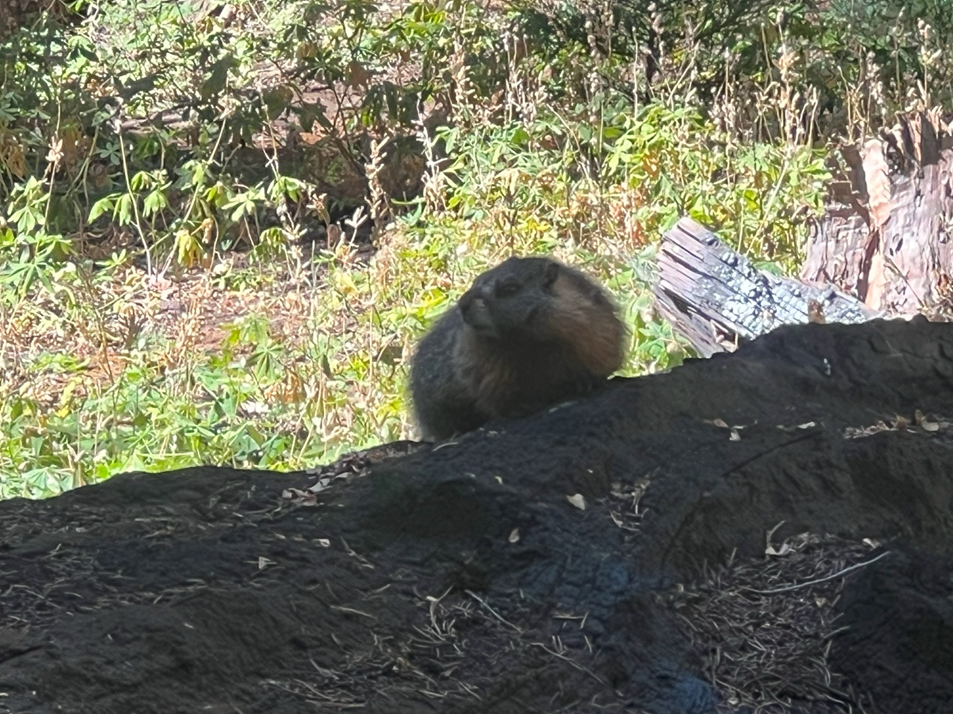
And a fat marmot preparing for the winter:
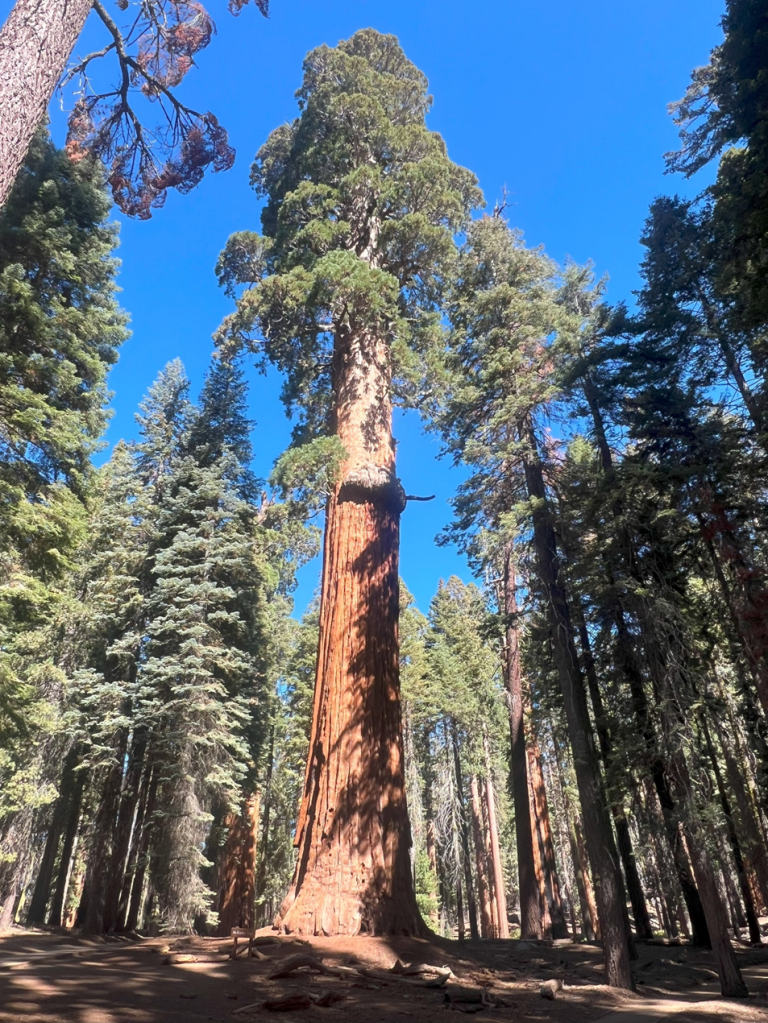
The tree names stimulated a number of historical associations. I had lunch in the shade of the General Lee Tree (which is no longer labeled with a sign, but easy to find from a map). I guess that General Lee is no longer regarded as a national hero by many; he was an example of an honorable man of high principle who nonetheless made a decision that plunged his country into an unnecessarily long and destructive civil war (many historians feel that had Lee accepted command of the Union Forces, the Civil War would likely have been over in a couple of months.) The tree named after him appears unscarred by fire and aesthetically pleasing (at least to me):
A little be off the beaten (or at least the paved) path, I found the tree named after Lincoln:

This massive tree was definitely scarred by fire; it sent me into a reverie about the 16th President. Lincoln was remarkable (perhaps unique) in being possessed of a combination of clear thought, a strong moral compass, consummate political skill and ultimately great power. I spent a good deal of time in reflection under the shadow of “his” tree:


 Journey Across America
Leave a comment