Entering the White Sands National Park on the morning of June 5, I was again impressed by the tremendous investment made by the US into the National Park System, truly one of the world’s most benign wonders; it made me proud and happy.
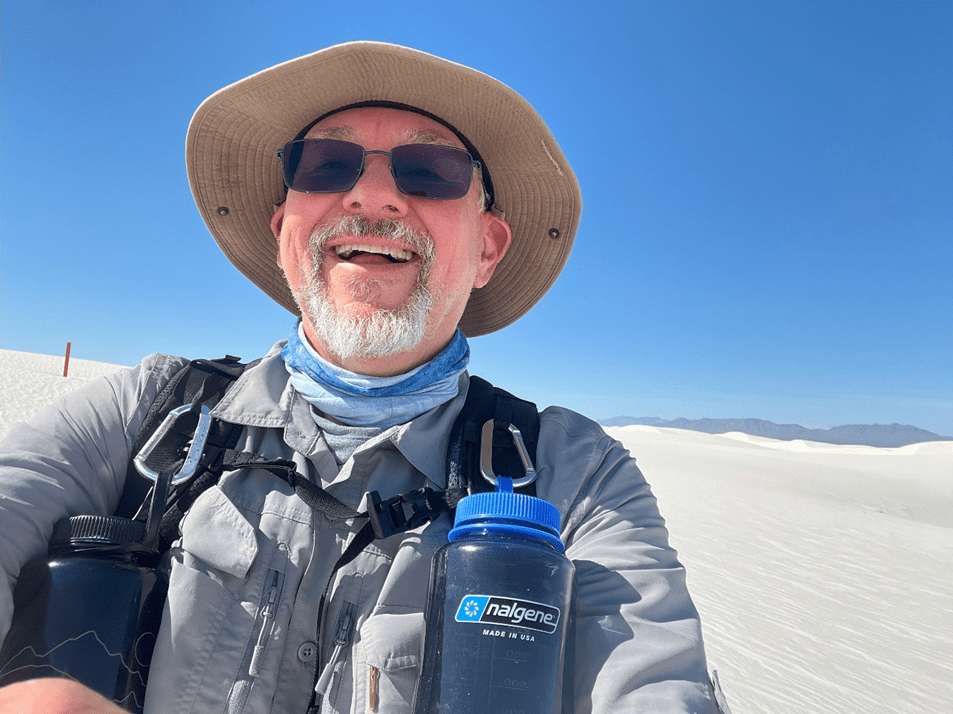
I started early in the morning on the Alkali Flats Trail, an old man in a broad-brimmed hat and boots, carrying trekking poles, four liters of water and all of the Mountaineer’s ten essentials on my back. I felt a little foolish as the two young men in front of me were hatless, wearing flip-flops and carrying only small bottles of water. This small party turned back after about half a mile and, indeed, of the other three or four parties that left the trailhead at the same time as I did, I seemed to be the only one to reach the furthest part of the trail (judging from the absence of fresh tracks). I guess that experience does, at least partially, compensate for the lack of youth.

Within a hundred yards of leaving the trailhead I was completely immersed in dunes of sparkling white gypsum sands. It was as if I had been plunged into Villeneuve’s Dune or Lean’s Lawrence of Arabia. Rarely have I become immersed in such a deep sense of solitude so quickly. To be sure there were hardy plants periodically scattered amongst the dunes but after a mile or two, I began to long for moving living things. Then I noticed that every ten paces or so, a tiny ant would cross my path.
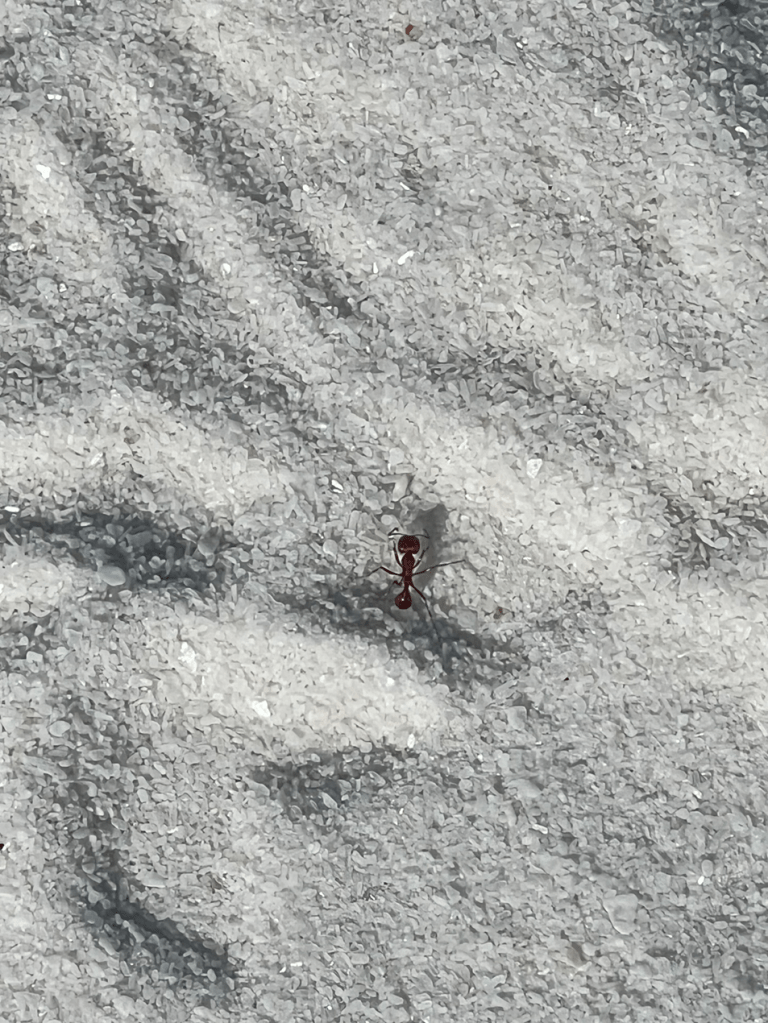
Note the scale of the sand grains in the picture. I became fascinated by the activities of these desert denizens, wondering how the desert supported so many. I became more aware of the sparse vegetation; it is quite difficult to gain a foothold as the dunes are constantly shifting. One way is to bind together the sand with an extensive root system and develop your own relatively immobile dune. I came across a fairly impressive mound:

As I approached the mound, a startled owl left the branches and flew off (unfortunately, I was too slow to photograph it). It was the largest creature that I saw in the park.
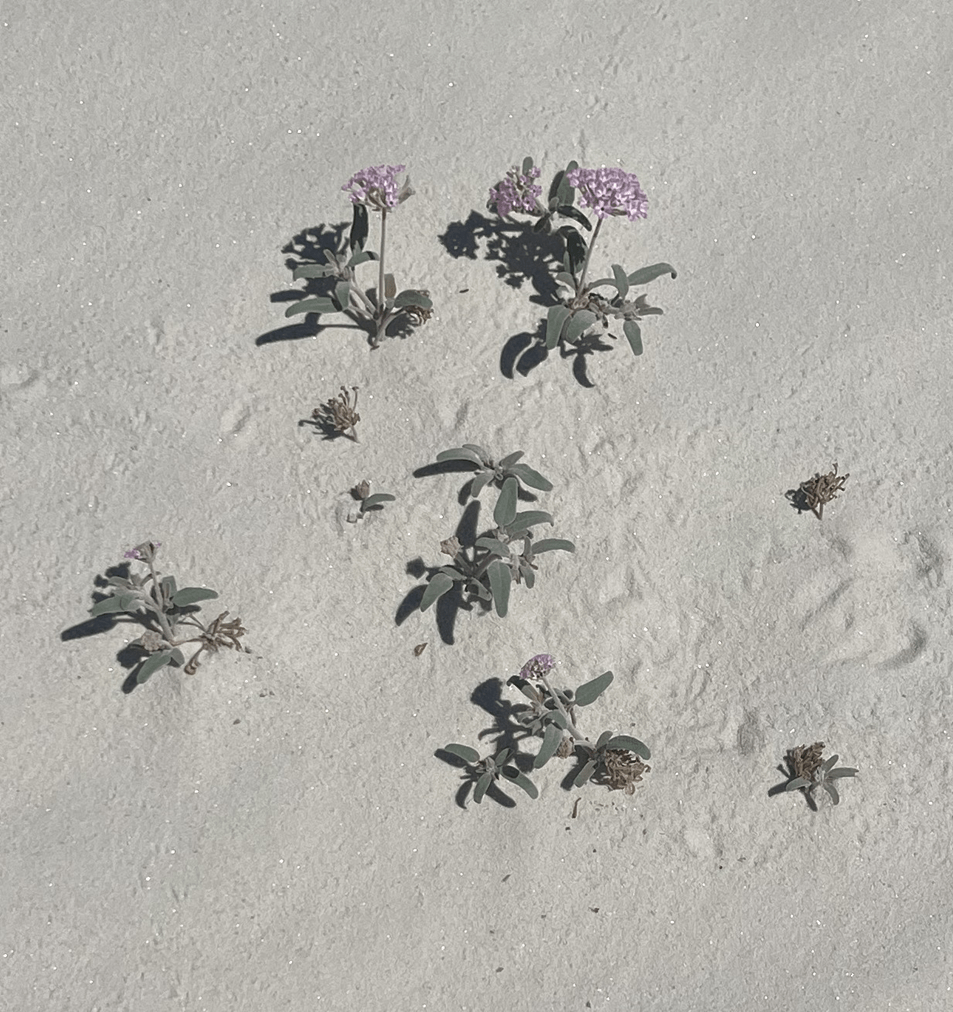
Another way for plants to survive is to bloom quickly and scatter seeds which, in turn can bloom and disperse seeds quickly; this is the strategy likely adopted by the sand verbena:
After about two and a half miles, I reached alkali flats:

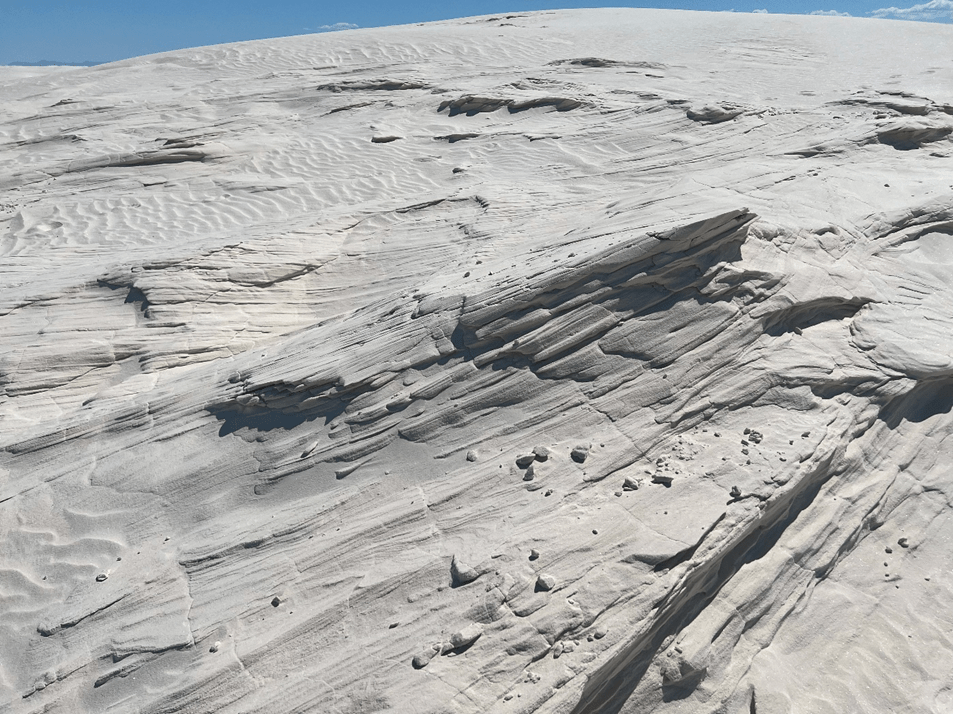
This flat is located in the Tularosa basin which is entirely surrounded by mountains and mesas, so that all the water from rainfall flows into lakes like the nearby Lake Lucero; as the water evaporates from these gypsum flats are formed, which are subsequently eroded by the winds to form the white dunes:
At the western-most part of the trail, I found the following sign:

This and a nearby sonic boom reminded me that, in addition to its stark scenic beauty, this area has been used for extensive development of weapons and space hardware. Indeed, the location of the first nuclear explosion (Trinity) is nearby. As we slip gradually (though perhaps inevitably) into the Second Cold War, the use of this area for advanced missile development is surely likely to increase.
In the morning (~ 7:30) when I started on the hike, it was quite cool; when I returned to the trailhead just before lunch, it was scorching hot. I then took the Dune Life Nature Trail. (I always enjoy the short nature trails at the national parks as they tend to be scenic and informative). Unfortunately, the signs at this nature trail were almost completely bleached by sunshine and so did not compensate for the hardship of wandering around in the 100 F temperature.
I then spent a pleasant and cool time at the very informative Visitor Center; the adobe buildings in which it was housed were particularly interesting.
Next national park stop: Petrified Forest.

 Journey Across America
Leave a comment